
Microsoft launches Copilot Health with lifestyle, fitness, and healthcare guidance

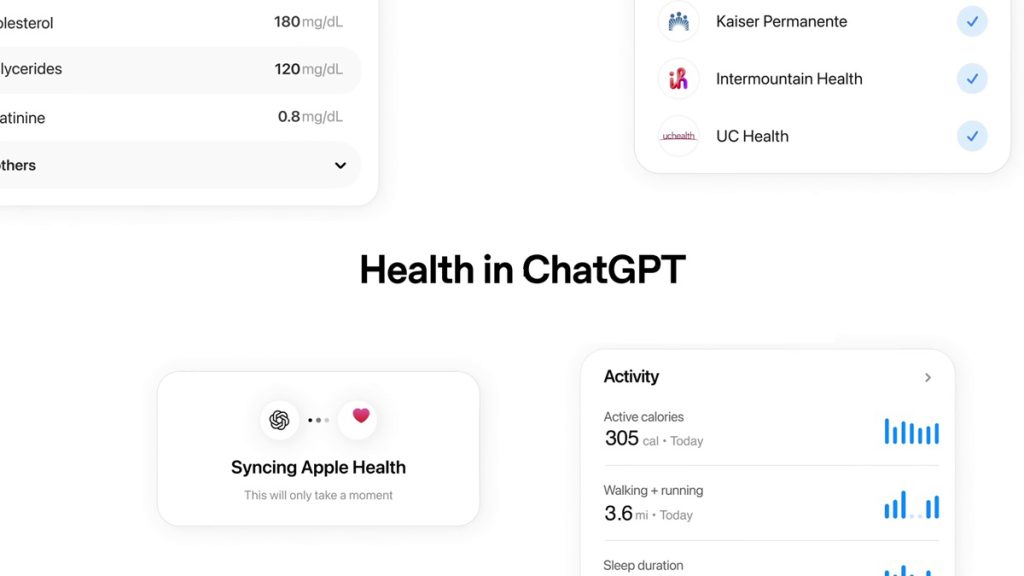
Microsoft has introduced Copilot Health, a feature within Microsoft Copilot designed to help users organize personal health information and understand medical data. The tool combines health records, wearable device data, and health history into a single interface and uses AI analysis to identify patterns and provide contextual insights. Continue reading “Microsoft launches Copilot Health with lifestyle, fitness, and healthcare guidance”

Claude gets interactive charts and diagrams to visualize answers in chat

Anthropic has introduced a feature that enables Claude to generate charts, diagrams, and other visualizations directly within chat responses. The capability is currently available in beta and displays visual explanations alongside text during conversations. Continue reading “Claude gets interactive charts and diagrams to visualize answers in chat”

Zoom expands enterprise agentic AI platform with AI Companion 3.0 and workflow orchestration

Zoom Communications has expanded its enterprise agentic AI platform with new workflow orchestration capabilities across Zoom Workplace, Zoom Phone, and Zoom CX. Continue reading “Zoom expands enterprise agentic AI platform with AI Companion 3.0 and workflow orchestration”

Google rolls out Gemini Embedding 2 for multimodal AI applications

Google has released Gemini Embedding 2, a multimodal embedding model built on the Gemini architecture. Continue reading “Google rolls out Gemini Embedding 2 for multimodal AI applications”

SK Hynix develops 1c-Node 16Gb LPDDR6 DRAM for on-device AI

SK hynix has announced the successful development of its 16-gigabit (Gb) LPDDR6 DRAM, utilizing its sixth-generation 10nm-class (1c) process technology. Following the product’s initial unveiling at CES last January, the company has now completed the world’s first validation of 1c LPDDR6 development. Continue reading “SK Hynix develops 1c-Node 16Gb LPDDR6 DRAM for on-device AI”

OpenAI rolls out GPT‑5.4 Thinking with advanced reasoning and coding

OpenAI has released GPT‑5.4 in ChatGPT (as GPT‑5.4 Thinking), the API, and Codex, marking its most capable and efficient frontier model for professional work. The company also introduced GPT‑5.4 Pro for users seeking maximum performance on complex tasks. Continue reading “OpenAI rolls out GPT‑5.4 Thinking with advanced reasoning and coding”

Vi expands 5G footprint in Punjab with Golden Temple launch

Vi has officially rolled out its 5G network services at the Golden Temple in Amritsar. The deployment aims to provide high-speed connectivity to accommodate the communication and data needs of the high volume of daily visitors at the site. Continue reading “Vi expands 5G footprint in Punjab with Golden Temple launch”

OpenAI Codex desktop app now available on Windows

OpenAI has released the Codex desktop app for Windows, following its macOS launch last month. The app provides a dedicated environment for managing multiple coding agents, running tasks in parallel, and coordinating long-running projects. Continue reading “OpenAI Codex desktop app now available on Windows”

NotebookLM gets Cinematic Video Overviews powered by Gemini 3 and Veo 3

Google has announced Cinematic Video Overviews for NotebookLM, expanding its AI-based video creation tools. The feature moves beyond narrated slide-style Video Overviews and generates animated, visually detailed videos based on user sources. Continue reading “NotebookLM gets Cinematic Video Overviews powered by Gemini 3 and Veo 3”

OpenAI rolls out GPT-5.3 Instant with fewer refusals and improved accuracy

OpenAI has rolled out GPT-5.3 Instant, updating the core model used across ChatGPT. The update improves conversational flow, response relevance, and tone in everyday interactions while strengthening factual accuracy and web-based answers. Continue reading “OpenAI rolls out GPT-5.3 Instant with fewer refusals and improved accuracy”

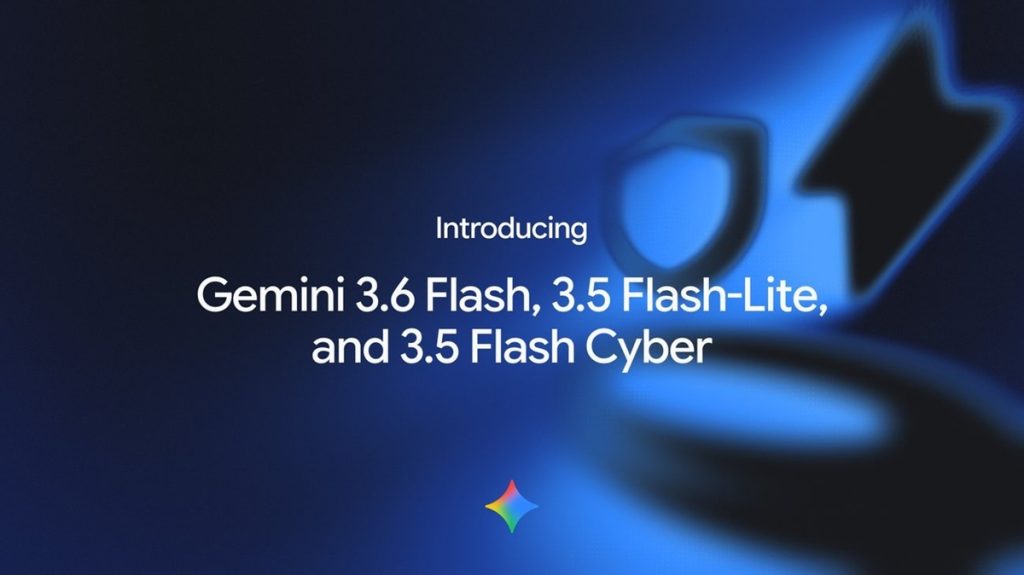
Google rolls out Gemini 3.1 Flash-Lite cheapest model in Gemini 3 series

Google has introduced Gemini 3.1 Flash-Lite, the company’s latest AI model that focuses on speed and cost efficiency. Google claims the model is the most cost-efficient in the Gemini 3 series, costing just $0.25 (Rs. 23 approx.) per 1M input tokens and $1.50 (Rs. 138 approx.) per 1M output tokens. It is built for high-volume developer workloads at scale, which involve high-frequency workflows and need low-latency responses.

Continue reading “Google rolls out Gemini 3.1 Flash-Lite cheapest model in Gemini 3 series”

Perplexity Computer with multi-model AI workflow system introduced

Perplexity has introduced Perplexity Computer, a system that combines multiple AI capabilities into a single platform. It is designed to research, design, code, deploy, and manage projects from start to finish. Continue reading “Perplexity Computer with multi-model AI workflow system introduced”

Zoom Virtual Agent 3.0 launched with new execution architecture and AI capabilities

Zoom Communications has introduced Zoom Virtual Agent 3.0 (ZVA), the latest version of its virtual customer service automation platform. The update brings a new execution architecture and expanded AI capabilities designed to support end-to-end issue resolution, structured handoffs to human agents, and cross-system workflow execution across voice and chat. Continue reading “Zoom Virtual Agent 3.0 launched with new execution architecture and AI capabilities”

OpenAI introduces Frontier Alliances to scale AI coworkers in enterprises

OpenAI has introduced Frontier Alliances, a new partner initiative designed to support enterprise deployment of AI coworkers. The program brings together global consulting and technology firms to help organizations implement OpenAI’s Frontier platform across business operations. Continue reading “OpenAI introduces Frontier Alliances to scale AI coworkers in enterprises”

Samsung expands Galaxy AI with multi-agent ecosystem, adds Perplexity support

Samsung Electronics has announced the continued expansion of Galaxy AI, outlining plans to support a broader, open and integrated multi-agent ecosystem. The company said Galaxy AI is designed to reduce effort across everyday tasks and enable more natural interactions, while offering users greater choice, flexibility and control. Continue reading “Samsung expands Galaxy AI with multi-agent ecosystem, adds Perplexity support”