
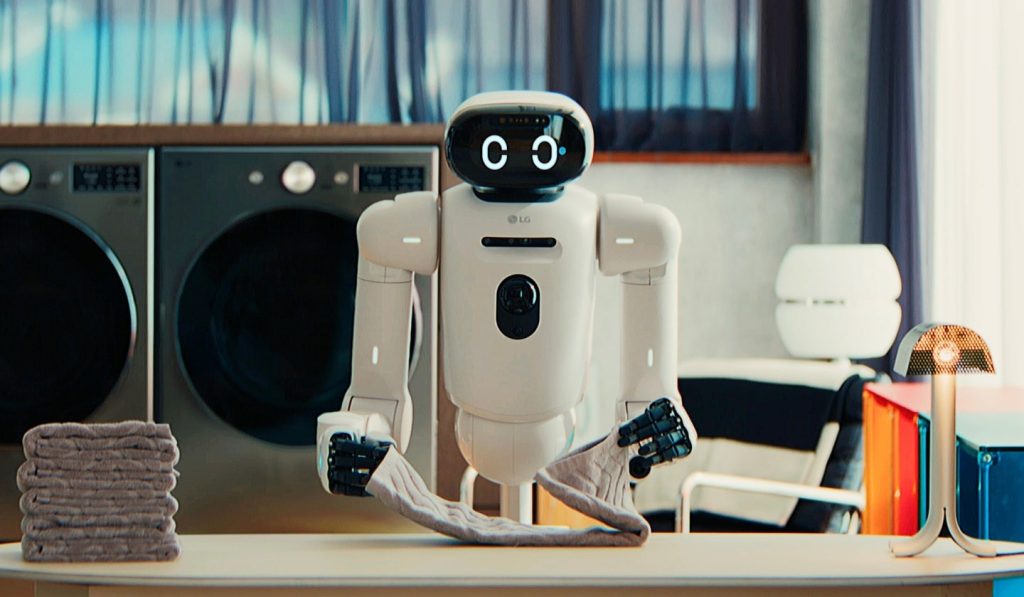
LG Electronics (LG) has announced LG CLOiD, an AI-enabled home robot that will be demonstrated publicly for the first time at CES 2026. The robot is designed to perform and coordinate household tasks across connected home appliances, with the aim of reducing the time and physical effort required for daily chores.
LG CLOiD represents LG’s latest development in AI-based home robotics and smart home platforms. The system builds on the company’s Self-Driving AI Home Hub (LG Q9) and the LG ThinQ ecosystem.
LG CLOiD
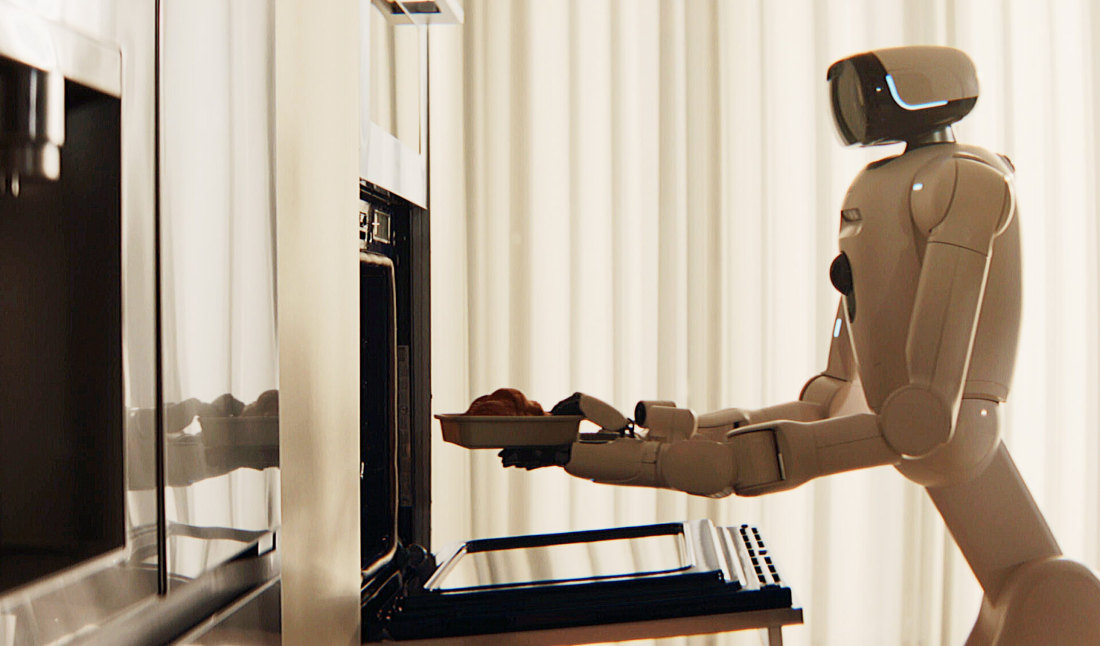
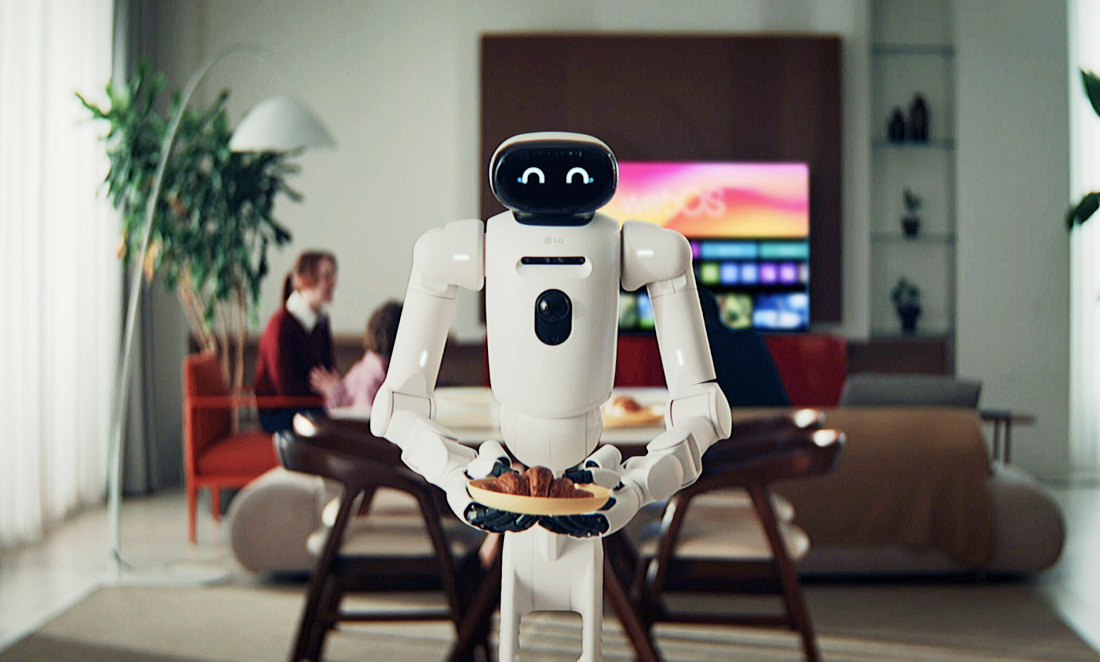
At CES 2026, LG will showcase CLOiD operating in multiple home environments.
In one demonstration scenario, the robot retrieves milk from a refrigerator and places a croissant into an oven to prepare breakfast. After household occupants leave, CLOiD initiates laundry cycles and folds and stacks clothes after drying.
These demonstrations highlight the robot’s ability to understand user lifestyles and control connected appliances with precision.
Hardware designed for home environments
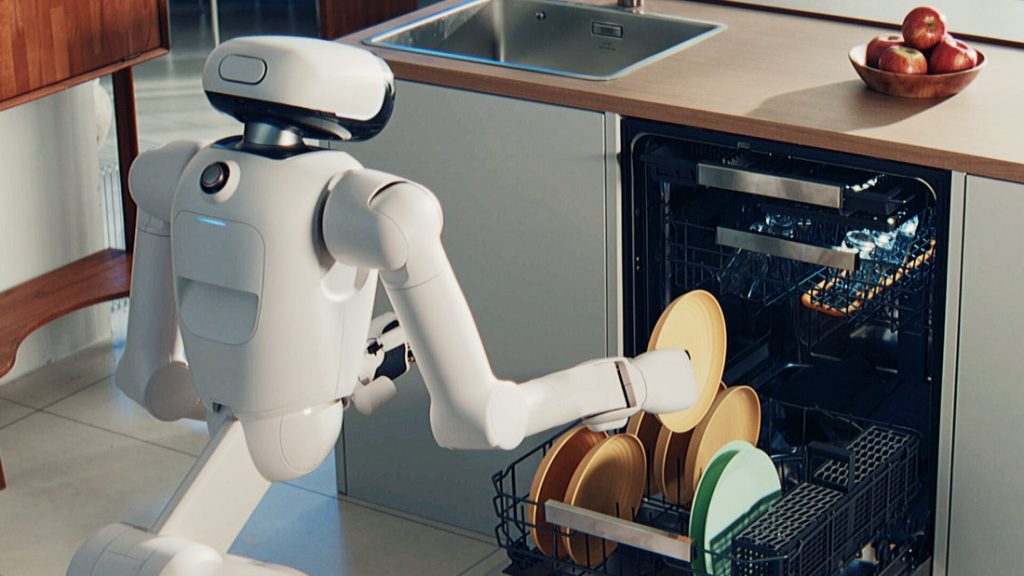
LG CLOiD features a structure optimised for use in living spaces. The robot consists of a head unit, a torso with two articulated arms, and a wheeled base with autonomous navigation. The torso can tilt to adjust height, allowing CLOiD to pick up objects from knee level and higher surfaces.
Each arm has seven degrees of freedom, matching the range of motion of a human arm. The shoulder, elbow, and wrist enable forward, backward, rotational, and lateral movement. Each hand includes five independently actuated fingers, allowing fine manipulation of household objects. This configuration enables CLOiD to operate across kitchens, laundry rooms, and living areas.
The wheeled base uses autonomous driving technology derived from LG’s experience with robot vacuums and the LG Q9 platform. The design provides a low centre of gravity to improve stability and reduce the risk of tipping if contacted by children or pets. The wheeled form factor was selected for safety, stability, and cost efficiency.
Head unit as a mobile AI home hub
The head of LG CLOiD functions as a mobile AI home hub. It integrates a chipset that serves as the robot’s processing core, along with a display, speaker, cameras, sensors, and voice-based generative AI.
These components allow CLOiD to communicate with users through spoken language and visual expressions, learn home environments and user routines, and control connected appliances based on accumulated learning.

Vision-based Physical AI: VLM and VLA
LG CLOiD operates using LG’s Physical AI technology, which combines two core models:
- Vision Language Model (VLM): Converts images and video into structured, language-based understanding
- Vision Language Action (VLA): Translates visual and verbal inputs into physical actions
These models have been trained on tens of thousands of hours of household task data. This training enables CLOiD to recognise appliances, interpret user intent, and perform context-appropriate actions such as opening doors or transferring objects.
Integration with ThinQ and ThinQ ON
LG CLOiD integrates with LG’s smart home ecosystem, including the ThinQ AI Home Platform and the ThinQ ON hub. Through this integration, CLOiD can coordinate services across connected LG appliances, expanding its operational scope beyond standalone tasks.
LG Actuator AXIUM: robotics components for Physical AI
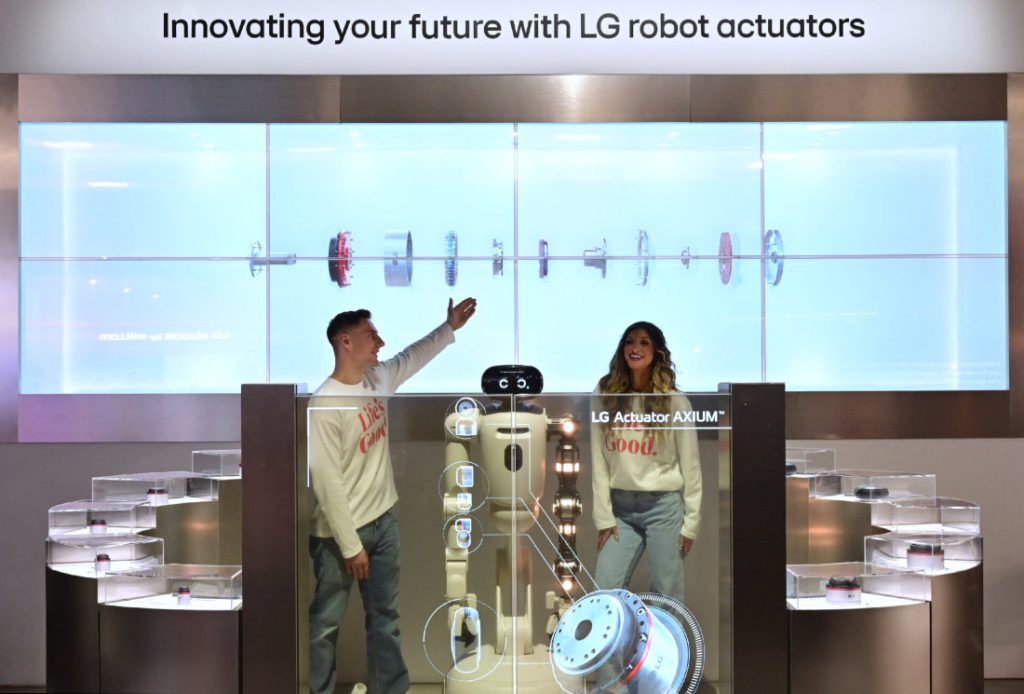
Alongside CLOiD, LG has introduced LG Actuator AXIUM, a new brand of robotic actuators for service robots and other robotic systems.
An actuator functions as a robot’s joint, integrating a motor that generates rotational force, a drive that controls electrical signals, and a reducer that manages speed and torque. Actuators are among the most critical and cost-intensive components in robotic systems and are considered a key upstream technology in the development of Physical AI.
LG is applying its component technology expertise from its home appliance business to actuator development, focusing on lightweight and compact designs, high efficiency, and high torque. LG’s modular design approach also enables customised, multi-variant actuator production, which is required for advanced robots that rely on multiple actuator types.
Roadmap toward AI-driven homes
LG plans to continue developing home robots with practical functions and forms suited for household tasks. In parallel, the company intends to expand robotics technology into home appliances.
This includes categories such as appliance robots, including robot vacuums, and robotised appliances, such as refrigerators with doors that open automatically when a person approaches.
LG’s stated objective is to build an AI-driven home environment where routine housework is handled by AI appliances and home robots.
Showcase at CES 2026
Visitors to CES 2026, taking place from January 6 to January 9 in Las Vegas, can experience LG CLOiD and the Zero Labor Home concept through real-life demonstrations at LG’s booth (#15004) at the Las Vegas Convention Center.
Speaking on the development, Steve Baek, President of the LG Home Appliance Solution Company, said:
The LG CLOiD home robot is designed to naturally interact with and understand the people it serves, delivering an optimized level of household assistance. We will continue our ongoing efforts to realise our Zero Labor Home vision, making housework a thing of the past so customers can spend more time on what truly matters.