
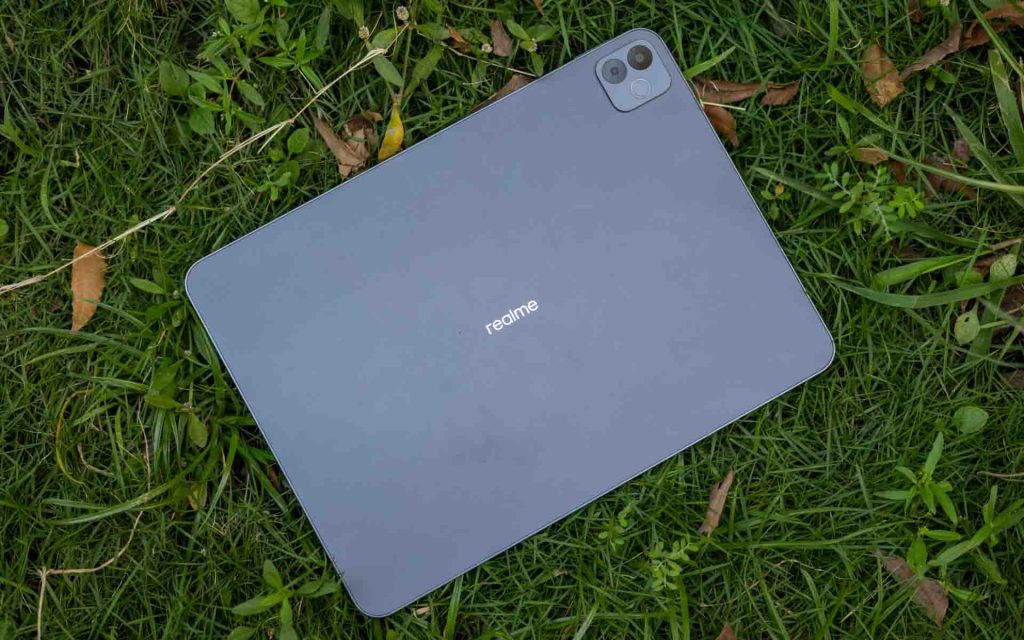
The mid-range Android tablet segment continues to see strong competition, with established options from OnePlus, Xiaomi, and Samsung. realme has now expanded its tablet lineup in India with the realme Pad 3, positioned as a value-focused offering under Rs. 30,000. The tablet features a large 2.8K display, quad stereo speakers, and a 12,200mAh battery, all housed in a slim chassis. In this review, we take a closer look at the realme Pad 3 and evaluate how well it stacks up against the competition.
Design and Build Quality
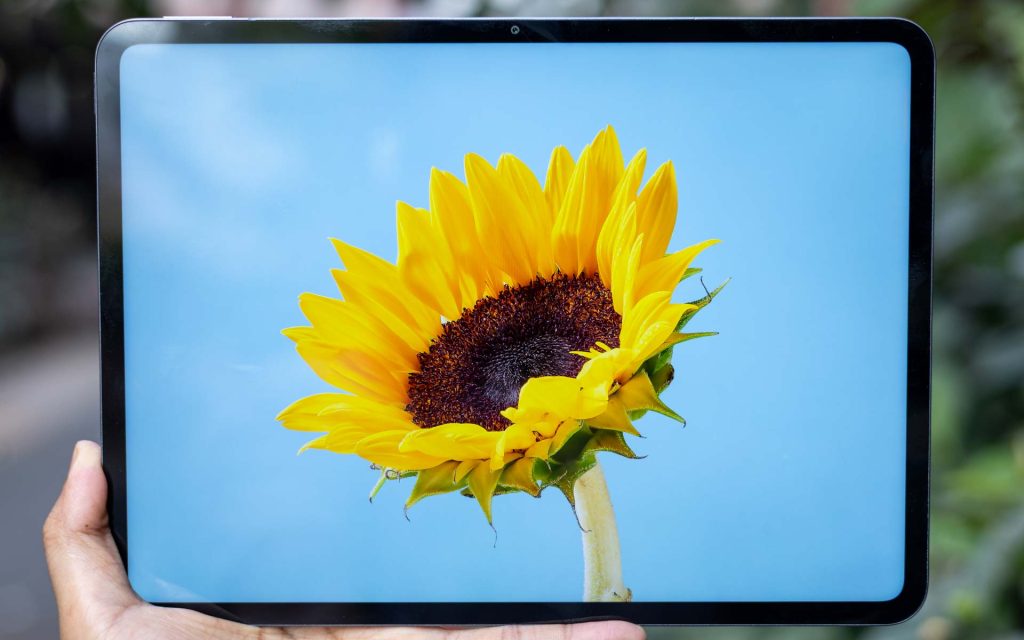
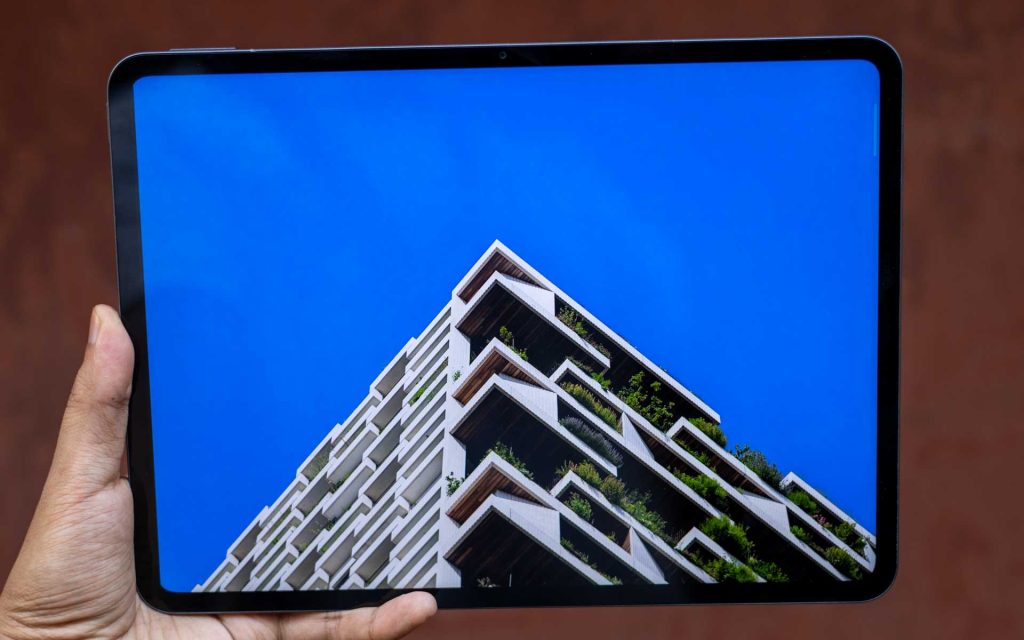
Tablet designs have largely matured, with most devices looking largely similar in overall design. The realme Pad 3 follows this familiar formula, featuring a large display with evenly sized bezels on all sides, rounded corners, flat edges, and a slim profile that makes it comfortable to hold. The tablet measures 6.6mm in thickness and weighs around 578g, with well-balanced weight distribution.
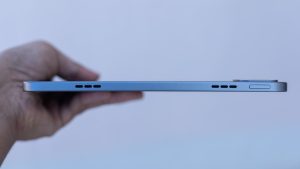


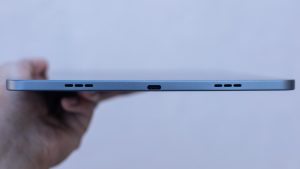
The button placement is conventional, with the volume rocker located on the side and the power button, which also houses the fingerprint sensor, positioned on the top edge. The tablet is equipped with quad stereo speakers, while the USB Type-C port is located on the bottom.
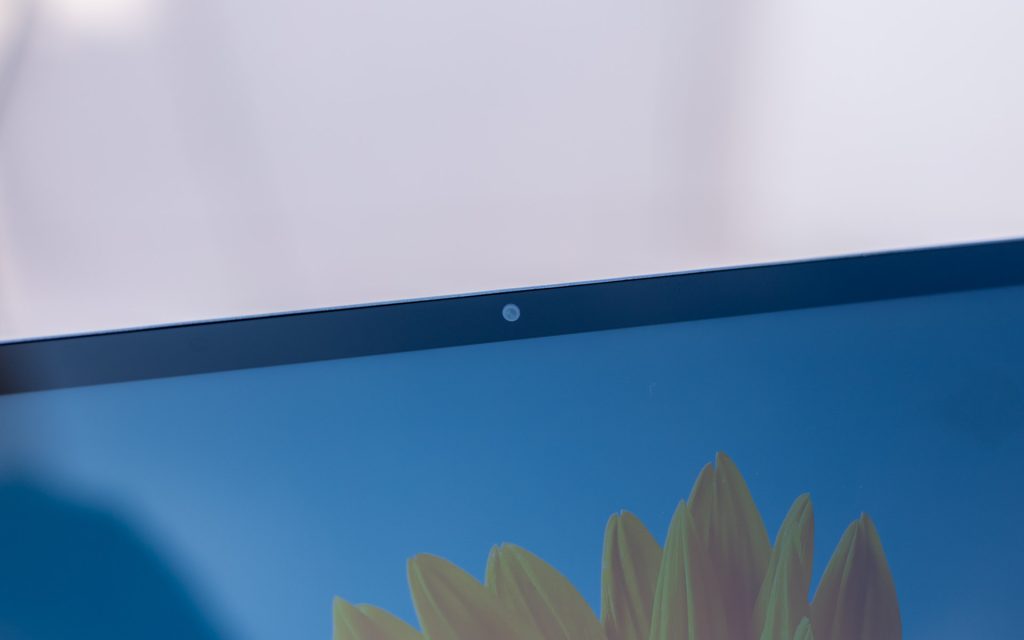
The front-facing camera is sensibly placed at the centre of the top bezel when the tablet is used in landscape orientation. On the rear, the camera module houses a single camera along with a ring flash.
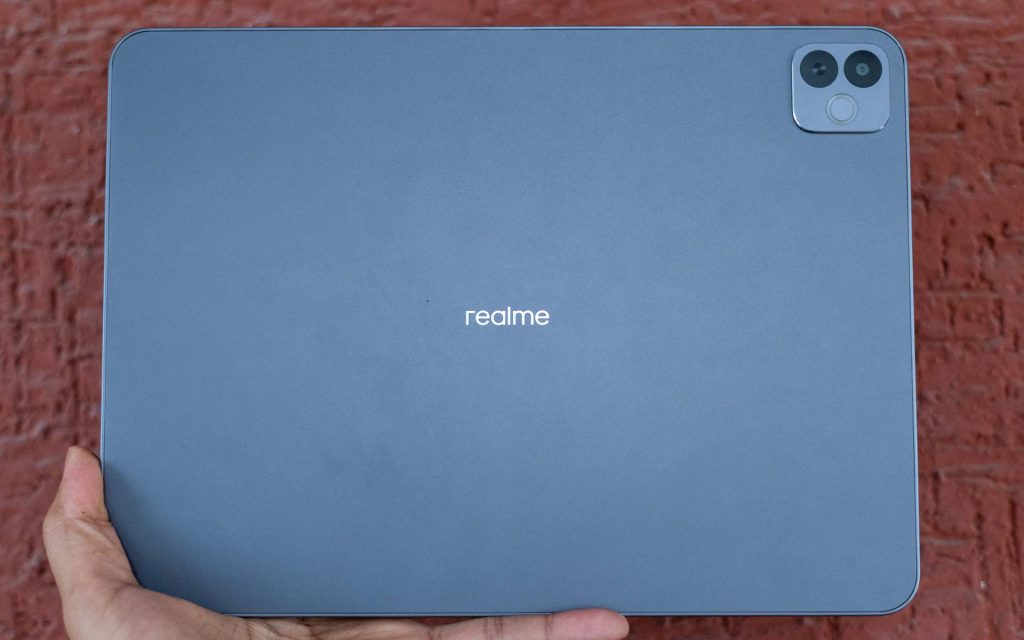
Despite support for optional accessories such as the realme Smart Pen and the realme Pad 3 Keyboard, the tablet does not feature magnetic connectors or pogo pins.
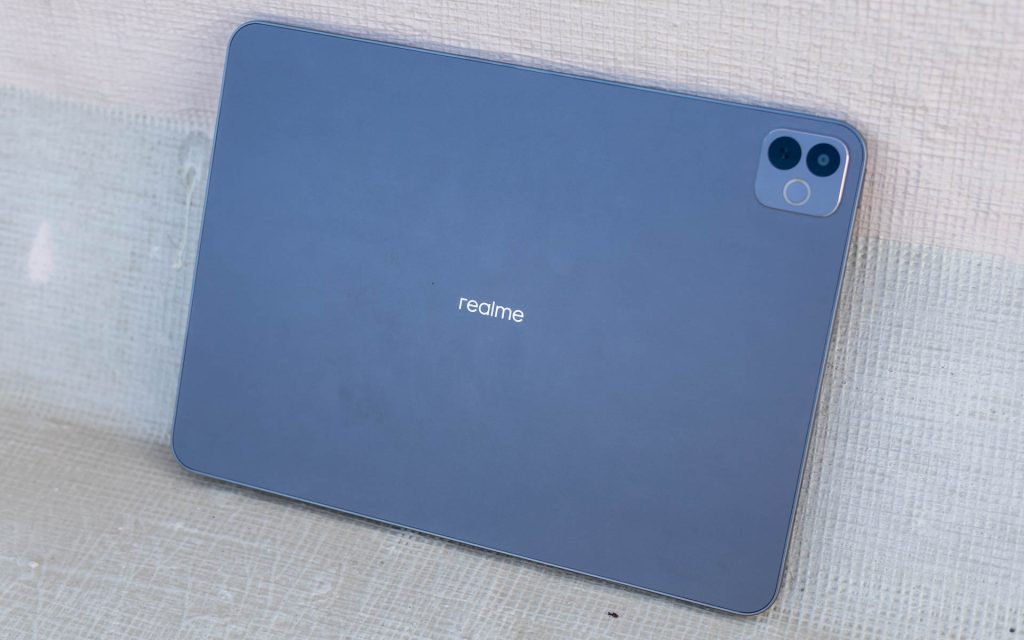
The realme Pad 3 is available in Space Grey and Champagne Gold colour options. The frosted glass finish on the rear panel gives it a premium look, complemented by a matte finish along the sides. Overall, the build quality is solid and in line with expectations for its price segment
Display and Audio
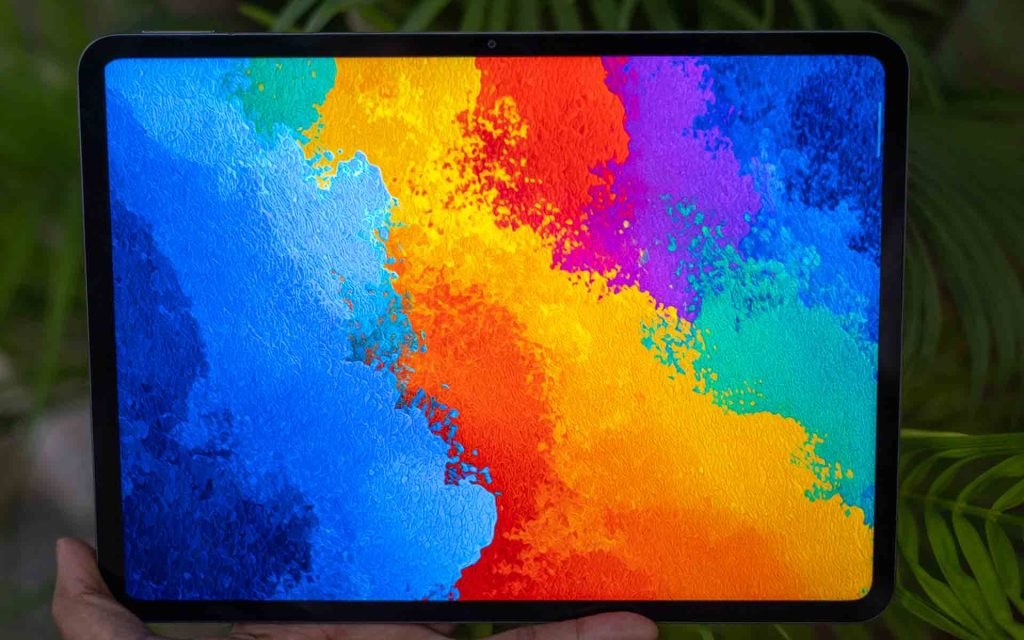
Compared to its predecessor, the realme Pad 3 comes with an upgraded 11.61-inch LCD display with a 2.8K resolution (2800 × 2000 pixels) and a maximum refresh rate of 120Hz. The panel can reach up to 550 nits in High Brightness Mode, though the glossy finish makes outdoor visibility challenging under direct sunlight.
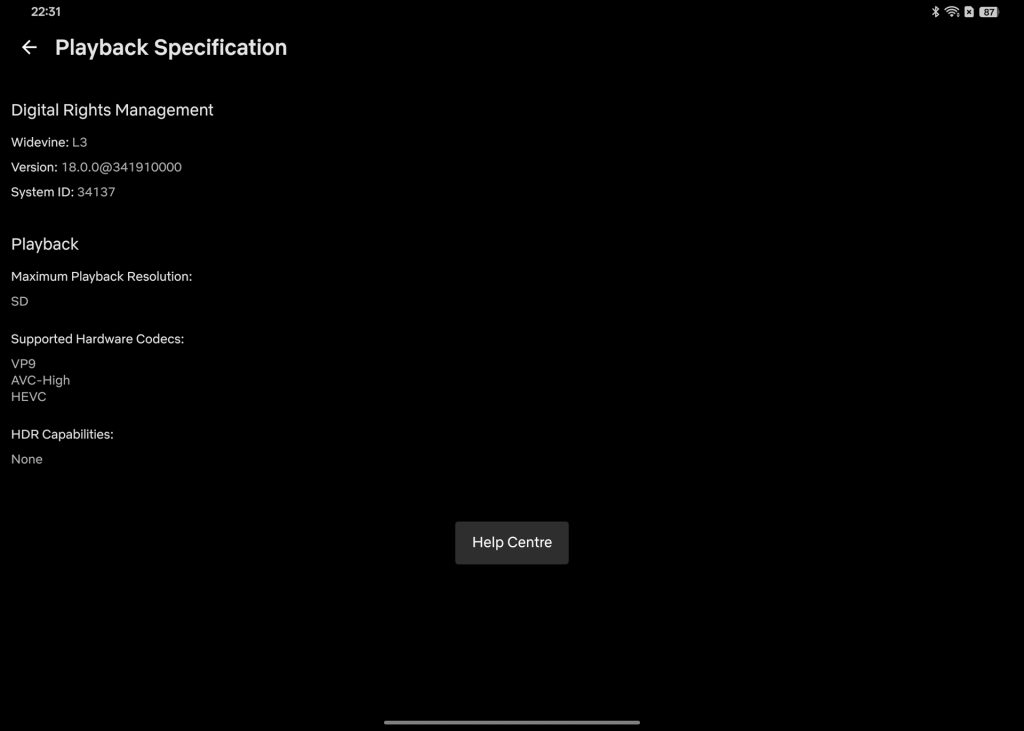
One notable limitation is the absence of Widevine L1 certification, which restricts Netflix playback to standard definition. This is a surprising omission given the tablet’s high-resolution display, which is otherwise well-suited for streaming content. There is also no HDR support, which is acceptable for this price segment, but the lack of HD streaming support remains a significant drawback.

The tablet uses a 7:5 aspect ratio, similar to what we’ve seen on devices like the OnePlus Pad Go 2. This aspect ratio works well for reading e-books and split-screen multitasking, although 16:9 video content results in noticeable black bars at the top and bottom.
The Pad 3 supports variable refresh rates of 60Hz, 90Hz, and 120Hz, contributing to smooth animations and fluid scrolling during general use and UI navigation.
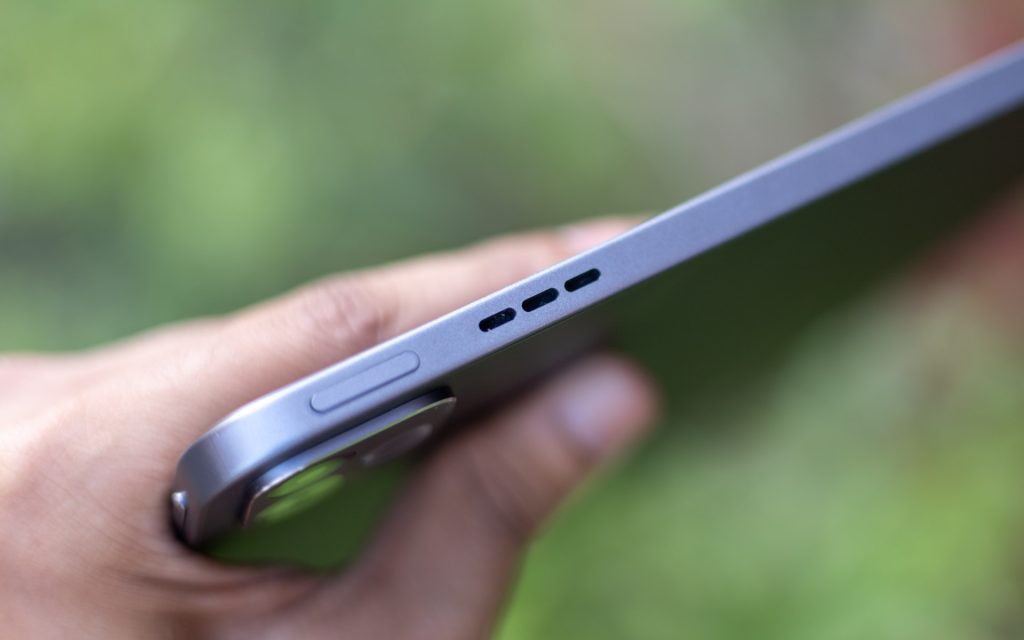
In terms of audio, the tablet is equipped with quad speakers arranged in a stereo configuration. The speakers are adequately loud, but distortion becomes noticeable at volumes above around 75%. They are sufficient for casual video consumption, though not ideal for extended movie watching or music playback. The tablet also misses out on Dolby Audio support, which was present on its predecessor.
Performance

Under the hood, the realme Pad 3 is powered by the MediaTek Dimensity 7300-Max chipset, paired with an Arm Mali-G615 GPU. The tablet is available with 8GB of RAM and either 128GB or 256GB of internal storage, with support for expandable memory. The SD Card tray also houses a slot for a 5G SIM in case you want to be connected to the internet on-the-go.
Compared to its predecessor, which was powered by the Helio G99 SoC, the Dimensity 7300-Max delivers a noticeable improvement in both CPU and GPU performance. In day-to-day use, the Pad 3 performs as expected for an Android tablet in this segment. System animations are smooth, multitasking works reliably, and the overall experience feels responsive.
Lighter games run smoothly at higher refresh rates, while more demanding titles such as Genshin Impact require reduced graphics settings to achieve playable frame rates. Overall, performance is well-balanced for general use, multimedia consumption, and casual gaming.
Software and Security
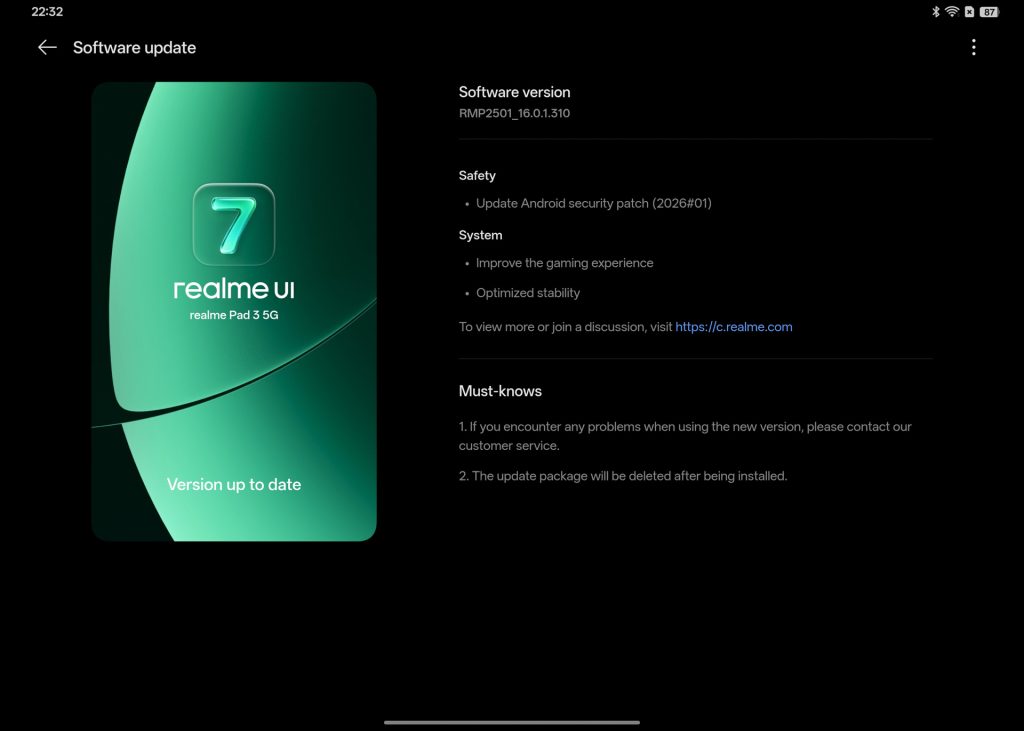
The realme Pad 3 runs realme UI 7 based on Android 16. At the time of review, the tablet was on the January Android security patch. realme has not specified the number of major Android updates or security updates the device will receive.
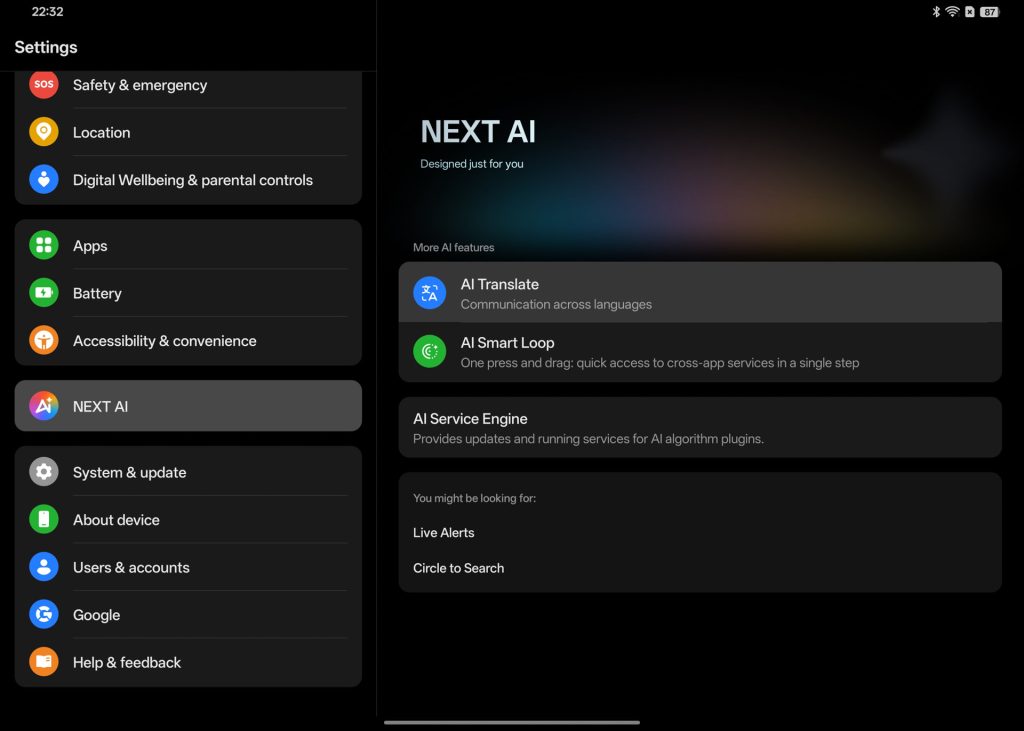
realme UI is built on OPPO’s ColorOS and shares similarities with OxygenOS from OnePlus. The interface is clean and relatively easy to navigate, with a good range of customization options. realme has also included tablet-oriented features such as multitasking gestures, along with several AI-based tools including AI Recording and AI Documents.
Like many Android tablets, however, the multitasking experience still falls short of what some competing ecosystems offer. While features such as split-screen and floating windows are present, the overall tablet software experience could benefit from further optimization for larger displays.
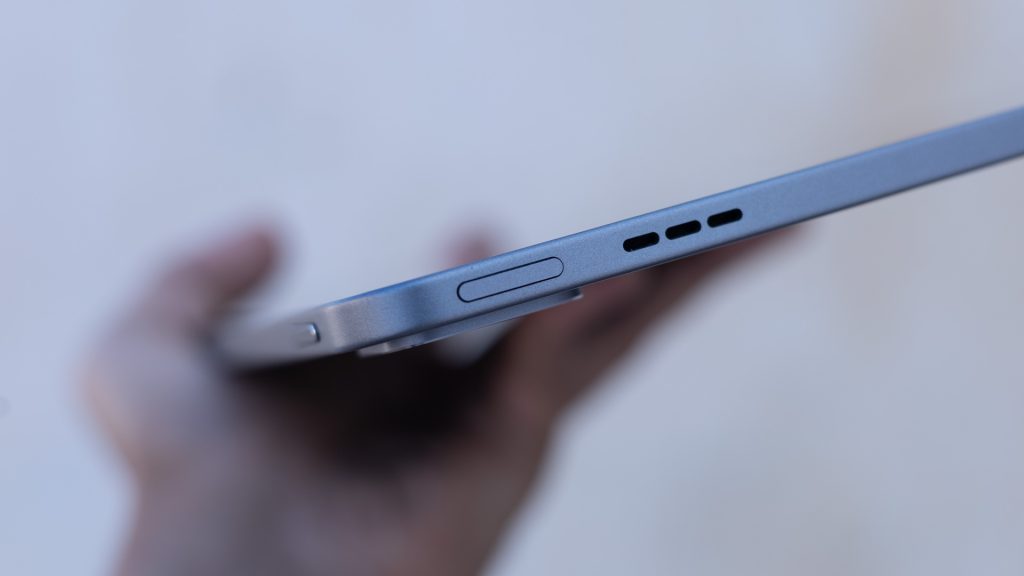
In terms of security, the Pad 3 includes a fingerprint sensor integrated into the power button, which is not always common in this price segment. Users can register up to five fingerprints and use them for unlocking the device, securing apps, and accessing the Private Safe.
Camera
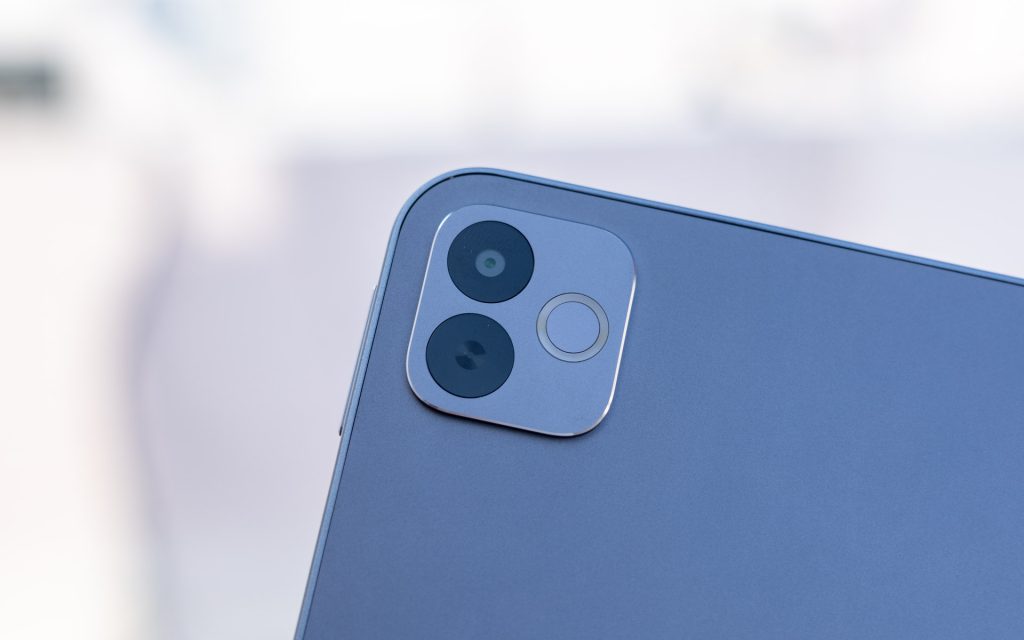
The realme Pad 3 features a single 8MP rear camera with an f/2.0 aperture and autofocus support, capable of recording videos at up to 1080p at 30fps. It also includes an LED flash, which is not commonly found on tablets in this price range. On the front, there is another 8MP f/2.0 sensor, though it uses a fixed-focus lens.
In terms of performance, the cameras deliver results that are typical for a tablet. Image quality is adequate for tasks such as scanning documents, video calls, or capturing quick photos when needed. The rear flash improves usability in low-light situations, particularly for document scanning. Overall, while the cameras are not designed to replace a smartphone, they are functional for their intended use cases.
Here are some samples:




5G and Wireless Connectivity
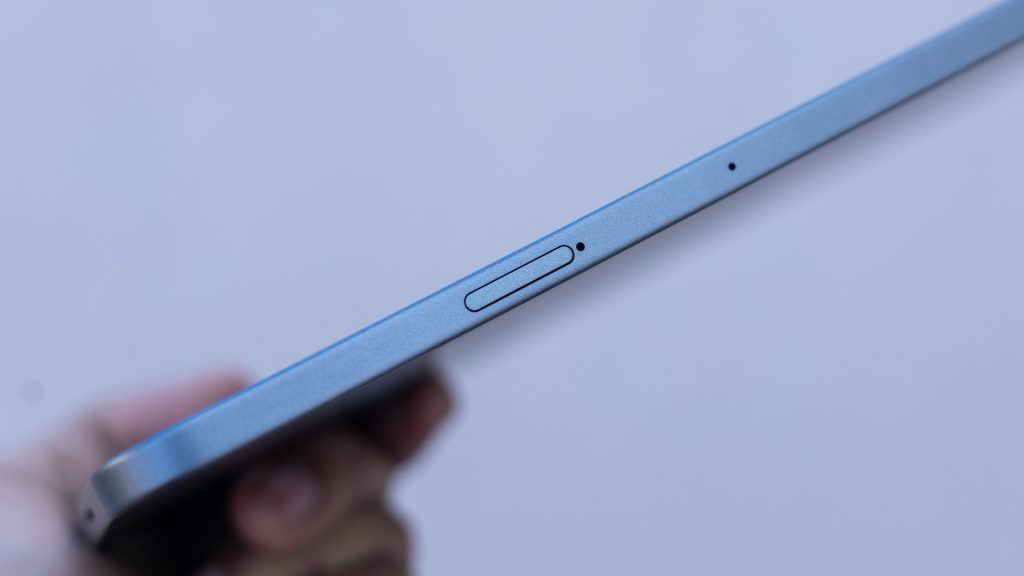
The realme Pad 3 also supports 5G connectivity, a feature that is becoming increasingly common in this segment. It supports a wide range of 5G bands relevant to the Indian market, and during testing, 5G connectivity worked reliably with an Airtel SIM for streaming and general data usage.
In addition, the tablet supports Wi-Fi 5 and Bluetooth 5.4. Both wireless connections remained stable during the review period, with no noticeable drops or connectivity issues.
Battery Life
The realme Pad 3 is equipped with a large 12,200mAh battery, which is one of its key highlights. The tablet supports fast charging at up to 45W and also offers wired reverse charging at up to 6.5W, allowing it to power smaller devices when needed.
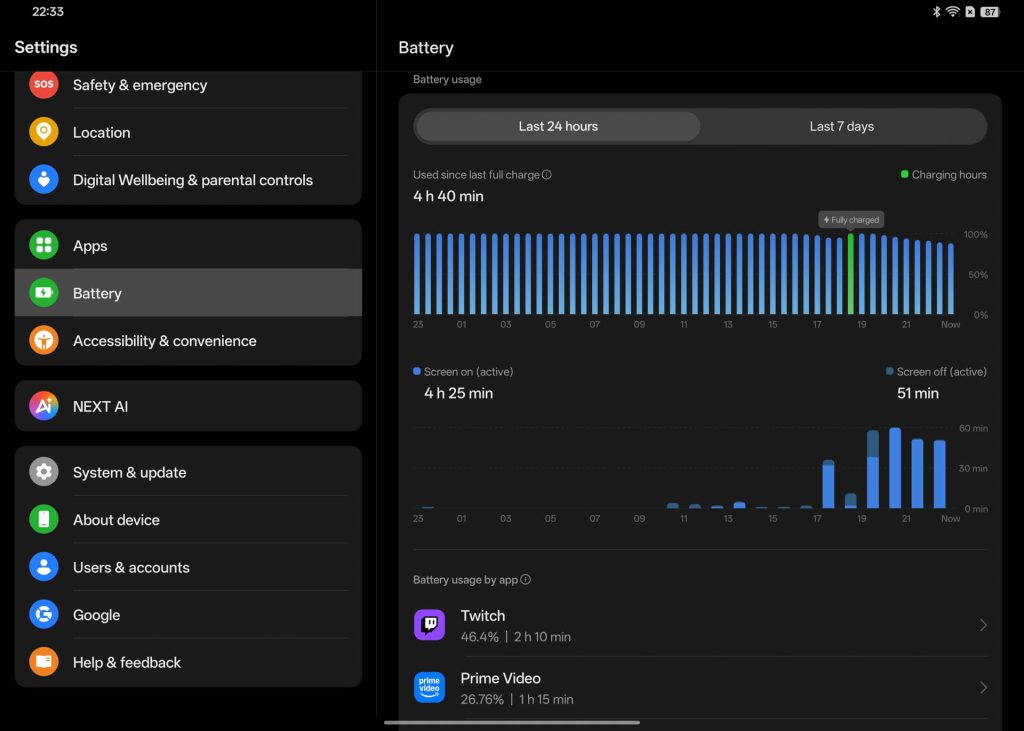
Battery life is a strong point of the Pad 3. During testing, continuous video streaming on platforms such as YouTube, Twitch, and Prime Video delivered close to 20 hours of playback. Usage involving lighter tasks such as reading e-books or web browsing resulted in even longer endurance.
Compared to devices like the OnePlus Pad Go 2, which supports up to 33W charging, the Pad 3’s 45W charging support allows for relatively quicker top-ups. In testing, a full charge took approximately 100 minutes.
Conclusion
The realme Pad 3 is a well-rounded mid-range Android tablet that focuses on delivering a strong multimedia experience and excellent battery life. Its 2.8K display is sharp and smooth, and the massive battery offers impressive endurance. The MediaTek Dimensity 7300-Max chipset provides reliable performance for everyday tasks, multitasking, and casual gaming, while the inclusion of a fingerprint sensor adds extra convenience.
That said, the lack of Widevine L1 certification limits Netflix playback to standard definition, which is a notable drawback for a tablet with a high-resolution display. The absence of HDR and Dolby Audio further reduces its appeal for users focused primarily on streaming.
Overall, the realme Pad 3 is a solid option under Rs. 30,000 for users who value battery life, performance, and 5G connectivity, but its streaming limitations are important to consider.
Priced starting at Rs. 26,999 for the 8GB + 128GB Wi-Fi model, it goes up to Rs. 31,999 for the 8GB + 256GB 5G model. The tablet will be available from Flipkart, realme.com and offline stores