
Meta develops AI version of Mark Zuckerberg for employees: Report

Meta Platforms is working on a photorealistic, AI-powered version of CEO Mark Zuckerberg designed to interact with employees, according to a report by the Financial Times. The initiative is part of Meta’s “personal superintelligence” strategy as it pushes to become an AI-first company amid competition from OpenAI and Google. Continue reading “Meta develops AI version of Mark Zuckerberg for employees: Report”
Google Gemini gets real-time simulations with interactive controls

Google has introduced a new capability in the Google Gemini app that enables users to generate interactive simulations and models directly within chat. The feature allows users to turn complex questions into custom, interactive visualizations for better understanding. Continue reading “Google Gemini gets real-time simulations with interactive controls”

OpenAI rolls out new ChatGPT Pro plan with Codex, Deep Research support

OpenAI introduced ChatGPT Pro plans for users who depend on AI to handle complex and high-stakes tasks. The plans are designed to provide higher usage limits along with access to advanced tools for research, coding, and content workflows. Continue reading “OpenAI rolls out new ChatGPT Pro plan with Codex, Deep Research support”

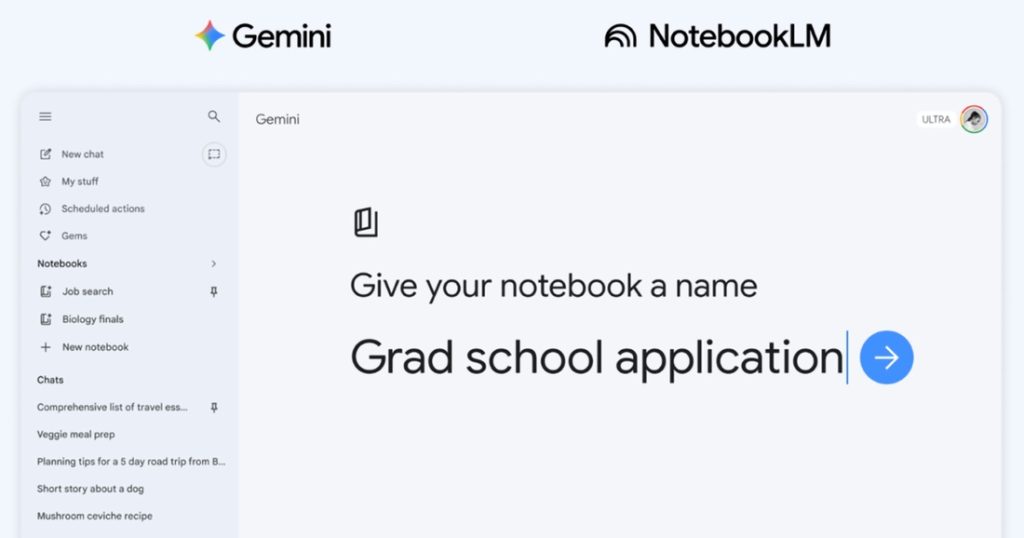
Google Gemini gets Notebooks with support for PDFs, documents, and custom instructions

Google has introduced Notebooks in the Google Gemini app to help users structure chats, files, and ongoing work in a single space. The feature extends the earlier connection with NotebookLM and is designed to support organized handling of study material, research inputs, and multi-step projects by grouping related content together and maintaining context across tools. Continue reading “Google Gemini gets Notebooks with support for PDFs, documents, and custom instructions”

Google expands Gemini in Colab with Learn Mode and Custom Instructions

Google Colab is expanding its integration with Google Gemini by introducing Custom Instructions and Learn Mode. These new features give users more control over how the Gemini assistant behaves within notebooks and how it supports both coding and learning. Continue reading “Google expands Gemini in Colab with Learn Mode and Custom Instructions”

Meta introduces Muse Spark AI model with multimodal reasoning and multi-agent capabilities

Meta has introduced Muse Spark, a new AI model developed by Meta Superintelligence Labs. The model is part of a broader Muse series designed to advance multimodal understanding, reasoning, and agent-based workflows, as part of Meta’s effort toward personal superintelligence. Continue reading “Meta introduces Muse Spark AI model with multimodal reasoning and multi-agent capabilities”

Anthropic unveils Project Glasswing to strengthen AI-driven cybersecurity

Anthropic has introduced Project Glasswing, a cybersecurity initiative aimed at using advanced AI models to identify and address vulnerabilities in critical software systems. Continue reading “Anthropic unveils Project Glasswing to strengthen AI-driven cybersecurity”

Google Gemini update adds mental health support and crisis response features

Google has announced an update to its AI assistant Gemini focused on mental health support, crisis response, and user safety. Mental health affects over one billion people globally, and Google states that its work in this area is based on research and clinical best practices. While AI tools can introduce new challenges, responsible AI is positioned to support user well-being as adoption increases. Continue reading “Google Gemini update adds mental health support and crisis response features”

OpenAI releases AI industrial policy for superintelligence transition

OpenAI has released a policy document titled “Industrial Policy for the Intelligence Age: Ideas to Keep People First”, presenting early proposals to guide the transition toward advanced AI systems, including “superintelligence.” Continue reading “OpenAI releases AI industrial policy for superintelligence transition”

Microsoft rolls out MAI-Transcribe-1, MAI-Voice-1 and MAI-Image-2 in Foundry public preview

Microsoft has announced three new AI models—MAI-Transcribe-1, MAI-Voice-1, and MAI-Image-2—in public preview through its AI development platform Microsoft Foundry. Continue reading “Microsoft rolls out MAI-Transcribe-1, MAI-Voice-1 and MAI-Image-2 in Foundry public preview”

Google unveils Gemma 4 open AI models with advanced reasoning and agentic workflows

Google has introduced Gemma 4, an open model family designed for advanced reasoning and agentic workflows. The models are built to deliver high intelligence-per-parameter while remaining efficient across a wide range of hardware environments. Gemma 4 is positioned as part of Google’s broader AI ecosystem and complements its proprietary Gemini models. Continue reading “Google unveils Gemma 4 open AI models with advanced reasoning and agentic workflows”

Google introduces Veo 3.1 Lite with lower pricing and scalable video output

Google has introduced Veo 3.1 Lite, its most cost-effective video generation model to date. The model expands the Veo 3.1 lineup by offering a lower-cost option while maintaining the same generation speed as existing models. Continue reading “Google introduces Veo 3.1 Lite with lower pricing and scalable video output”

OpenAI secures $122 billion funding to scale AI infrastructure and products

OpenAI announced the closure of a funding round with $122 billion in committed capital, reaching a post-money valuation of $852 billion. The company stated that the capital will support scaling of AI systems, expansion of infrastructure, continued model development, and growth across consumer and enterprise products. Continue reading “OpenAI secures $122 billion funding to scale AI infrastructure and products”

Google rolls out Gemini 3.1 Flash Live for real-time voice AI conversations, expands Search Live globally

Google has introduced Gemini 3.1 Flash Live, a real-time audio and voice AI model designed to enable faster, more natural conversational experiences. The model enhances latency, reliability, and dialogue quality for developers, enterprises, and everyday users, supporting the next generation of voice-first and multimodal AI applications. Continue reading “Google rolls out Gemini 3.1 Flash Live for real-time voice AI conversations, expands Search Live globally”

Google expands AI music tools with Lyria 3 and Lyria 3 Pro

Google has expanded its AI music offerings with Lyria 3 and Lyria 3 Pro, now accessible through the Gemini API, Google AI Studio, and multiple Google products. These models provide high-fidelity, structurally coherent music generation for developers, creators, and organizations, supporting both professional-grade compositions and rapid prototyping. Continue reading “Google expands AI music tools with Lyria 3 and Lyria 3 Pro”