
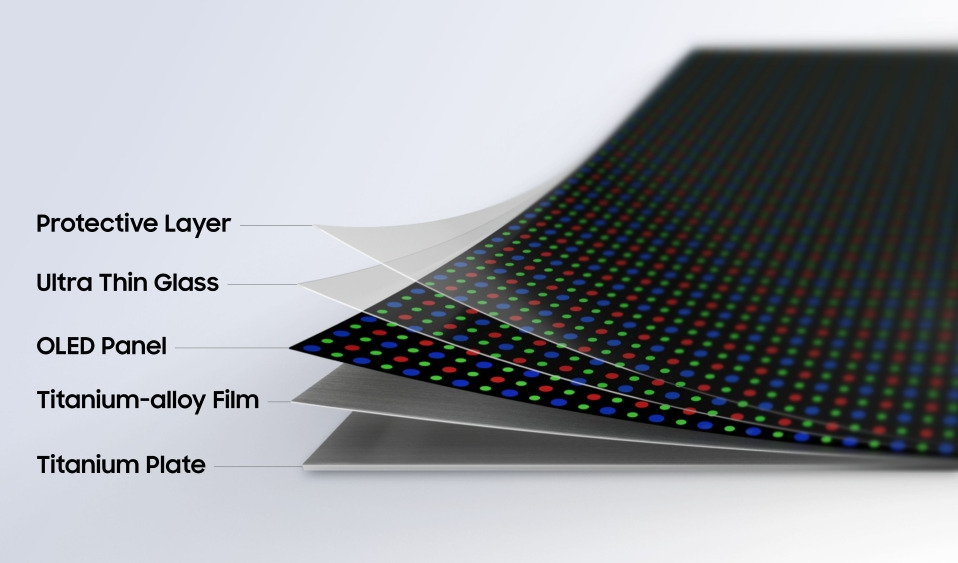
Samsung has officially announced the development of Flex Titanium, a new display structure designed for its upcoming lineup of Galaxy foldable devices. Drawing on seven generations of engineering in the foldable category, the technology incorporates material and structural modifications aimed at improving display durability and reducing the visibility of the screen crease.
The introduction of Flex Titanium follows a history of mobile display developments at Samsung, including the commercialization of AMOLED displays in 2007 and the subsequent transition into flexible form factors. According to the company, the new display architecture was developed in response to consumer demands for larger, more immersive screens that maintain portability and structural integrity over extended use.
Structural Composition and Engineering
To address the challenges of balancing thickness, flexibility, and impact resistance, Samsung engineered a dual-component system utilizing titanium, a material typically utilized in aerospace and high-stress mechanical applications due to its strength-to-weight ratio.
The Flex Titanium architecture consists of two primary elements:
- Titanium-Alloy Film: Positioned directly beneath the OLED panel, this component serves as the internal support layer for the display. The alloy film provides 20 times the mechanical stiffness of traditional polymer films. It is manufactured using a precision rolling process that reduces its thickness to approximately one-third that of a human hair, allowing the overall display panel to remain slim.
- Titanium Plate: Located underneath the display module, this flexible structural plate provides foundational support when the device is fully unfolded. The plate utilizes advanced hole-processing technology to eliminate air gaps between the display module and the structural adhesive, creating a tighter bond. This configuration is designed to maintain the flexibility required for repeated folding cycles while enhancing underlying stability.
Efficiency and Resolution Upgrades
In addition to the mechanical alterations, the new display integration features a revised high-resolution architecture alongside next-generation organic materials. These updates are engineered to maintain high display resolution while optimizing power consumption, resulting in increased overall energy efficiency for the panel.
Samsung states that the combination of the titanium-alloy film, the structural titanium plate, and the updated organic materials allows for a flatter, more resilient screen surface without increasing the physical profile of the device.
Availability
Flex Titanium technology is scheduled to make its commercial debut on Samsung’s next generation of Galaxy foldable devices. The company has indicated that full product specifications, features, and release timelines will be disclosed at the next week’s Galaxy Unpacked event.