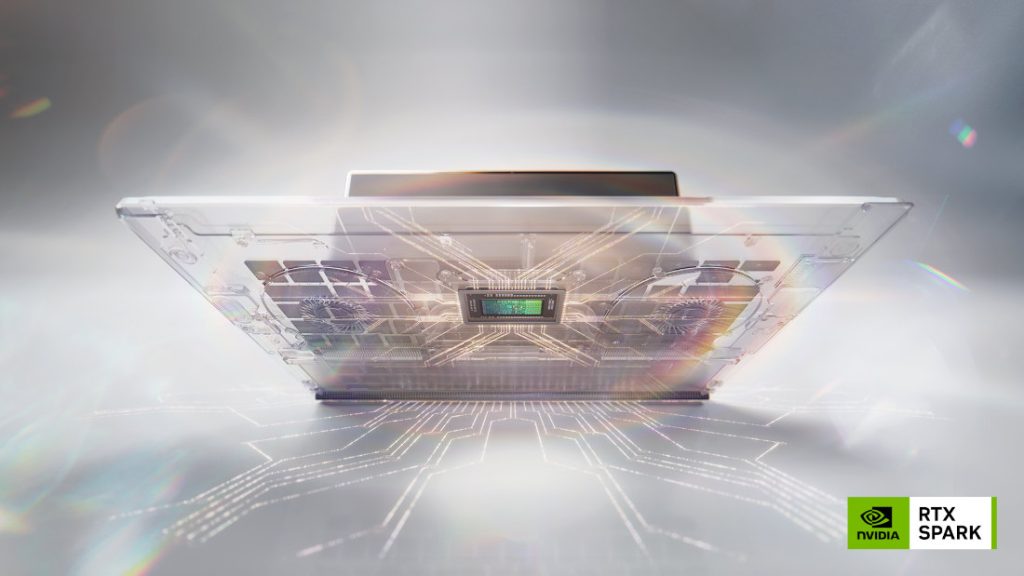
At the NVIDIA GTC conference, Microsoft and NVIDIA announced a multi-year, full-stack collaboration to deliver a new class of thin-and-light Windows PCs. Accelerated by the newly unveiled NVIDIA RTX Spark™ superchip, these systems are engineered specifically for developers, creators, and power users, with a core focus on executing localized AI agent workflows.
This platform integrates Windows operating system optimizations with NVIDIA’s silicon and graphics architecture to shift personal computing from a tool-based model to an interactive, agent-driven teammate experience.
Technical Architecture and Deep OS Optimization
The RTX Spark superchip features up to 6,144 Blackwell architecture CUDA cores, fifth-generation Tensor Cores with FP4 precision, and a 20-core CPU built on the Arm architecture via a design partnership with MediaTek. Equipped with up to 128GB of unified memory and delivering 1 petaflop of AI performance, the platform relies on tailored Windows 11 architectural updates to maximize its heterogeneous hardware.
Performance and Power Management
- Workload Profile Scheduling (WPS): Microsoft implemented and optimized WPS specifically for RTX Spark, allowing the Windows scheduler to dynamically distribute threads across all 20 CPU cores to maintain efficiency during tasks ranging from baseline productivity to local code debugging.
- Microsoft Power and Thermal Framework (MPTF): Enabled natively on RTX Spark, MPTF standardizes thermal profiles across OEM designs, ensuring the systems maintain high sustained performance while preserving all-day battery life.
- Graphics and AI APIs: The platform utilizes DirectX 12 advancements for neural rendering and optimized ray tracing, while Windows ML has been tuned to expose NVIDIA TensorRT capabilities natively to AI developers.
Unified Memory Optimizations
To fully leverage the 128GB unified memory pool, Windows has updated its memory allocation boundaries. The OS now implements a higher, intelligent limit on the total system memory accessible by the GPU. This adjustment allows users to load larger local large language models (LLMs)—up to 120-billion parameters with a 1-million-token context window—and render expansive 90GB 3D scenes.
Additionally, enhanced page-size management within shared memory regions allows the OS to dynamically scale page sizes to accelerate heavy workloads while maintaining data transfer flexibility between the CPU and GPU.
Prism Emulation Enhancements
For legacy x86 compatibility, Microsoft’s Prism emulator handles 32-bit and 64-bit applications on the Arm-based architecture. Building on previous updates that added AVX/AVX2 instruction set extensions, Prism has been structurally tuned for the specific microarchitecture of the RTX Spark superchip to close the performance gap for non-native development, creation, and gaming applications.
Secure Architecture for On-Device AI Agents
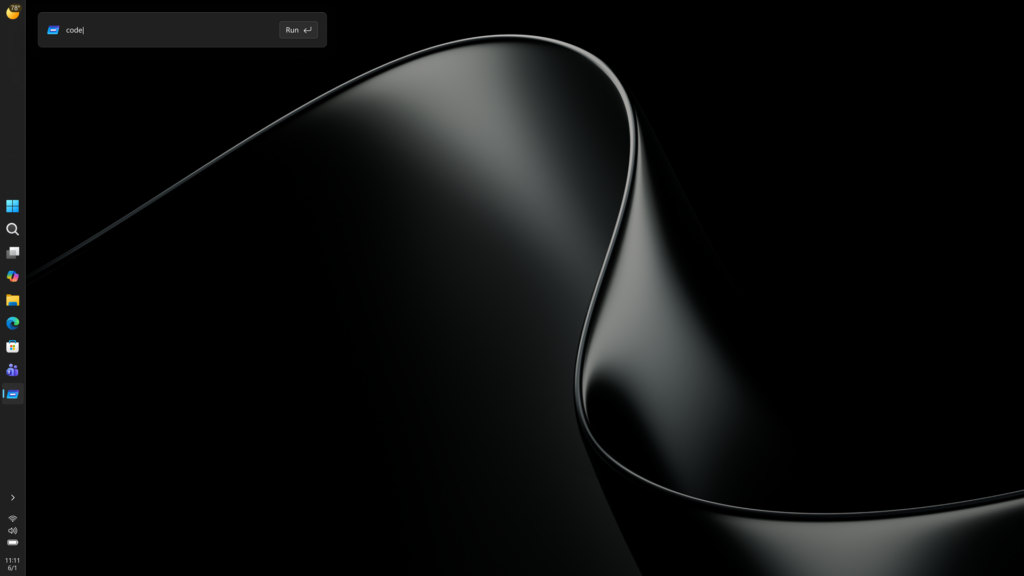
Addressing the security and privacy limitations of cloud-dependent AI, Microsoft and NVIDIA used Microsoft Build to showcase a local deployment platform for autonomous agents.
The security architecture operates via native Windows primitives providing OS-enforced identity, containment, policy, and manageability. Layered atop this foundation is the NVIDIA OpenShell™ runtime, which grants users control over what local data an agent can access, intelligently routes queries based on compliance boundaries, and obfuscates personal details before communicating with external cloud models.
Open-source agent applications like Hermes Agent and OpenClaw are integrating these security primitives directly into their Windows software, enabling them to execute multi-app workflows, write code, and conduct semantic file searches entirely on-device. Future phases of the collaboration will introduce these agent experiences directly into the Windows taskbar UI.
Software and Gaming Ecosystem Growth
The RTX Spark platform launches with an established ecosystem of native applications optimized for Arm-based Windows devices:
- Creative Applications: Adobe has rearchitected its core suite—including Photoshop, Premiere, and the Substance 3D tools (Painter and Stager)—to run natively. The software utilizes a new video pipeline that couples unified memory with TensorRT to accelerate tools like Firefly-powered Generative Fill and Generative Extend by up to 2x. Other native creative tools include Blender 5.3 (featuring DLSS 4.5 Ray Reconstruction), DaVinci Resolve, Maxon Cinema4D, Topaz Photo, CapCut, and Affinity by Canva.
- Technical Development: Engineering tools like MATLAB now officially support Windows on Arm. For AI developers, the platform introduces support for CUDA-accelerated PyTorch, llama.cpp, Hugging Face frameworks, Unsloth, Kohya, and node-based UIs like ComfyUI (featuring RTX Video with 4x Frame Generation).
- Gaming Catalog: Native anti-cheat integrations from Epic’s Easy Anti-Cheat and BattlEye, alongside Xbox PC app integration, allow x86 games to run smoothly under the enhanced Prism emulator. Game developers are bringing major titles natively to the platform, including Riot Games’ League of Legends and VALORANT, KRAFTON’s PUBG: Battlegrounds, as well as Alan Wake 2, Naraka: Bladepoint, Pragmata, and War Thunder.
Hardware Form Factors and OEM Configurations
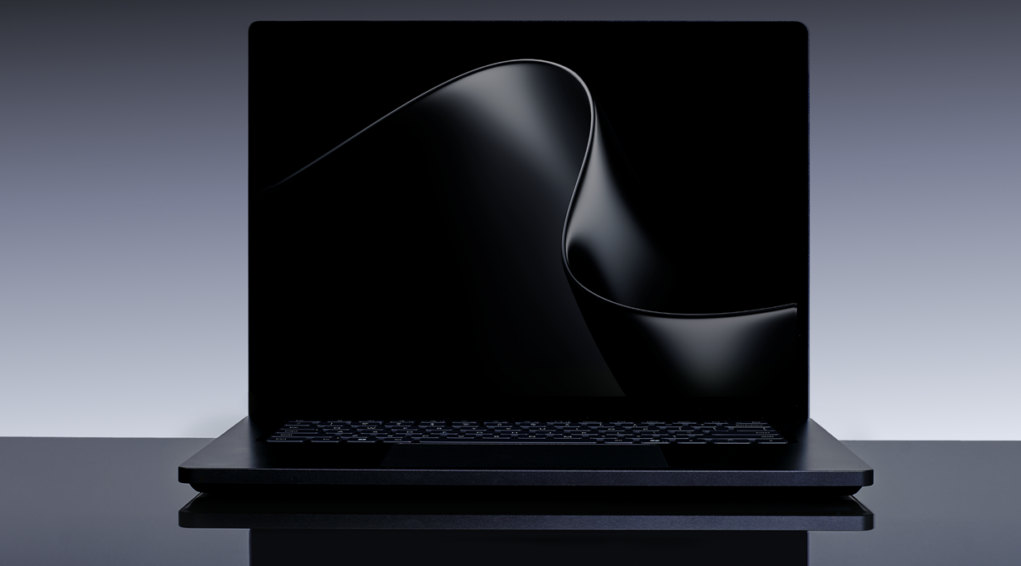
Joining the Copilot+ PC category, RTX Spark systems combine an integrated NPU for baseline AI processing with the Blackwell GPU for advanced workloads. Microsoft Surface Laptop Ultra will be one of the first laptops with the chip.
Initial laptop and compact desktop designs will debut this fall from major hardware manufacturers:
| Manufacturer | Model | Key Specifications |
| ASUS | ProArt P16 / ProArt P14 | 16-inch and 14-inch form factors; ASUS Lumina Pro OLED displays; Nano Black and Neo White chassis options. |
| Dell Technologies | XPS 16 Creator Edition | Dedicated creator configuration; Tandem OLED display with True Black HDR 600; integrated SD card reader and HDMI port. |
| HP Inc. | OmniBook Ultra 16 / OmniBook X 14 | Optimized thermal profiles designed for a split demographic of creators, gamers, and AI developers. |
| Lenovo | Yoga Pro 9n | Portability-focused engineering combining Yoga-specific display features with extended battery life. |
| MSI | Prestige N16 Flip AI+ | 2-in-1 convertible design; 16-inch UHD+ Tandem OLED display; high-capacity 99.9Wh battery. |
Jensen Huang, founder and CEO of NVIDIA, said:
The PC is being reinvented. For forty years, you launched apps. Click. Type. With RTX Spark and Microsoft Windows, you ask — and the PC does the work. RTX Spark brings everything NVIDIA has built — CUDA, RTX, our AI platform — into a single superchip. Local agents. Frontier models. Creative workflows. RTX games. All on a laptop. This is the new PC. The personal AI computer.