
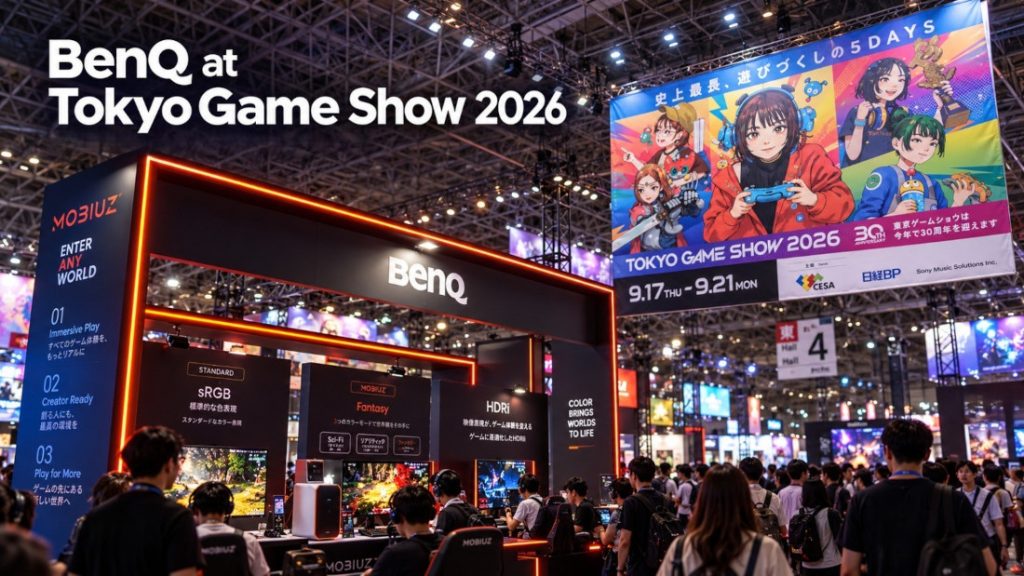
At Tokyo Game Show 2026 (TGS2026), held from September 17 to 20 at Makuhari Messe, BenQ presented its MOBIUZ gaming monitor series under the theme “MOBIUZ Game Art Museum”.
Designed to reflect an exhibition space, the booth highlighted the brand’s approach to display calibration, positioning game visual design as creative work to be accurately rendered rather than merely amplified.
Firmware Innovations: Game Art Color HDR
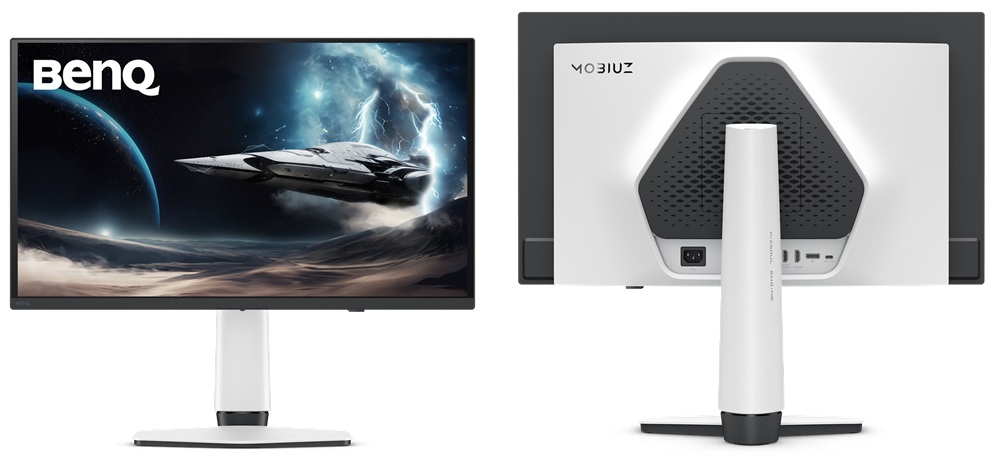
Central to the showcase was the debut of Game Art Color HDR, an updated firmware capability built upon BenQ’s proprietary Smart Game Art technology. The feature introduces three targeted HDR presets—Immersive, Balanced, and Vivid—for each game art color mode. These options allow players to adjust color saturation, contrast curves, and tonal palettes according to the artistic direction of different game genres.
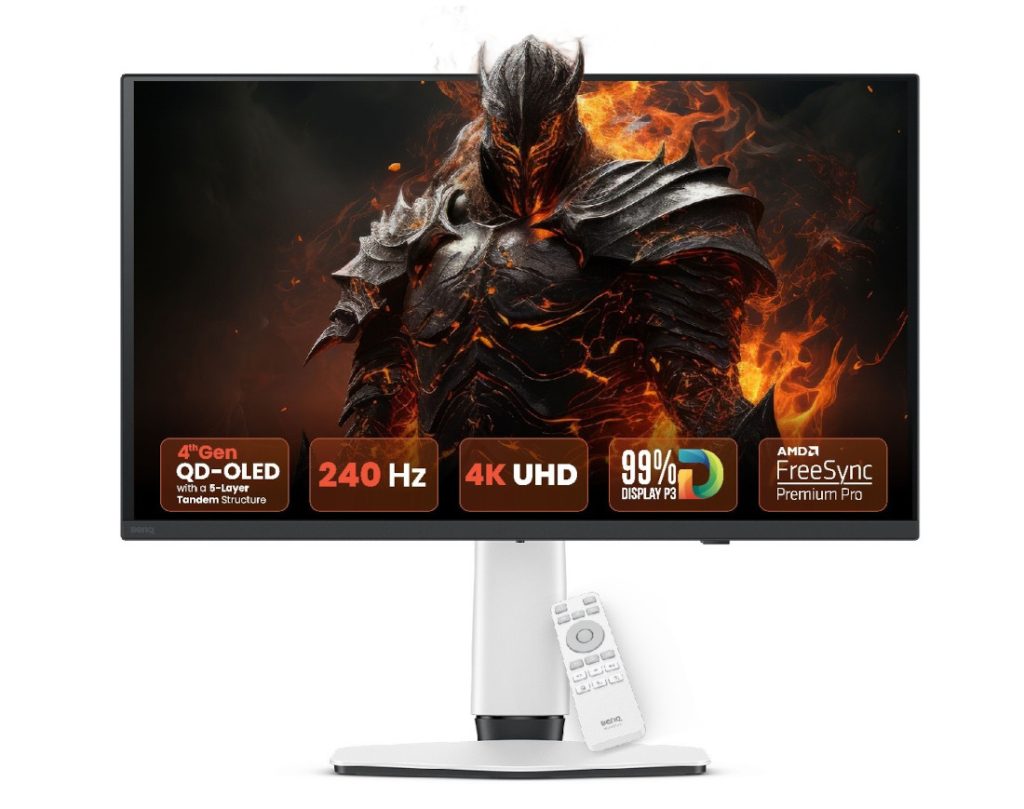
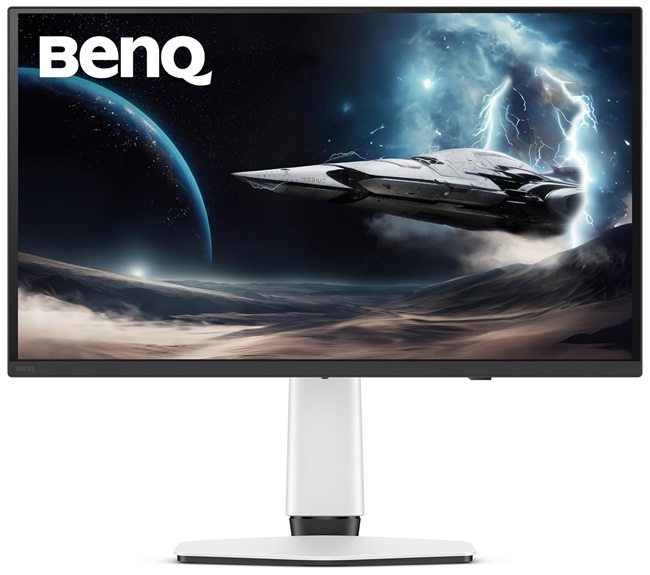
The Game Art Color HDR feature is integrated across six new-generation displays, divided evenly between OLED and QHD product tiers:
- OLED Displays: EX271UZ, EX321UZ, and EX271QZ
- QHD Displays: EX271QMZ, EX271QM, and EX271QP
Interactive Exhibits and Ecosystem Integration
The exhibition space was divided into functional demonstration areas. Visitors were able to evaluate side-by-side performance benchmarks across different panels and test upcoming game releases on MOBIUZ flagship configurations. Alongside the hardware stations, BenQ featured insights from game developers discussing visual fidelity, lighting design, and world-building—the artistic variables targeted by the Game Art Color HDR firmware.
The booth also highlighted BenQ’s hardware partnerships within Japan’s gaming sector, most notably with gaming PC brand Galleria. Galleria systems were deployed throughout all 11 exhibition halls of Makuhari Messe, including the MOBIUZ booth. Conversely, Galleria incorporates MOBIUZ displays for its competitive setups and esports tournaments.
Demographic Trends and Market Outlook
Attendance patterns observed during the four-day event demonstrated gaming’s expanding demographic base, with active participation spanning multiple age brackets rather than remaining confined to traditional youth segments.
According to BenQ, this demographic shift provides a reference point for emerging gaming regions such as India. While India’s current gaming user base skews substantially younger, the cohort that grew up with interactive entertainment is steadily aging into higher-purchasing-power adulthood. BenQ projects this demographic transition will drive sustained demand for high-end, color-accurate gaming hardware in the Indian market over the coming decade.
Rajeev Singh, Managing Director, BenQ India and South Asia, said:
Gaming today is as much about a title’s visual identity as it is about performance, and Indian gamers are increasingly discerning about both. Game Art Color HDR, MOBIUZ users can experience a game the way its creators intended, whether that’s the painterly warmth of a fantasy title or the stark contrast of a sci-fi world. As India’s gaming and esports audience continues to grow, this is the kind of display innovation we’re bringing closer to our market.
Regarding the BenQ MOBIUZ range, Jeffrey Liang, President, BenQ Asia Pacific, said:
The Game Art Museum concept is really about how closely we work with game creators on colour science. Game Art Color HDR is a direct result of that: it lets a monitor read a title’s art direction and respond to it. As APAC becomes one of the fastest-growing regions for PC and console gaming, that kind of art-led engineering is what will differentiate MOBIUZ as the category matures.