
Lightstorm, an Asia Pacific AI connectivity platform, has officially signed contracts to construct a new submarine cable system named I-2SEA. The project is being developed in collaboration with a consortium that includes Microsoft, Singtel, and Tata Communications to address the expanding bandwidth requirements of hyperscalers, GPU infrastructure providers, and enterprises managing AI training and inference workloads across the India–Southeast Asia corridor.
The 3,600-kilometer subsea cable system will connect India’s east coast directly to Singapore and Malaysia. It is projected to be Ready-for-Service (RFS) by the fourth quarter of 2029.
Route Architecture and Regional Connectivity
The I-2SEA system is designed to link major AI and data center hubs across the region:
- India: The cable will feature dual landing points on India’s east coast. One landing will be located at Machilipatnam, designed to offer a direct subsea path to the data center clusters in Hyderabad. The second landing will be positioned at a geographically diverse location in South Chennai.
- Southeast Asia: The system will connect these Indian hubs directly to Singapore—a primary cloud interconnect and AI hub—and to Malaysia’s growing data center corridor in Kuala Lumpur.
Lightstorm intends to integrate the subsea capacity with its existing 30,000+ kilometer terrestrial network in India. This integration will provide onward connectivity from the landing stations to Hyderabad, Mumbai, and more than 80 data centers across the country.
According to the company, the combination of the subsea route and its terrestrial backhaul network is expected to offer a low-latency transmission path on the Singapore/Malaysia–Hyderabad corridor.
Technical Specifications and Architecture
The I-2SEA cable system incorporates several design and operational features focused on performance and reliability:
Network Integration and Management
For its customers, Lightstorm will extend its SmartNet AI Fabric—a network architecture optimized for low-jitter and low-loss transport—into the subsea domain. Lightstorm will operate the cable landing stations in India and manage the network through its SmartNet AI Fabric and Polarin platform. The Polarin platform enables on-demand provisioning and real-time network visibility, allowing users to scale and monitor capacity.
Open and Neutral Infrastructure
The cable system employs an interoperable architecture and will utilize carrier-neutral landing infrastructure at both Indian landing points to facilitate open access for various network operators.
Physical Protection and Resilience
To mitigate the risk of physical damage and ensure high network uptime, the consortium has adopted a deep cable burial strategy. The system’s routing plan targets a burial depth of three meters across all buried sections of the subsea network.
Consortium and Supply Partners
The project is governed under a Joint Build Agreement between the four primary consortium members: Lightstorm, Microsoft, Singtel, and Tata Communications.
The consortium has finalized agreements with key industrial partners for the manufacturing and deployment phases:
- NEC Corporation has been selected as the turnkey system supplier.
- ASEAN Cableship Pte Ltd (ACPL) will serve as the marine installation partner.
With the signing of the official construction contracts, the I-2SEA cable system has formally opened for commercial capacity commitments from enterprises and telecom carriers.
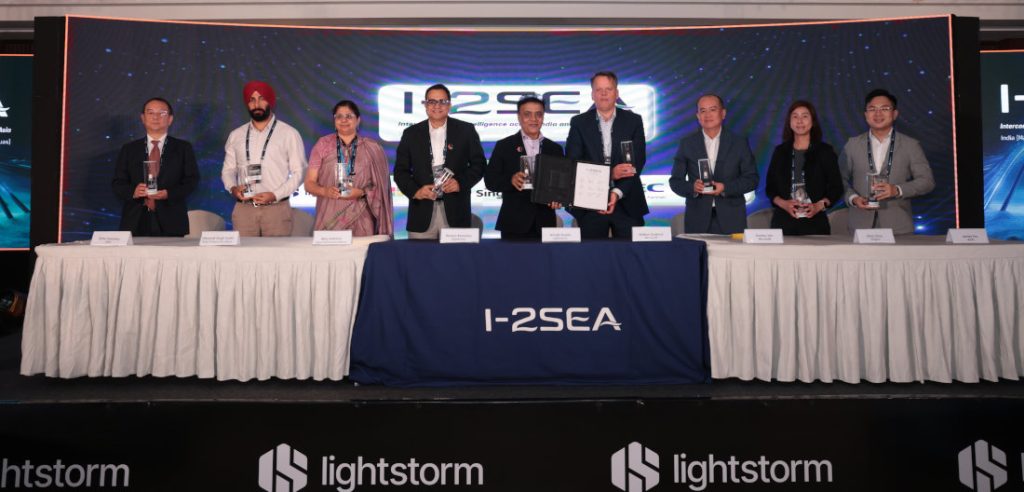
Regarding this, Amajit Gupta, Group CEO & MD, Lightstorm, said:
Lightstorm works around a single mission: interconnecting intelligence. As majority owner of I-2SEA and with SmartNet AI Fabric already delivering AI-ready transport across data centers and GPU clusters in India, we can now offer the natural extension of that platform into the subsea domain. On our network, AI regions across India, Malaysia, and Singapore will be connected by a single, purpose-built, end-to-end system — engineered for the performance and scale that AI infrastructure requires.