
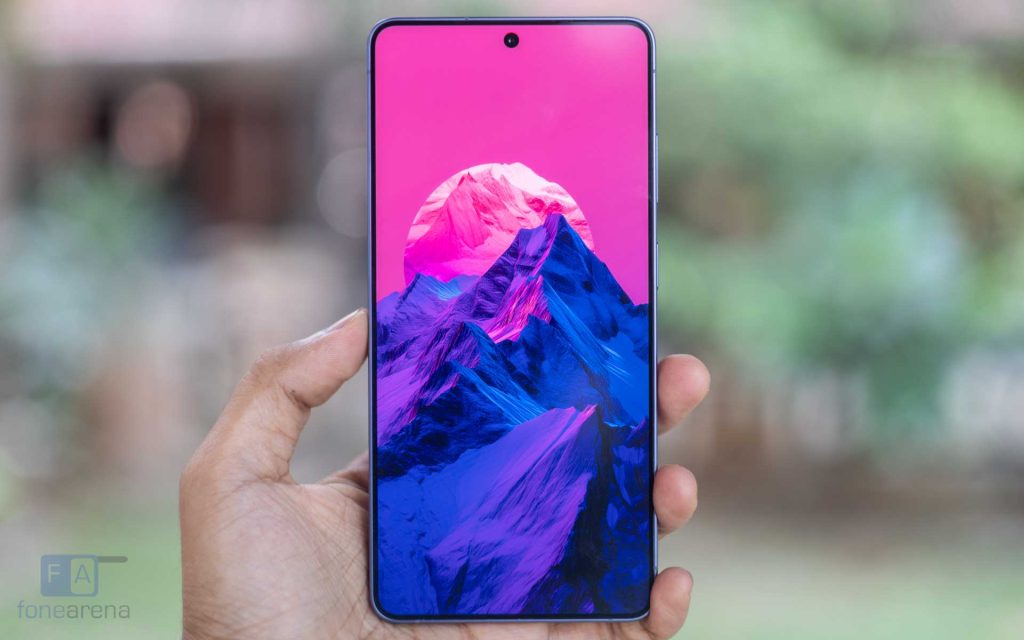
When it comes to flagship Android smartphones, the Samsung Galaxy S series is impossible to overlook. The company has consistently delivered some of the finest offerings in this premium category, refining its smartphones steadily with each generation. The Galaxy S26 Ultra is the latest addition to the family in 2026, bringing the world’s first built-in Privacy Display, an upgraded Snapdragon 8 Elite Gen 5 processor, faster 60W Super Fast Charging 3.0, and an improved camera system.
Competition in this premium segment has grown fierce, with strong challengers from the likes of Vivo and OPPO. While Samsung has long enjoyed its position at the top, a formula of incremental refinements year over year may no longer be enough to hold that ground. So how does the Galaxy S26 Ultra measure up against its rivals? Do these upgrades justify the price? We find out in this review.
Box Contents
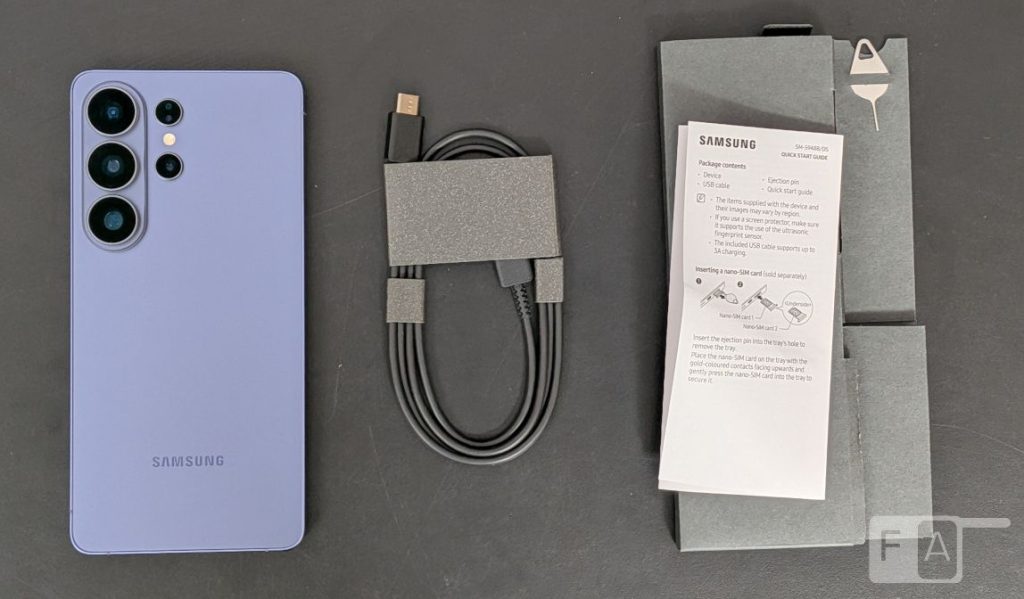
- Samsung Galaxy S26 Ultra 12GB + 256GB in Cobalt Violet colour
- USB Type-C to C cable
- SIM Ejector tool
- User guide
Hardware and Design
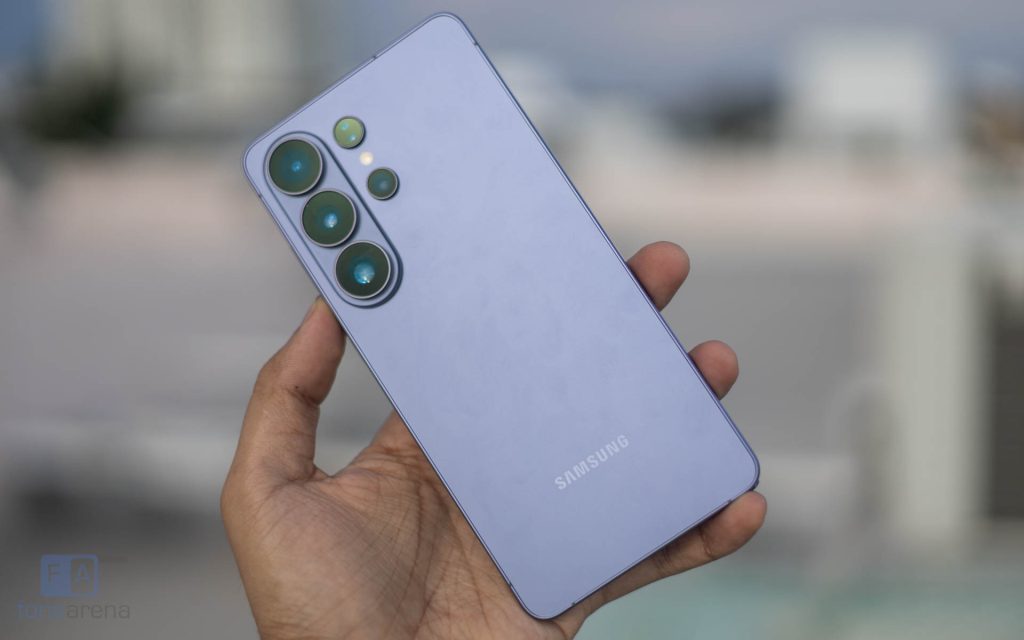
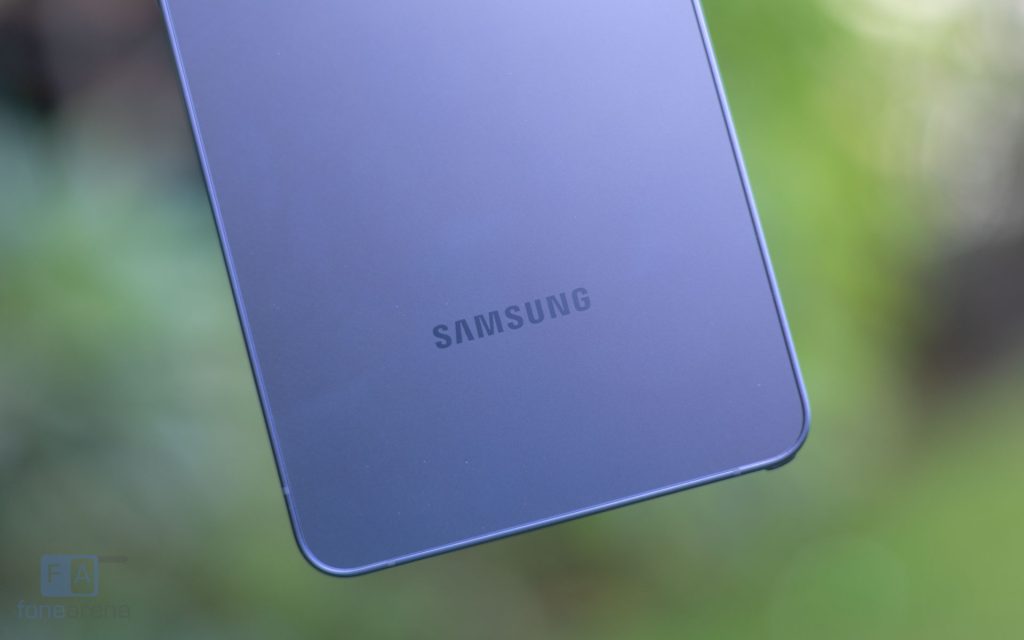
The hardware and design of the Galaxy S26 Ultra remain largely unchanged from its predecessor. It features the same Armor Aluminum frame sandwiched between two panes of Corning Gorilla Armor 2 glass. The edges are flat and the corners are nicely rounded, giving it a clean, refined look. At 7.9mm, the smartphone is marginally slimmer than before, which is impressive given that it houses a built-in S Pen. The back panel has a frosted glass finish, and our review unit came in Cobalt Violet, a shade that looks stunning across different lighting conditions.
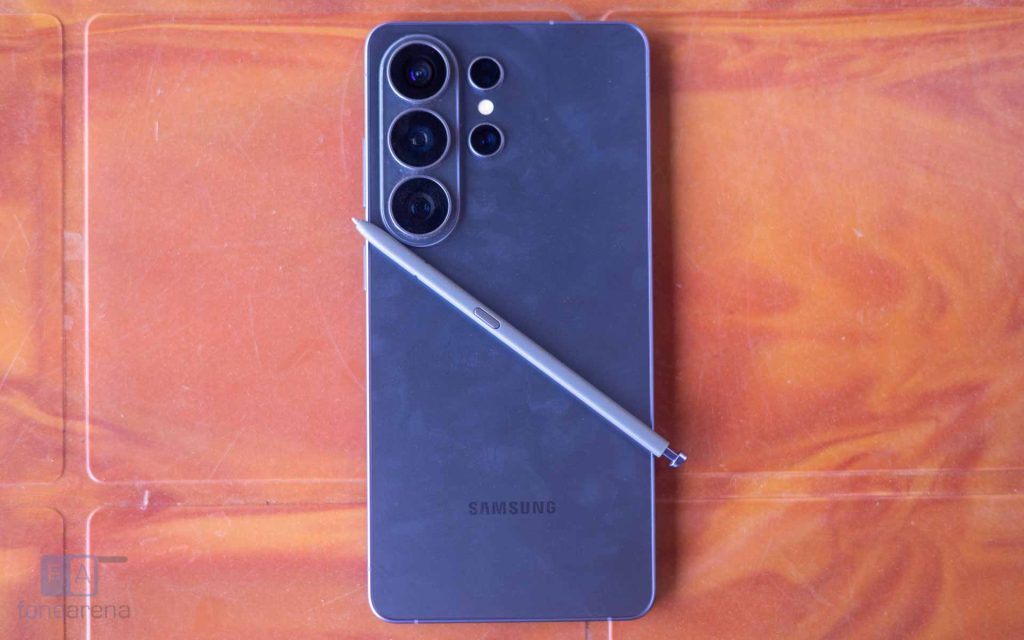
The weight distribution feels well-balanced, and the device sits comfortably in hand. The smooth frosted glass back does make it prone to slipping, particularly in cold environments, though the matte finish on the edges helps offset this.
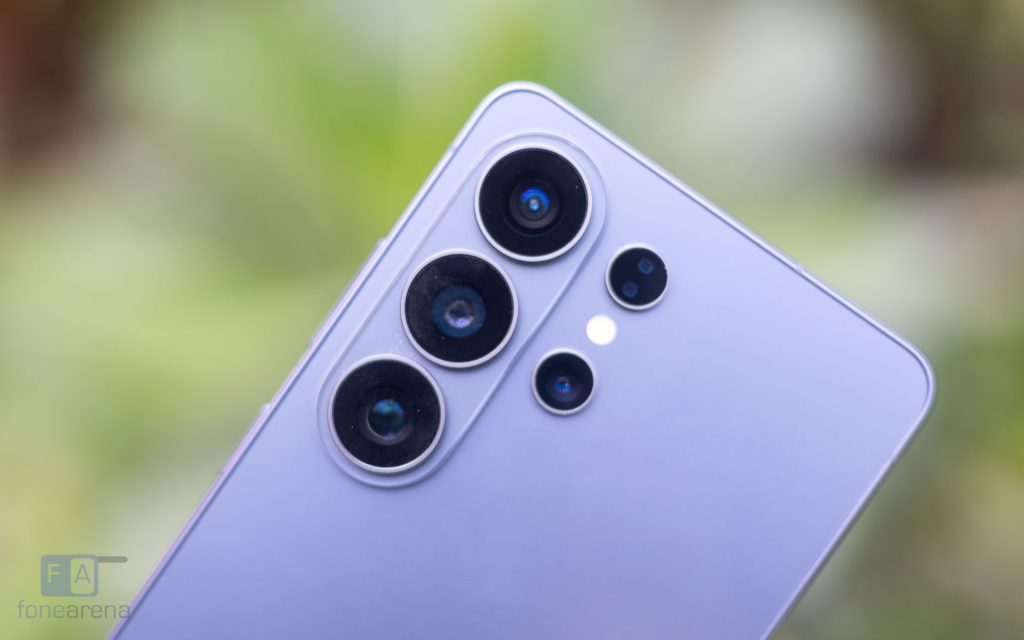
One visible change from the previous generation is the new ambient island camera design, where a raised translucent surround frames three of the rear cameras. It serves primarily as a design differentiator rather than offering any functional purpose.
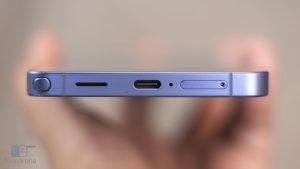
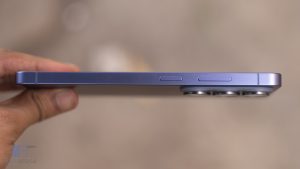
The power button and volume rocker sit on the right edge, consistent with previous generations. The bottom edge houses the USB-C port, speaker grille, and dual SIM tray, while the left and top edges are bare, aside from microphone holes and antenna cutouts. IP68 water and dust resistance is retained.
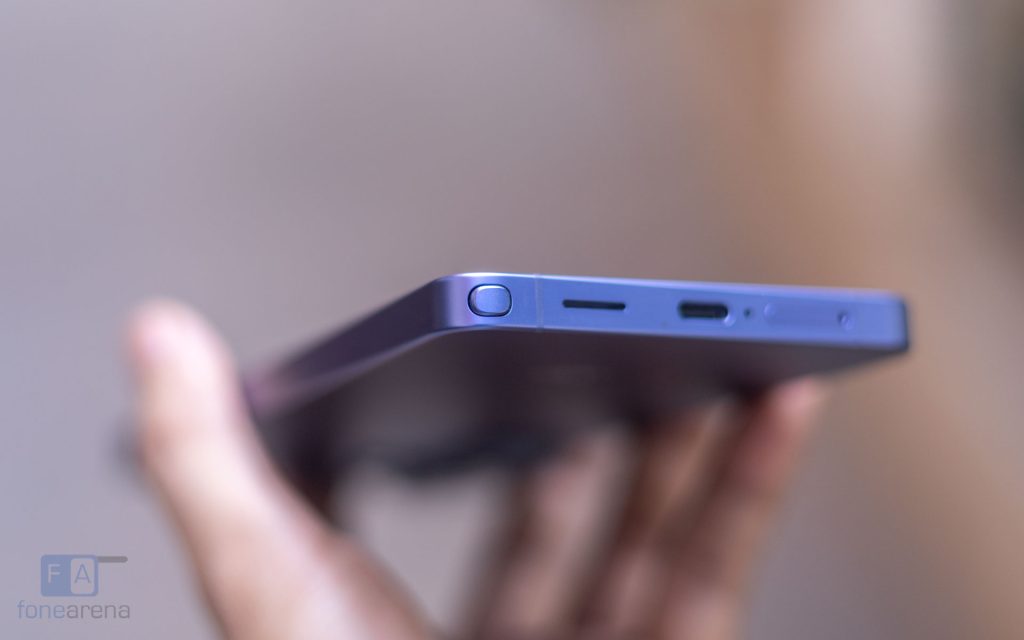
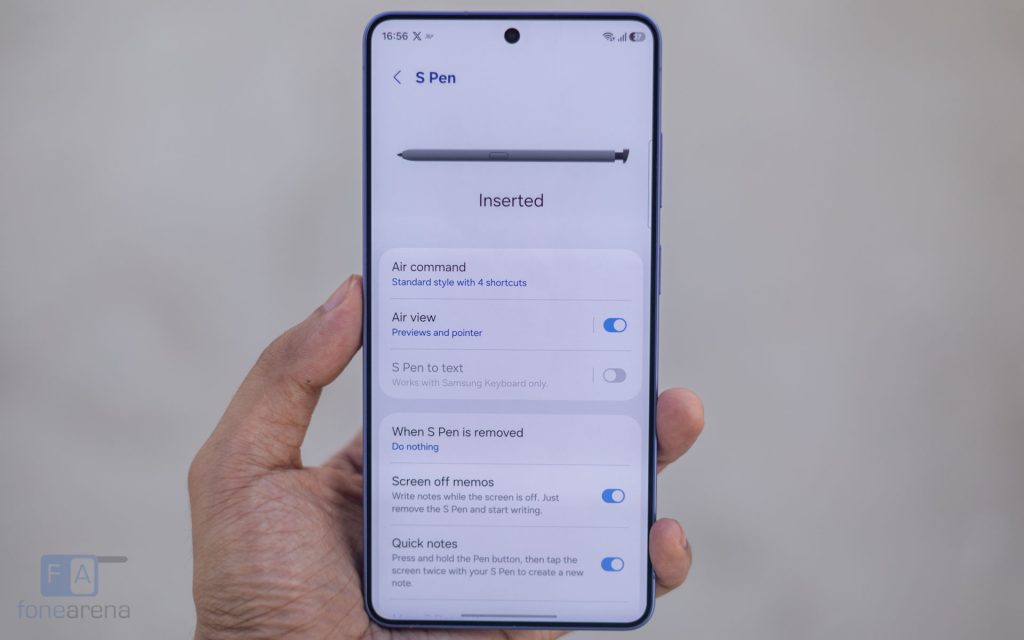
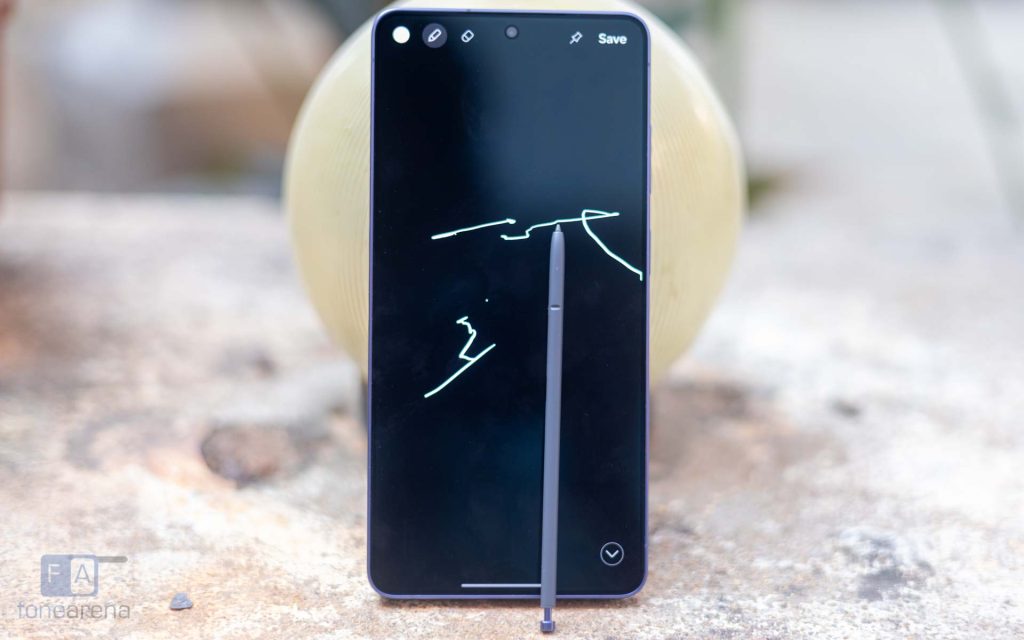
The S Pen has been repositioned slightly closer to the corner of the bottom edge, and this introduces a minor but puzzling issue. The tip of the S Pen is curved rather than flat, which means it can only be inserted in one specific orientation. If inserted the wrong way, the curved end protrudes and disrupts the clean line of the bottom edge. It is an odd oversight for a device at this price point, and one Samsung would do well to address in the next generation.
Display
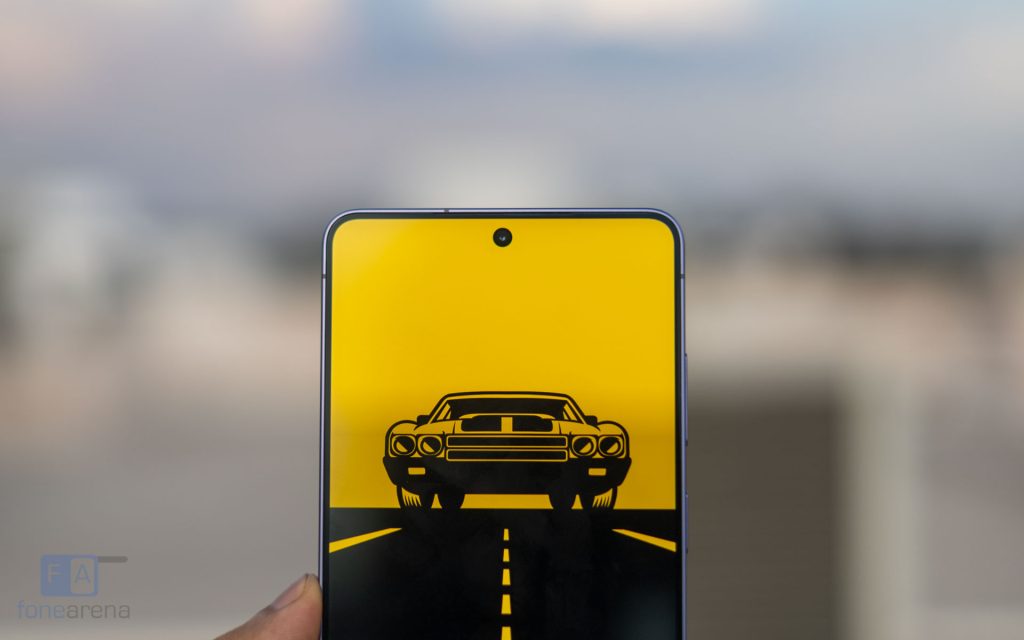
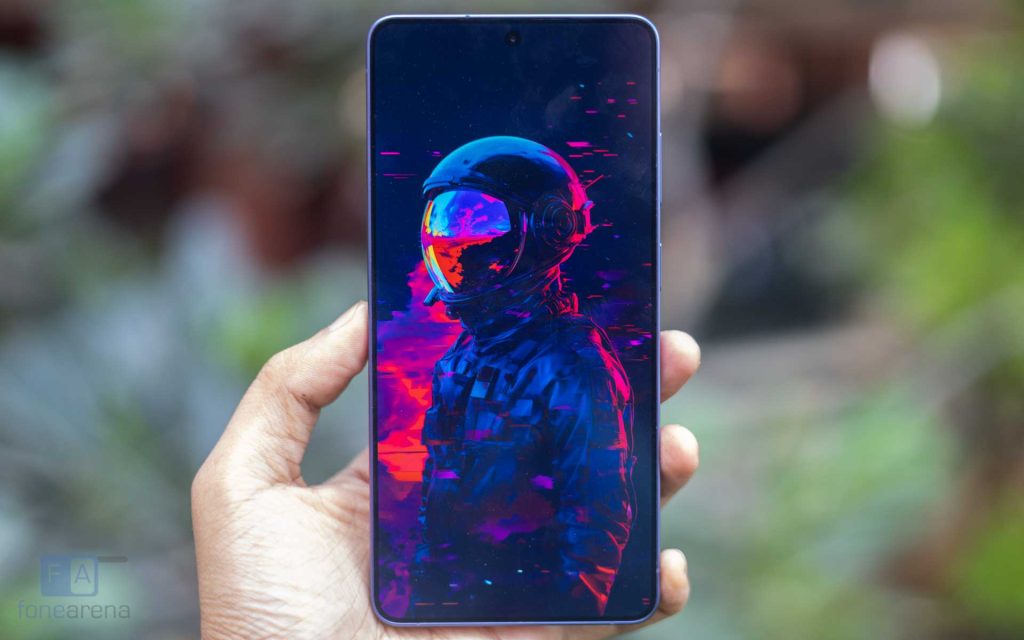
The standout update this year is the Galaxy S26 Ultra’s display, particularly the new Privacy Display feature. The panel is a 6.9-inch Quad HD+ Dynamic AMOLED with a peak brightness of 2600 nits, a maximum resolution of 3120 x 1440, and a variable refresh rate that switches between 1Hz and 120Hz. It also retains the excellent anti-reflective coating from last year, which improves viewability in strong backlighting conditions.
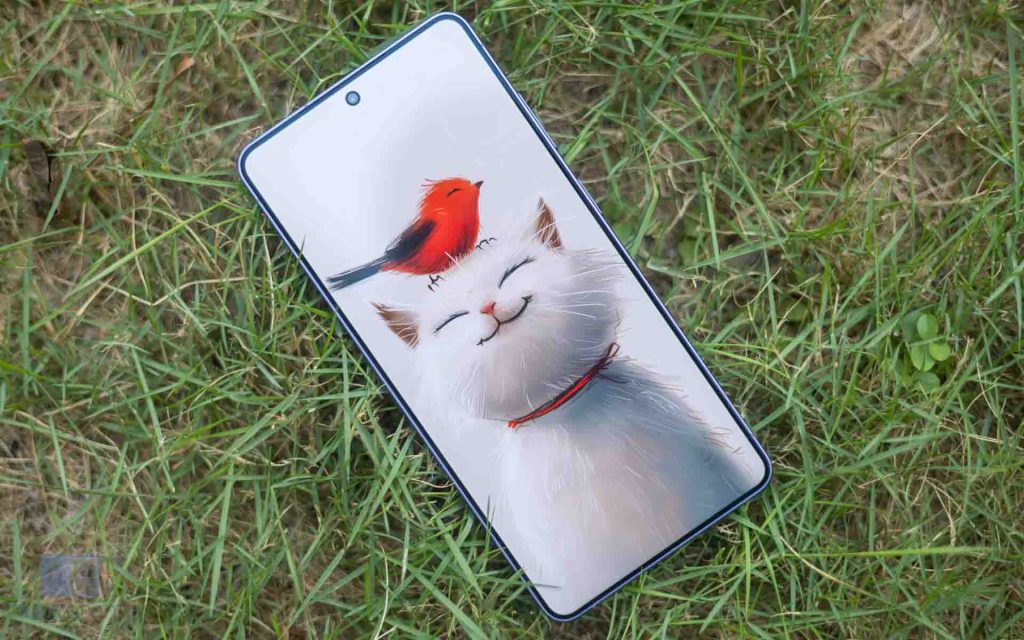
The display continues to rank among the best in the industry, delivering vibrant colours, deep contrast, and strong HDR performance. The 2600 nits peak brightness ensures content remains clearly visible even in challenging outdoor conditions.
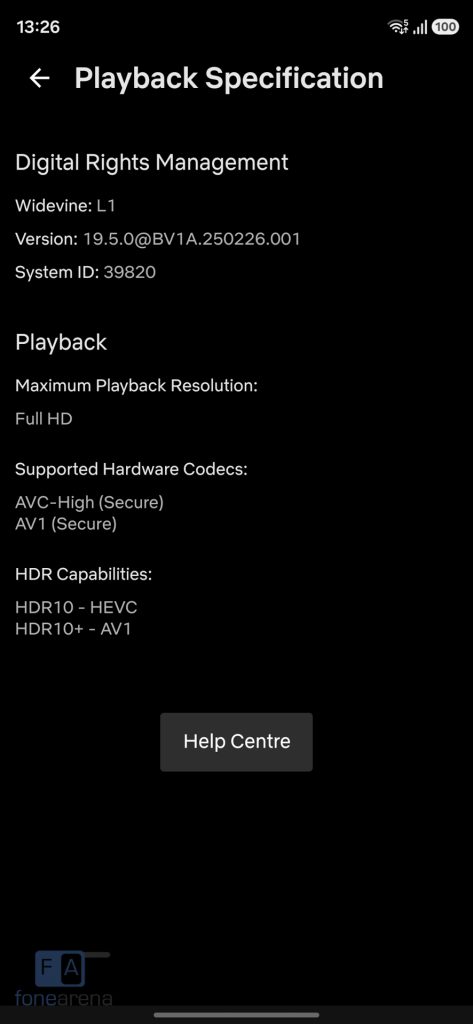
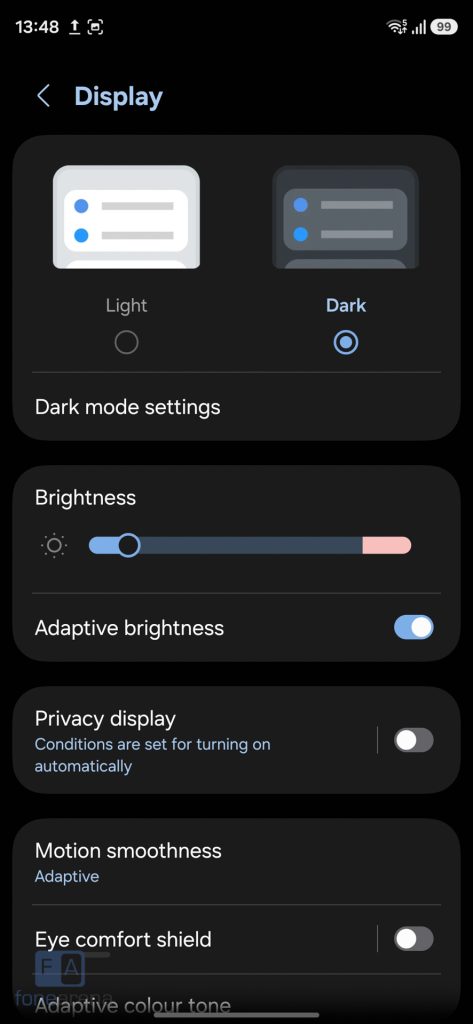
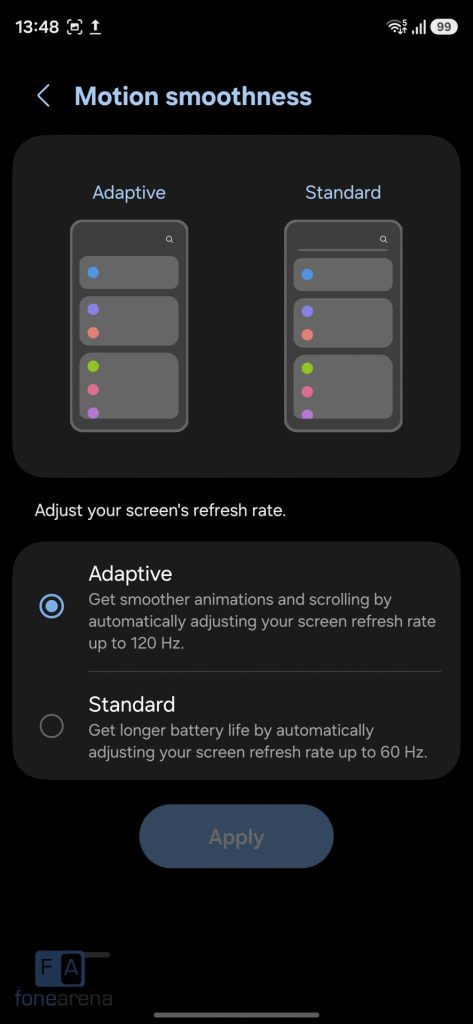
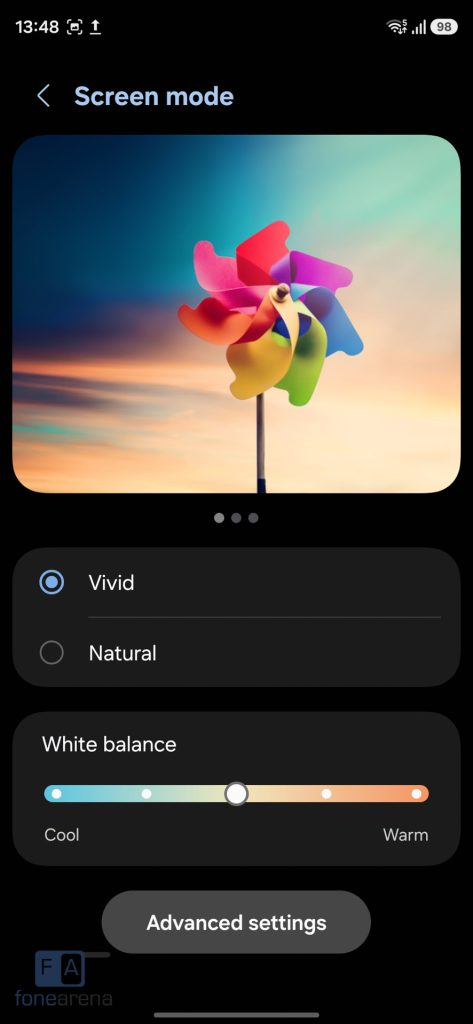
Under direct sunlight, the phone activates a high brightness mode that trades some colour saturation for improved legibility, which is a reasonable compromise. In normal conditions, the display offers a thoroughly enjoyable experience when watching content from streaming services such as Netflix and Amazon Prime Video.
Privacy Display
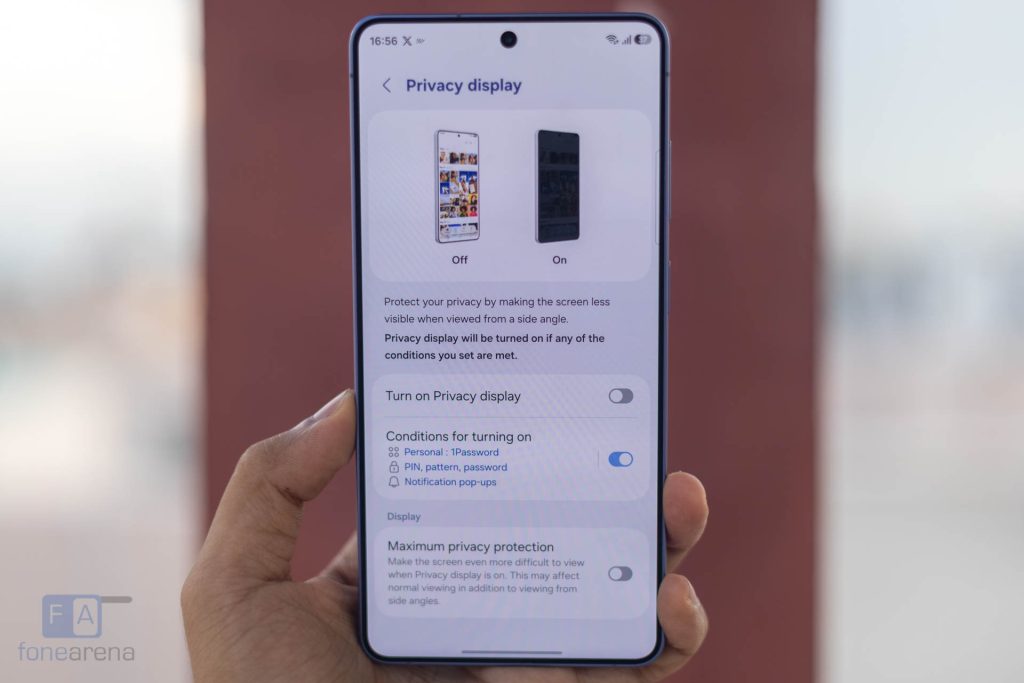
Privacy Display is an impressive new technology that Samsung has developed exclusively for the Galaxy S26 Ultra. The feature limits the display’s viewing angles to a narrow window, making content visible only when the screen is viewed head-on. Anyone looking in from the sides will see only black pixels. While third-party screen protectors can simulate a similar effect, Samsung has implemented this at the hardware level with pixel-level control, which is a meaningful distinction.
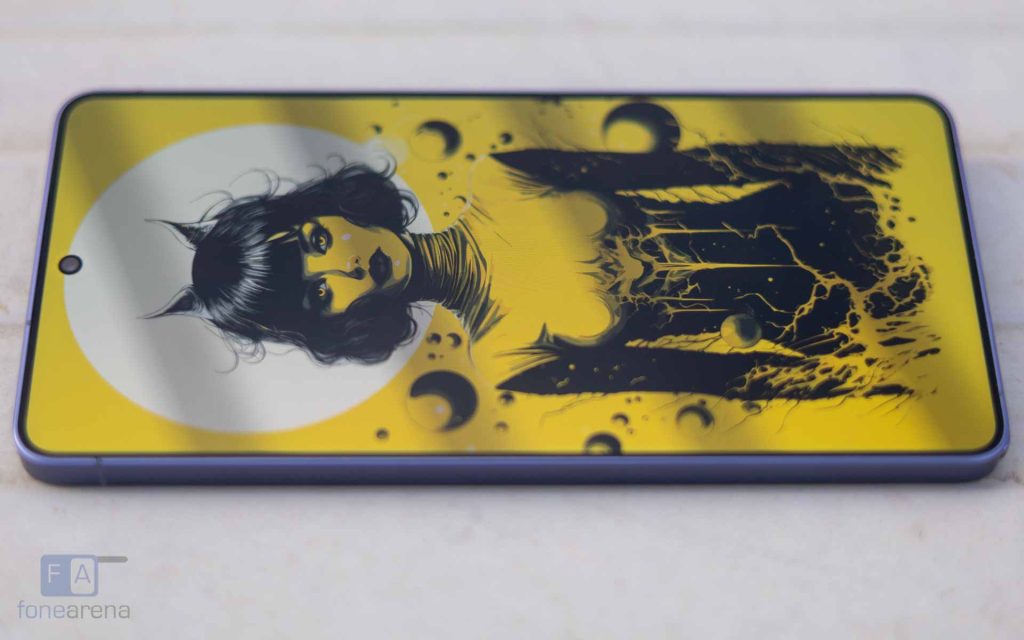
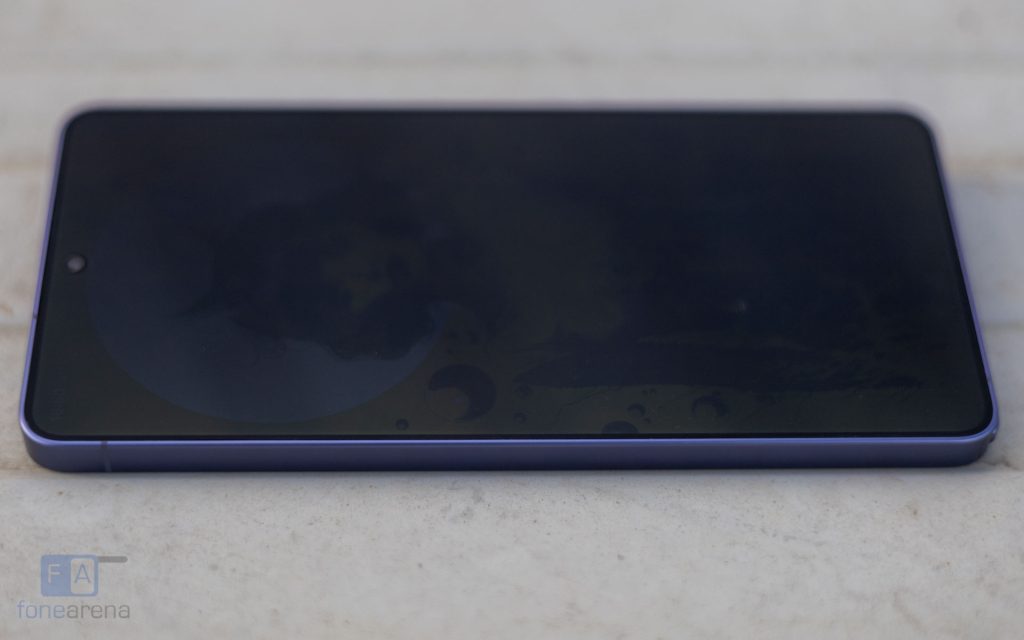
During testing, the feature works as advertised. Once activated, viewing content on the display from an angle is next to impossible unless the phone is held directly in front of you. It proves particularly useful in public settings where you would rather keep the contents of your messaging or banking apps away from prying eyes. Anyone standing directly behind you will still have an unobstructed view, but that is rarely a realistic concern.
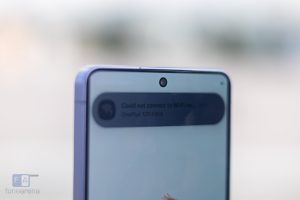
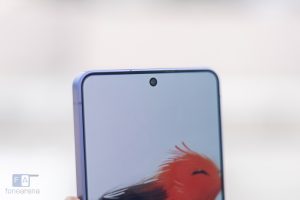
Thanks to pixel-level control, Samsung has also built some useful software options around the feature. Privacy Display can be configured to activate only for incoming notifications or for specific apps, giving users meaningful control over when and how it engages.
It is worth noting the trade-off that comes with enabling Privacy Display. The feature works by adding a separate layer of pixels alongside the standard display layer, where this additional layer has a deliberately narrow viewing angle. When Privacy Display is switched on, the regular pixel layer is turned off, which results in a reduction in both resolution and brightness. The difference is noticeable.
For this reason, we found it impractical to keep Privacy Display on at all times. However, leaving it enabled specifically for notifications and passwords proved to be a sensible middle ground, as it added a layer of security without meaningfully affecting everyday use.
As a first-generation implementation, Privacy Display is already more useful than expected, largely thanks to Samsung’s software work around it. With continued refinement, it has the potential to become a genuinely compelling reason to choose the Galaxy S Ultra over its rivals in the years ahead.
Camera
Here is the refined version, followed by the full changelog:
The camera setup on the Galaxy S26 Ultra has received only minor upgrades this year. Here are the specifications of all five camera modules:
- 200MP Wide camera, 1/1.3-inch sensor, f/1.4 aperture, OIS
- 50MP Ultra Wide camera, 120-degree field of view, f/1.9 aperture
- 10MP Telephoto camera, 3x optical zoom, f/2.4 aperture, OIS
- 50MP Periscope Telephoto camera, 5x optical zoom, 100x Space Zoom, f/2.9 aperture
- 12MP Front camera, f/2.2 aperture, 4K at 60fps
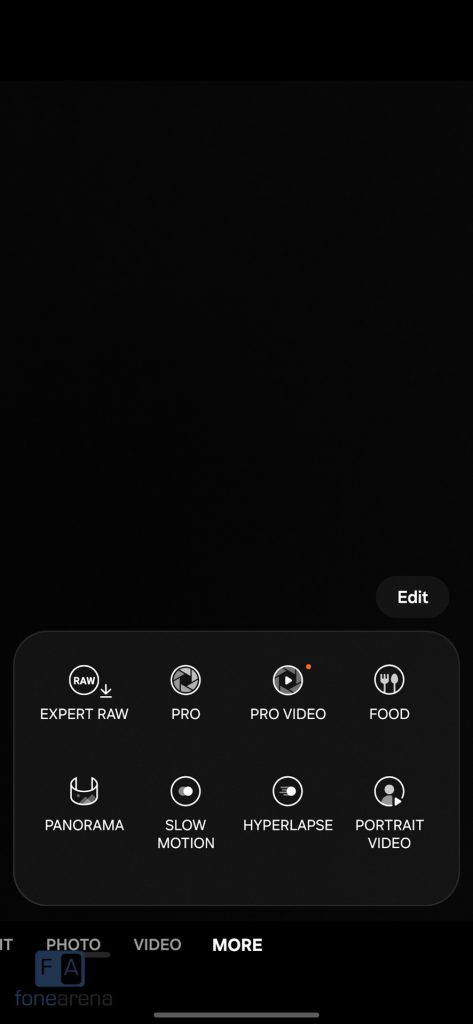
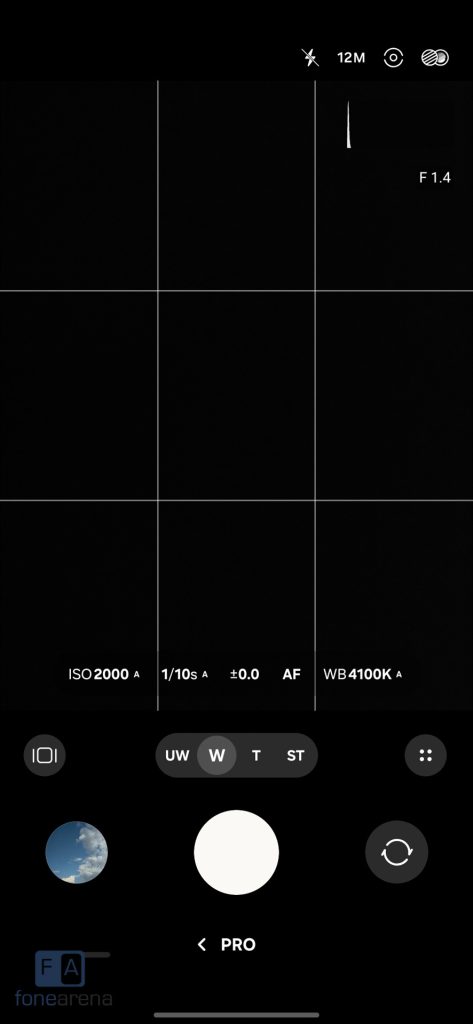
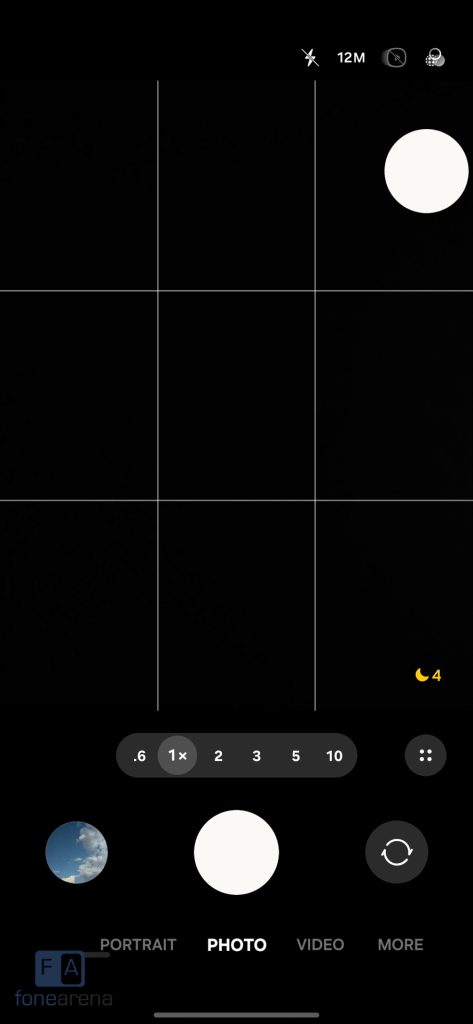
The Galaxy S26 Ultra’s camera system remains one of the most well-rounded in the premium Android segment. In good lighting, photos are consistently impressive, with well-saturated colours and excellent dynamic range. The 200MP main sensor captures fine detail with minimal noise, aided by pixel binning. The Ultra Wide sensor does a reasonable job of maintaining sharpness and matching white balance with the main sensor. In low light, the phone delivers strong performance with good detail retention and controlled noise levels. One area worth flagging is lens flare, which was noticeable in certain scenarios when pointing the camera directly at a light source. This was not an issue observed on competing devices we tested alongside the Galaxy S26 Ultra.
The 3x and 5x telephoto cameras are largely unchanged from the previous generation. Photos remain sharp up to around 20x zoom, beyond which quality degrades noticeably. Samsung has historically been strong with its AI sharpening algorithms for high zoom levels, but the Galaxy S26 Ultra falls short of the competition in this regard. Both the Vivo X300 Ultra and the OPPO Find X9 Ultra deliver meaningfully better results at zoom levels above 30x. Samsung will need to significantly improve its AI zoom algorithms, or consider reintroducing a dedicated 10x periscope telephoto lens as seen on older Ultra models, to close this gap.
Video capabilities on the Galaxy S26 Ultra remain excellent, with support for up to 4K at 60fps and 8K at 30fps. New this year is Horizon Lock, a feature that produces some of the most stable footage we have seen from a smartphone. It does require a noticeable crop on the main sensor, but the results more than justify the trade-off. The Galaxy S26 Ultra is also Samsung’s first smartphone to support the Advanced Professional Video, or APV, codec standard, a welcome addition for professionals looking to shoot broadcast-quality footage on a mobile device.
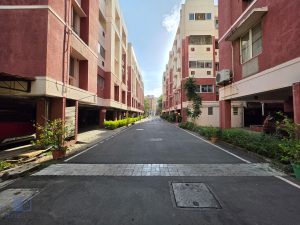
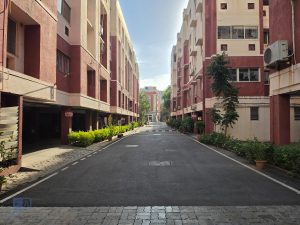
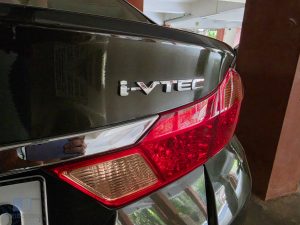
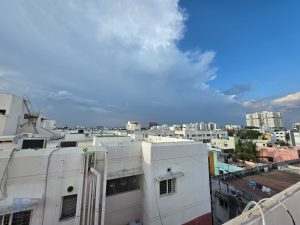
Here are some camera samples:































Software and UI
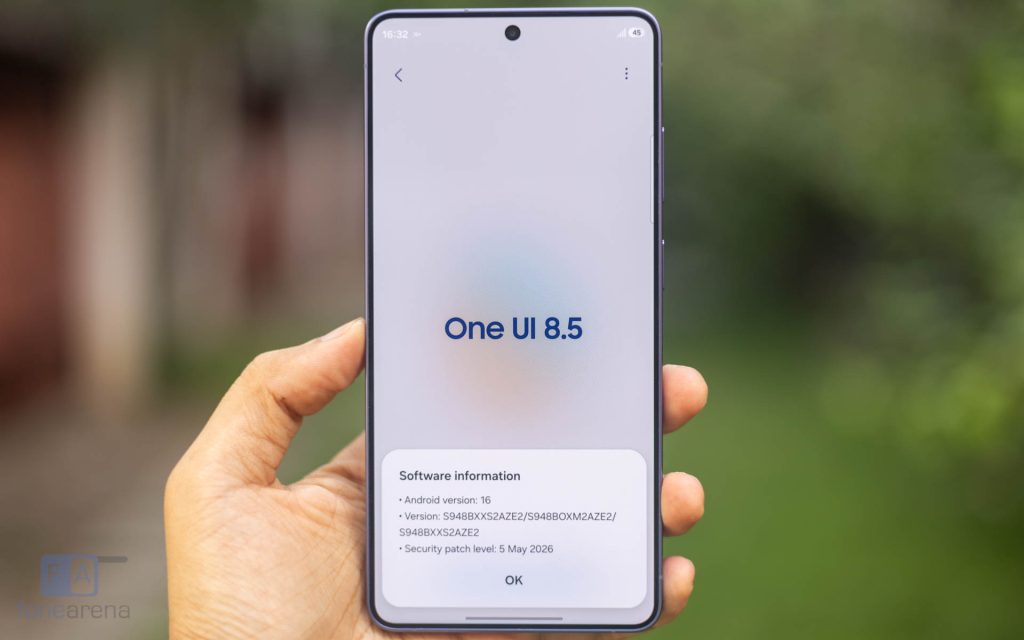
The Galaxy S26 Ultra runs One UI 8.5 based on Android 16, with the June 2026 Android security patch. As with previous generations, Samsung promises seven major OS upgrades and seven years of security updates, which remains one of the strongest software support commitments in the Android space.
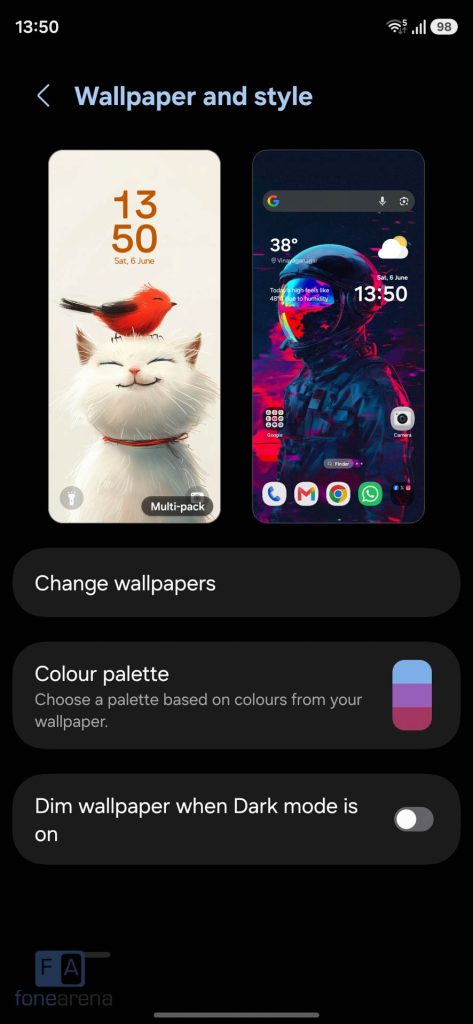
One UI continues to deliver a stable, feature-rich, and highly customisable Android experience. Navigation is smooth, multitasking is effortless, and the theme engine remains excellent. It continues to be one of the better Android skins available, holding its own comfortably against the competition.
The headline addition this year is the expanded set of Galaxy AI features built into One UI 8.5. The photo editor and image generation capabilities are noticeably more capable and faster than before. Features such as Now Nudge and Now Brief surface contextual information intelligently across the OS, reducing the steps needed to complete common tasks.
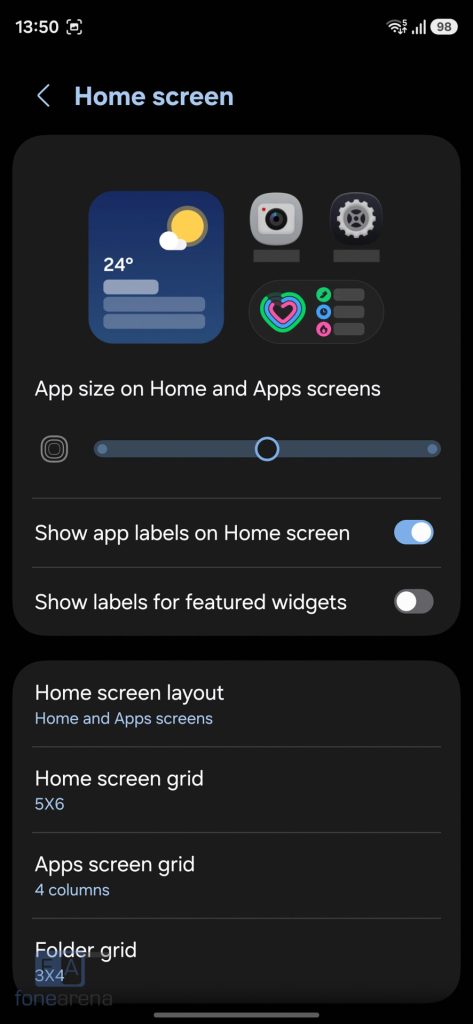
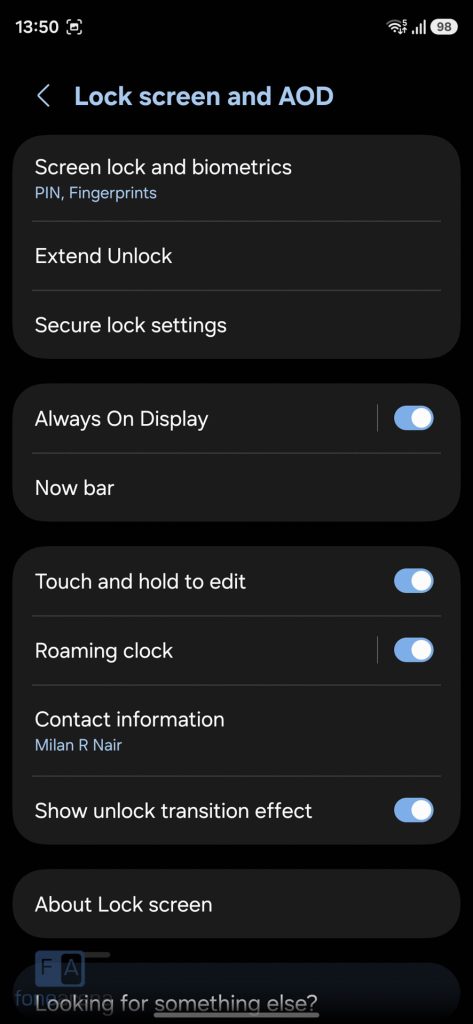
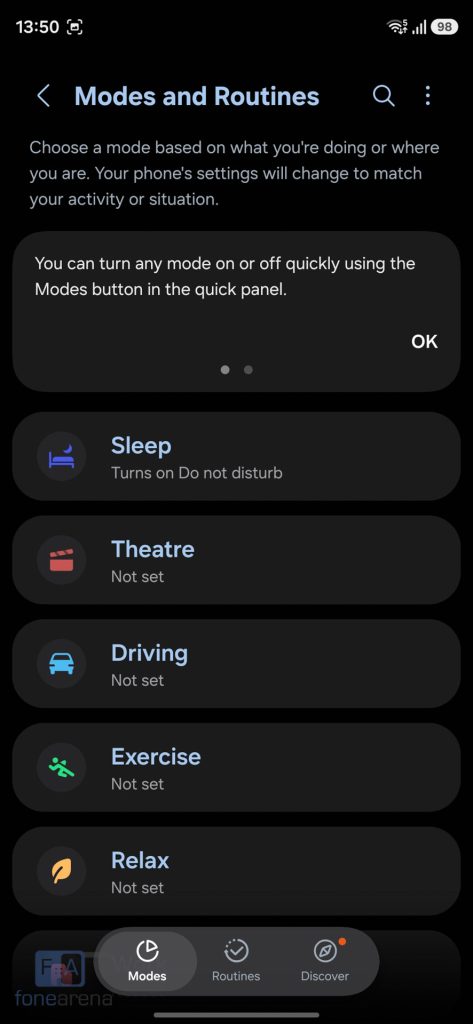
Bixby is more deeply integrated as well, making it easier to locate a setting or run a quick web search using natural language. Circle to Search with Google rounds out the AI toolkit, enabling a quick contextual search of any item visible on the screen.
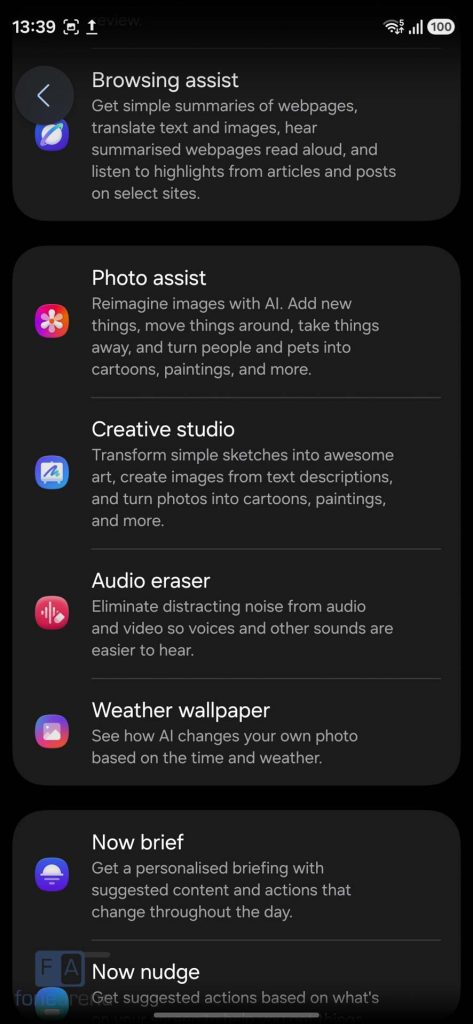
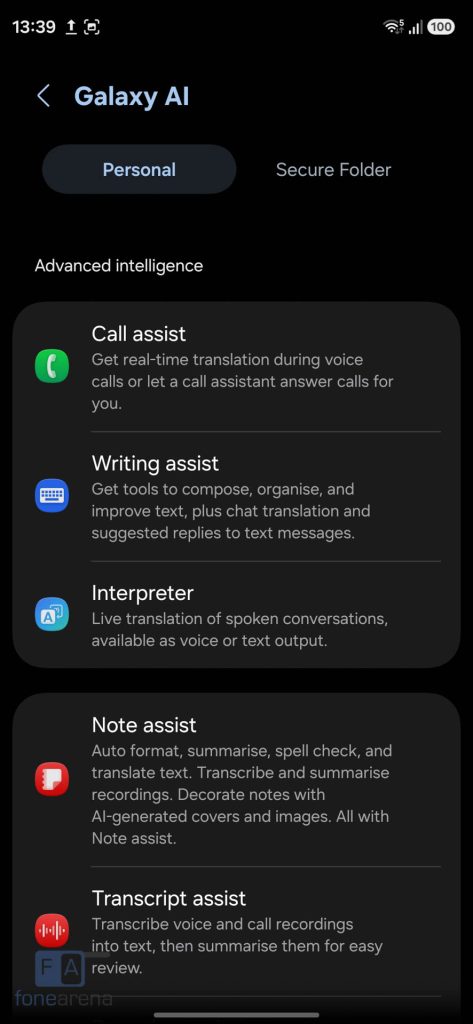
Galaxy AI features are improving steadily with each generation, with a growing number of tasks now processed on-device. This delivers both faster and more private processing, which is a meaningful step forward for users who are conscious of their data. These features have moved well past the gimmick stage and are genuinely useful in everyday scenarios. The trajectory is encouraging, and the foundation Samsung has built here should only get stronger in the years ahead.
Fingerprint sensor and Face unlock
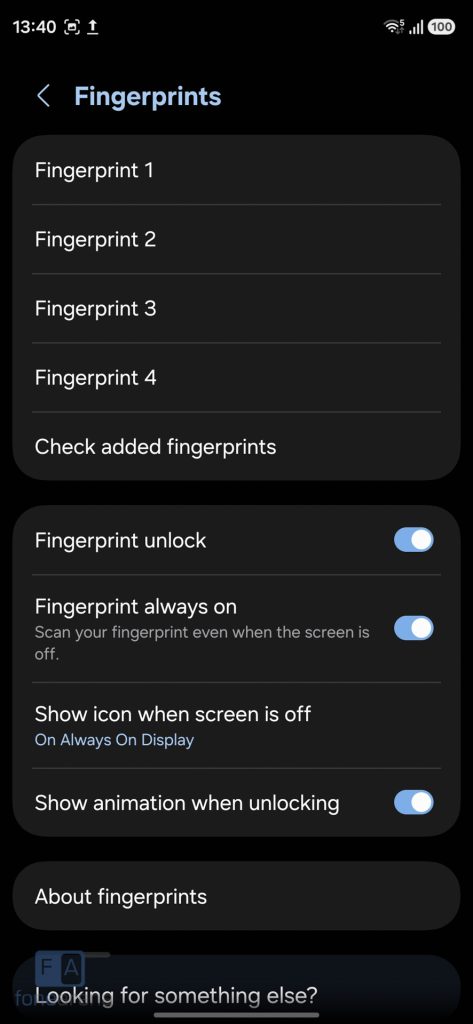
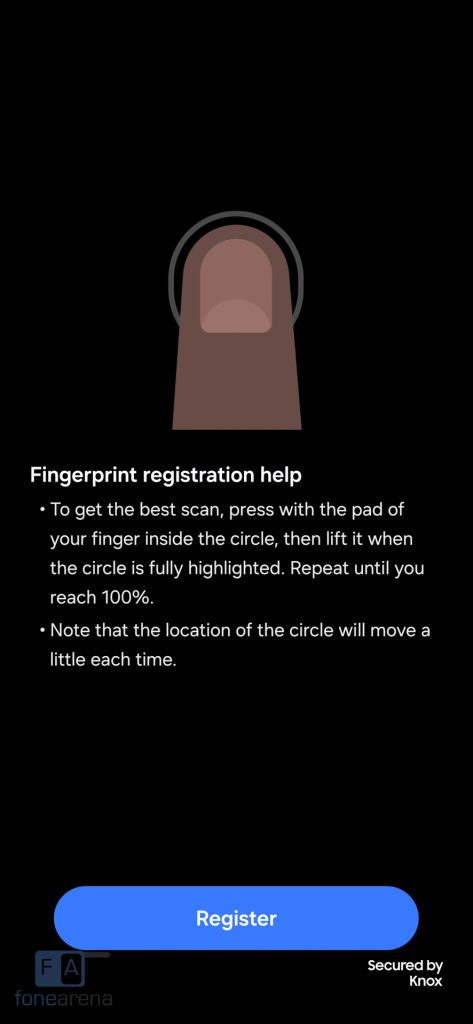
Samsung has long offered fast fingerprint unlocking across the Galaxy S series, thanks to the use of ultrasonic sensors. The Galaxy S26 Ultra continues that trend, delivering swift and secure biometric unlocking for up to four fingers. The sensor performs reliably under all conditions, including when the display is wet. A particularly welcome touch is that the sensor remains active even when the display is off, making unlocking marginally faster. Third-party apps can also make use of the biometric security for locking and unlocking, including the Secure Folder feature in One UI.
Face Unlock is available on the Galaxy S26 Ultra as well, though it relies solely on the front camera for detection. This makes it considerably less secure than the fingerprint sensor, and we would recommend sticking with the latter for everyday use.
Performance and Connectivity
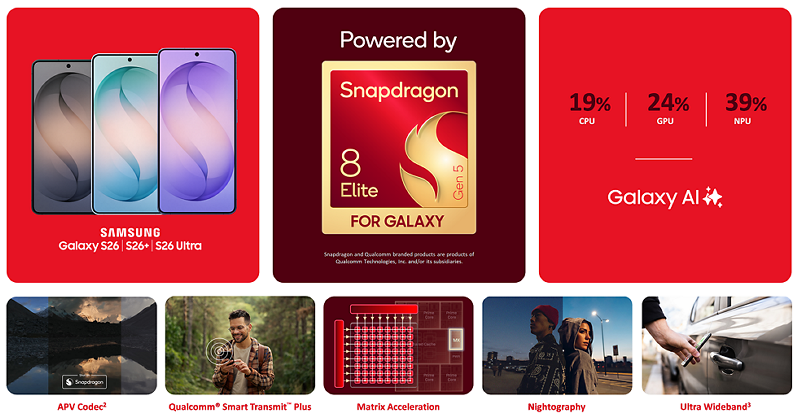
Under the hood, the Galaxy S26 Ultra is powered by Qualcomm’s Snapdragon 8 Elite Gen 5 for Galaxy, paired with either 12GB or 16GB of RAM depending on the storage variant. The processor is a customised version of the standard Snapdragon 8 Elite Gen 5, featuring Qualcomm’s third-generation Oryon CPU cores and the Adreno 840 GPU, both clocked slightly higher than the stock configuration. Qualcomm has also worked closely with Samsung to refine several aspects of the chip, including connectivity, thermal design, and image signal processing.
As expected of a flagship device, performance is excellent across the board. The Snapdragon 8 Elite platform has made significant strides in both performance and efficiency over the years, and the Galaxy S series continues to make good use of it. The phone feels fast and responsive, apps load quickly, and multitasking is seamless. No lag or slowdowns were encountered even under heavy workloads with multiple apps running in the background. On the graphics front, the Adreno 840 handles demanding titles such as Genshin Impact with ease, sustaining high frame rates consistently.
The improved thermal design also makes a noticeable difference on the Galaxy S26 Ultra. The device does get warm during extended gaming sessions, with a perceptible hotspot near the rear camera module. Using the phone in a hot environment at high screen brightness may occasionally result in mild throttling, though this was rarely observed during testing. Power users pushing the device to its limits may notice it, but it is unlikely to affect most everyday users. Importantly, the device never became uncomfortable to hold, which speaks to the effectiveness of the thermal management overall.
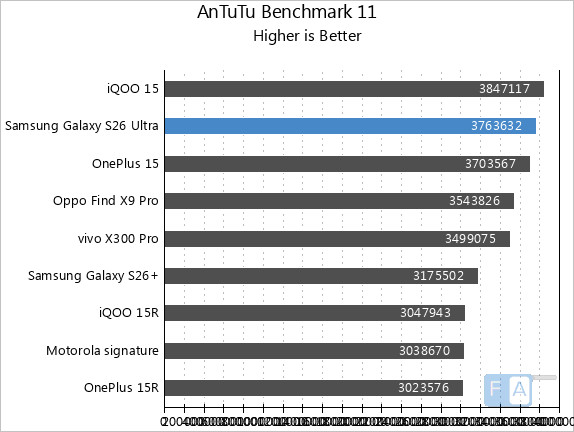
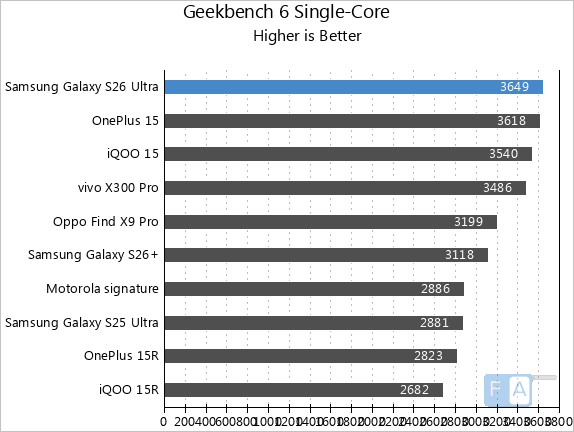
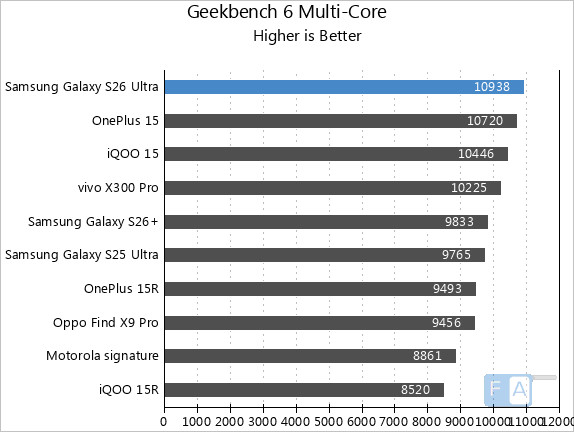
The Galaxy S26 Ultra supports Wi-Fi 7 and Bluetooth 6.0. Internet speeds were consistently fast and reliable when connected to Wi-Fi networks throughout our testing period. For cellular connectivity, the phone offers full support for 5G SA and NSA networks, including Airtel’s dedicated “Fast Lane” network. Call quality was dependable, with no dropped calls observed, and 5G data speeds were strong throughout.
The phone also supports Ultra Wideband (UWB) for improved positional accuracy when locating and tracking nearby devices.
Battery life and Charging
Samsung has opted not to use silicon-carbon battery technology in the Galaxy S26 Ultra, instead sticking with the more traditional lithium-ion design at a capacity of 5000mAh. This is identical to last year’s model, which is a mild disappointment. Competing flagships from Vivo and OPPO have embraced silicon-carbon cells to offer considerably higher capacities.
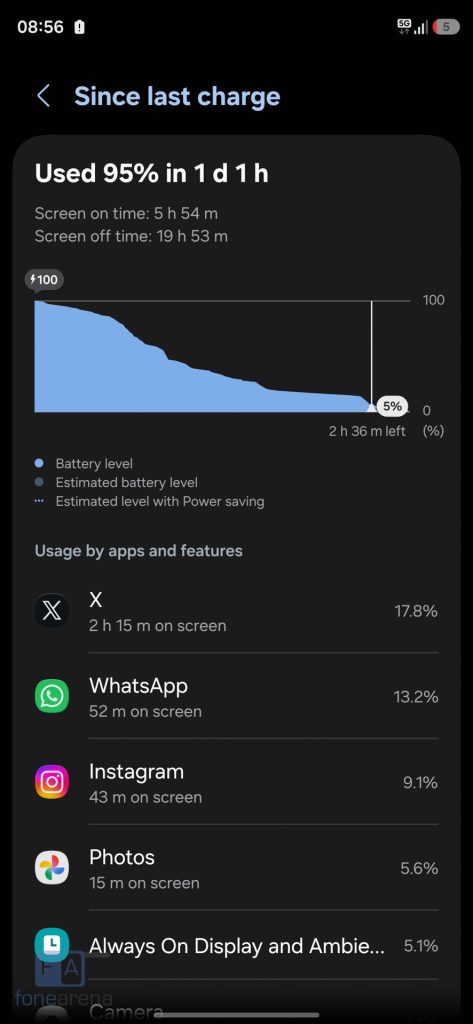
The result is battery life that can only be described as average among premium Android flagships. With light to moderate usage, the device comfortably lasts a full day, returning a screen-on time of around six hours. This includes activities such as watching YouTube, browsing social media, taking photos, and light navigation. While that would have been acceptable a few years ago, current flagships are routinely delivering two-day battery lives with screen-on times exceeding nine hours. The Galaxy S26 Ultra has fallen behind the competition in this regard, and Samsung will need to address this in the next generation.
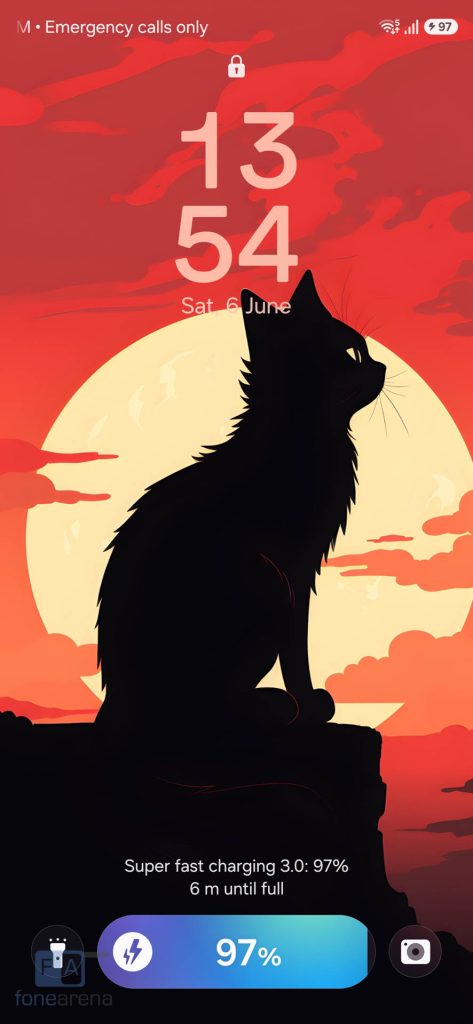
Charging, however, is a welcome step forward. With a compatible charger, the Galaxy S26 Ultra now supports up to 60W wired charging and up to 25W wireless charging via Qi2. A full charge from three percent to 100 percent took approximately 50 minutes, which is a significant improvement over its predecessors. The Galaxy S series has historically lagged behind the competition on charging speeds, so it is encouraging to see Samsung finally close that gap.
Conclusion
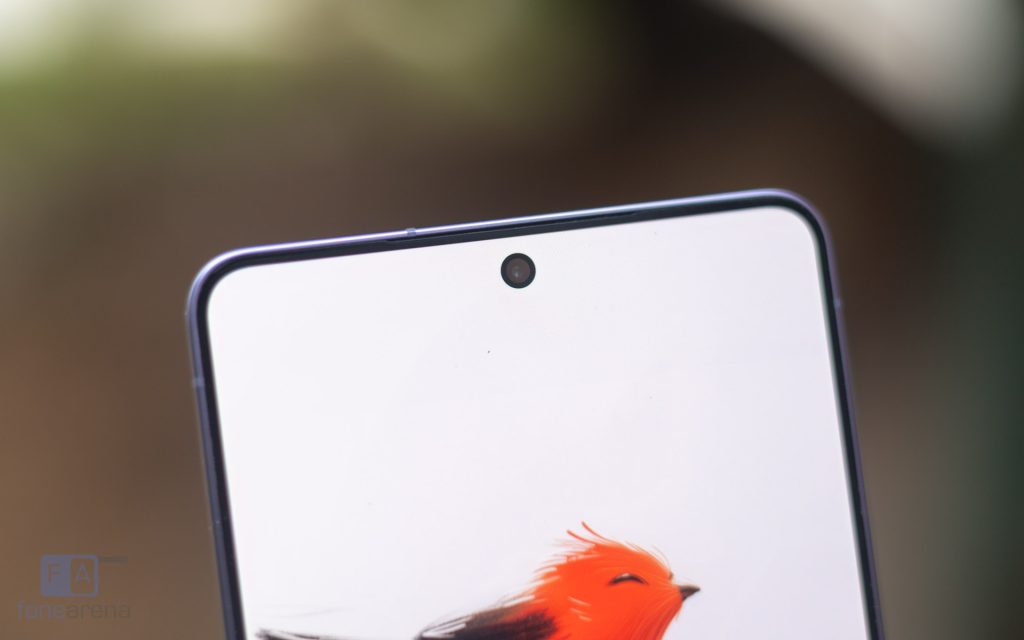
The Samsung Galaxy S26 Ultra is a polished, capable flagship that delivers on most fronts. The Privacy Display is a genuinely innovative first, the Snapdragon 8 Elite Gen 5 processor keeps performance well ahead of daily demands, and the camera system remains one of the most versatile available on any Android smartphone. Charging speeds have also taken a meaningful step forward with Super Fast Charging 3.0. And Samsung’s seven-year software support commitment continues to be one of the strongest in the business.
That said, the Galaxy S26 Ultra is not without its shortcomings. Battery life is merely average for a flagship at this price point, particularly when competing devices are offering considerably more endurance. Zoom performance beyond 30x has fallen behind the Vivo X300 Ultra and OPPO Find X9 Ultra, and the S Pen orientation issue is an oversight that should not exist on a device of this calibre. Those coming from the Galaxy S25 Ultra will find the upgrades incremental at best.
For anyone upgrading from the Galaxy S23 Ultra or older, the Galaxy S26 Ultra is a compelling package and a worthwhile step forward. For everyone else, it remains the benchmark by which other Android flagships are measured, even if it no longer holds that position unchallenged.
Pricing and availability
The Samsung Galaxy S26 Ultra is now available starting at a price of Rs. 1,30,999 for the 12GB + 256GB version, Rs. 1,50,999 for the 12GB + 512GB version and Rs. 1,80,999 for the 16GB + 1TB version.