
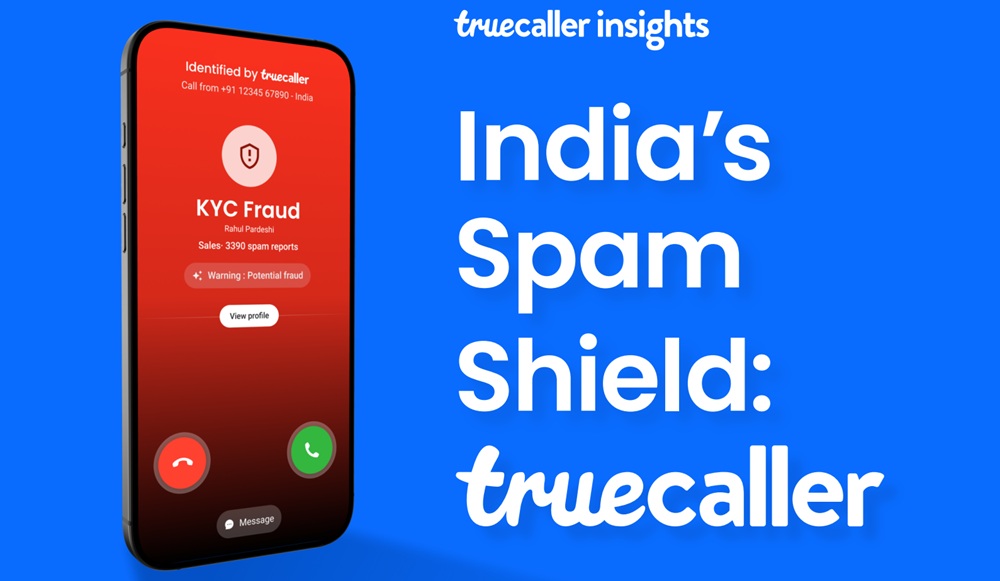
Truecaller today announced its 2025 India Insights Report, India’s Spam Shield, revealing that Indians received more than 4,000 crore spam calls in 2025, reflecting the growing scale of fraud, disruption, and digital risk in everyday communication.
In India, every phone call carries meaning—it can deliver vital information, open opportunities, or expose individuals to serious risk. With the country advancing toward a digitally empowered and globally competitive economy under the vision of Viksit Bharat, trust in communication has become a defining pillar of progress.
The report provides a data-driven view of how spam and fraud are reshaping communication in India and how technology helps protect crores of people daily.
The Scale of Communication Risk in 2025
According to Truecaller’s report:
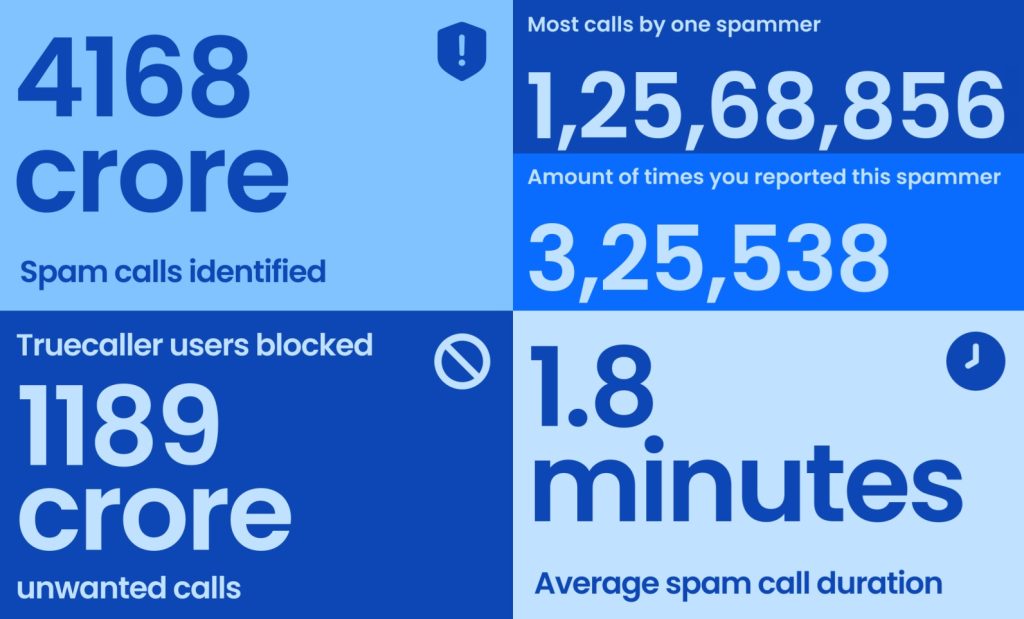
- Total spam calls identified: 4,168 crore
- Spam calls blocked by users: 1,189 crore
- Fraudulent calls detected: 770 crore
- Average spam call duration: 1.8 minutes
- Spam messages detected: 12,903 crore
These figures reflect billions of moments of potential disruption, confusion, and risk, as well as billions of moments where harm was prevented. Fraudulent calls frequently impersonated banks, government authorities, payment platforms, and well-known brands. Spam messaging remained a major concern, increasing notably in the second half of 2025.
Protecting Time, Attention, and Confidence
Community reporting and Truecaller’s blocking tools prevented 1,189 crore calls from reaching users, translating into:
Time saved:
- 21.7 lakh hours every day
- Over 1.5 crore hours every week
- Roughly 250 years of human life per day
Protection offered:
- Reduced stress and urgency-driven mistakes
- Preserved focus and confidence in digital interactions
Blocking spam calls protects users’ attention and digital confidence, in addition to saving time.
Scam Patterns and Emerging Threats for 2026
The report identifies scam tactics expected to become more prominent in 2026:
- Identity verification scams
- Impersonation using familiar institutions
- Multi-step fraud combining messages and calls
- AI-generated voice messages
- Migration of scams to third-party messaging platforms such as WhatsApp and Telegram
Trust will increasingly rely on behavioural context, community reporting, and long-term activity patterns, rather than isolated signals.
Guidance for Users
Truecaller recommends:
- Be cautious with urgent requests related to banking, KYC updates, account suspension, or law enforcement.
- Avoid responding to calls or messages flagged as spam or suspicious.
- Never share sensitive information such as OTPs, PINs, passwords, Aadhaar, PAN, or bank details.
- Avoid clicking unknown links or installing apps from untrusted sources.
- Treat unexpected offers, refunds, or requests claiming to represent organisations with scepticism.
- Rely on trusted identification tools and community reporting.
Outlook
As spam and fraud continue to evolve, protection systems must adapt. Truecaller will focus on strengthening detection, context, and collective signals to reduce risk before users are forced to make decisions, helping maintain secure communication in India.
Speaking on the insight, Rishit Jhunjhunwala, CEO, Truecaller, said:
In a country where connectivity is powering opportunity at every level, trust has become our most valuable digital asset. Fraud today is not just a technical problem, it is a human one. It exploits fear, urgency, and uncertainty in moments that matter most. Our responsibility is to make sure that no Indian has to choose between staying connected and staying safe. Our focus at Truecaller is simple: help people stay connected without compromising their safety and preventing risk before it turns into loss.