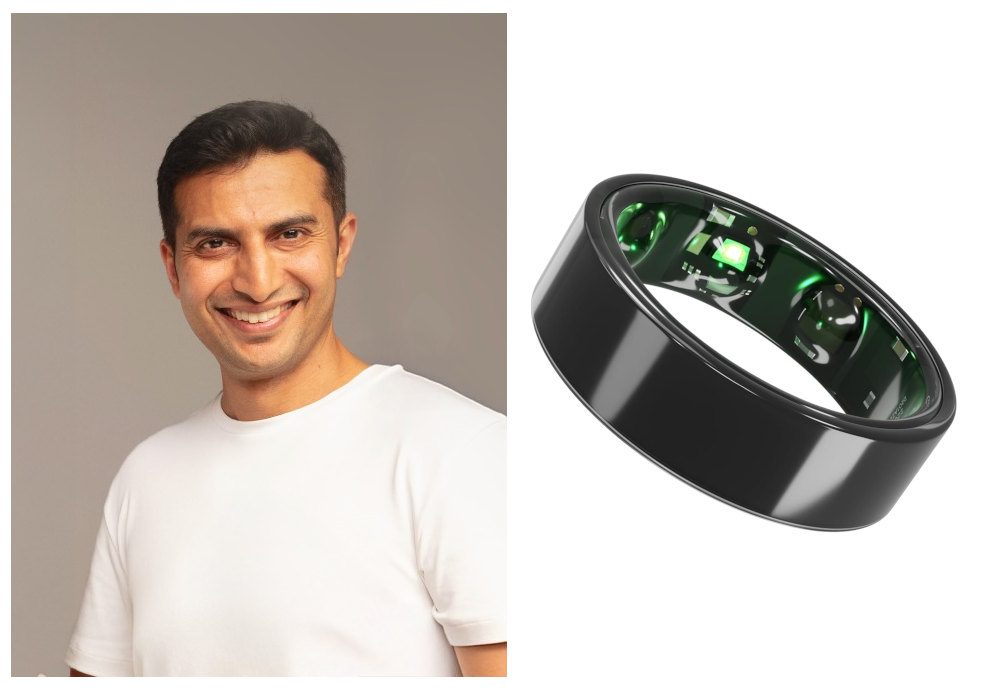
Hardware is quickly becoming a commodity in the premium wearable market, but the strategy behind the tech is where the real battles are being fought. Gabit, founded by Zomato co-founder and former COO Gaurav Gupta, is taking a vastly different path from global giants by ditching subscription fees and focusing entirely on a deeply integrated wellness ecosystem.
From tracking 150 different biomarkers on a single platform to engineering physical solutions for gym-goers, Gabit is out to rewrite the preventative healthcare playbook in India. I had a chance to connect with Gaurav Gupta, Founder, Gabit, to decode the company’s vision, the choice of the ring form factor, and why he believes the consumer universally rejects hardware paywalls.
The Pivot to Preventative Health
Varun: You spent a long time at Zomato as a co-founder and COO, leading major milestones like the IPO roadshow. What triggered the shift from tech and logistics to building a dedicated health ecosystem like Gabit?
Gaurav: During COVID, I fell in love with health as a mission because I lost fifteen kilos of weight. For the first time in life, travel stopped for me, and my metabolic age came down crashing by almost fourteen years. I thought, this is magical. I wanted to use my capability to build something in health because I saw massive impact and opportunity. We started building Gabit almost four years back, but we launched for customers two years ago.
The transition from an idea during COVID to an actual market player has been a fantastic journey. The honest answer is I’m loving the impact it’s driving. We’ve been fortunate with customer love; we got the best Smart Ring of the Year award by Amazon last year, and we just got the award from NDTV Gadget 360 this year.
Why the Ring Over the Wristband
Varun: Packing sensors and batteries into something as tiny as a ring is notoriously difficult, yet you chose it as your primary wearable form factor. Why do you favor rings over traditional smartwatches or screenless fitness bands?
Gaurav: I am actually in favor of rings more than any other form factor as of today based on whatever we’ve seen till now, including bands and watches.
First, look at battery life. In spite of the small form factor, we’ve been able to pack seven to ten days of battery. People hate to charge their products, and that’s the problem with watches—you have to charge them in the night to use them the next morning, so you can’t even use them for all twenty-four hours. Ninety percent of people can’t sleep with a band or a watch on their hand, which defeats the whole purpose of sleep tracking.
Second, it comes down to data and tracking accuracy. In watches and bands, the sensor throws and reflects light to understand your pulse through all that movement and wrist noise. Scientific papers show that because the sensor and the data are at the exact same location around the finger on a ring, it is much more accurate. Plus, a ring complements traditional watches beautifully. People love their mechanical automatics, and a ring lets them track their health discreetly.
Solving the Gym Dilemma
Varun: One major roadblock for smart ring adoption among fitness enthusiasts is weightlifting. Brands like Oura even advise users to take their rings off during heavy gym sessions to prevent structural damage or scratching. How did you address this?
Gaurav: One of the most frequent questions people used to ask us in month one was, “How do I lift weights with a ring on my finger?” So, we designed a custom cover called Ring Skin.
It’s like a cover for your phone, but for your ring. Because it’s made of silicone, it actually improves your grip and ensures a dumbbell doesn’t scratch the metal titanium. I was surprised no one else had launched this. I shot a quick reel showing how it works at my gym and posted it on Instagram. I had hardly any followers at the time, but the reel completely blew up and hit 31 million views. That told us exactly how relevant a solution like this is for everyday users who want a ring but don’t want to compromise their workouts.
AI-Driven Diagnostics Over Basic Hardware
Varun: You can find basic trackers anywhere now; a trip to Shenzhen can easily get you a white-labeled wearable. How does Gabit take that raw data and turn it into actionable insights using AI, especially for consumers who don’t understand baseline health metrics?
Gaurav: You’re completely right; it’s moving from hardware to software-based analytics. We target four key interconnected pillars: fitness, nutrition, sleep, and stress. We’ve gamified it to build intrinsic motivation. For example, my mother is a power user of the ring. She became so focused on avoiding a bad sleep score in the morning that she completely fixed her own sleep habits.
We also used AI to completely fix food logging, which is historically a high-inertia, cumbersome feature. We built an AI-powered voice engine backed by a massive database of Indian dishes. Now, I just log my food by speaking directly into the app: “Three scrambled eggs for breakfast, one chicken salad for dinner,” and it instantly processes my fat, protein, fiber, and carbs against my daily energy expenditure.
Our biggest step forward is Gabit One, a proprietary AI engine we launched in beta. Instead of jumping between four different apps for your wearable data, smart scale, blood tests, and CGM, Gabit One processes 150 markers under one roof to find cross-parameter correlations.
When I put my own data through it, the AI gave me a highly specific warning: “You have increased your workout intensity and reduced your carbs a lot over the last four months, and it is showing a stress on your pancreas in your blood report. Stop doing these two in such extreme fashion.” No standalone hardware or generic lab report could give you a recommendation that contextualized.
The Stance Against Subscriptions
Varun: Global market leaders like Whoop and Oura lean heavily into monthly recurring memberships. Gabit is sold as a one-time purchase with no subscription. How do you justify the ongoing server and infrastructure costs without a paywall, and is a subscription just a hard sell for the Indian market?
Gaurav: From my time at Zomato to what we are building now, the one core principle is that you have to build entirely for the consumer. When I talk to hundreds of customers both in India and globally, the feedback is unanimous: “I hate a subscription on my hardware.”
Consumers don’t expect to pay a recurring fee just to look at their own steps or sleep data. Because we designed Gabit as a full health ecosystem rather than just a ring company, our business model doesn’t rely on software lockouts.
We monetize across the entire health journey. Once users see their continuous tracking data intersect with their quarterly blood markers on our platform, they naturally rely on our broader services. They use our integrated coaching, book native blood tests through our logistics partners, or buy our science-backed NACK supplements. We even want to get to the point where our data tells a user, “This specific supplement isn’t working for your body; please stop buying it and try this instead.” If you drive genuine health outcomes, the business model scales naturally. You don’t need to lock their data behind a paywall.
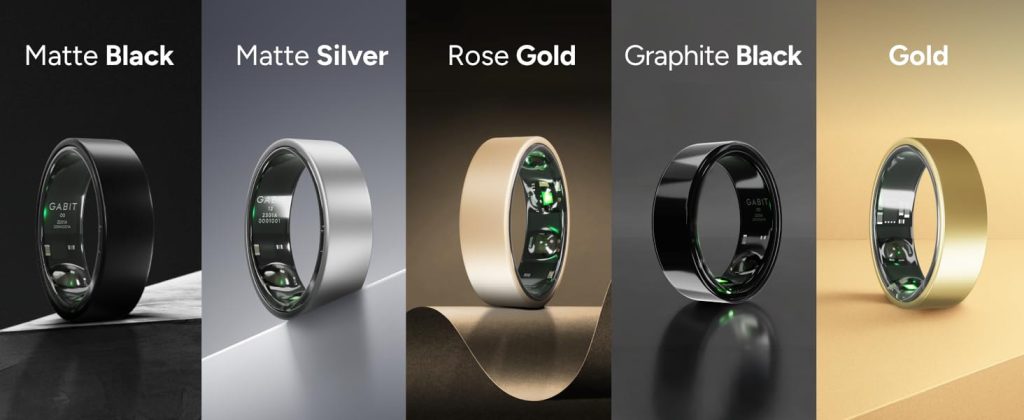
Gabit Smart Ring is available from Gabit website and other online retailers such as Amazon.in for Rs. 14,500.