
According to Ookla’s latest report, which analyzed Speedtest Intelligence® and Cell Analytics™ data, India has seen a major digital transformation over the past 3–5 years. As the world’s second-largest telecom market, India has made considerable progress in connecting over 650,000 villages.
Key trends include:
- Steady subscriber growth and rising data consumption
- Rapid deployment of advanced technologies, including 5G
- Persistent differences in connectivity between urban and rural areas
Urban-Rural Mobile Penetration Gap
India’s telecom growth has been supported by affordable tariffs, expanded coverage, and new technologies. Mobile data traffic surged 23% year-over-year in 2024, reaching 21.5 exabytes per month. Total wireless subscribers rose from 1,147.39 million (June 2022) to 1,170.88 million (June 2025).
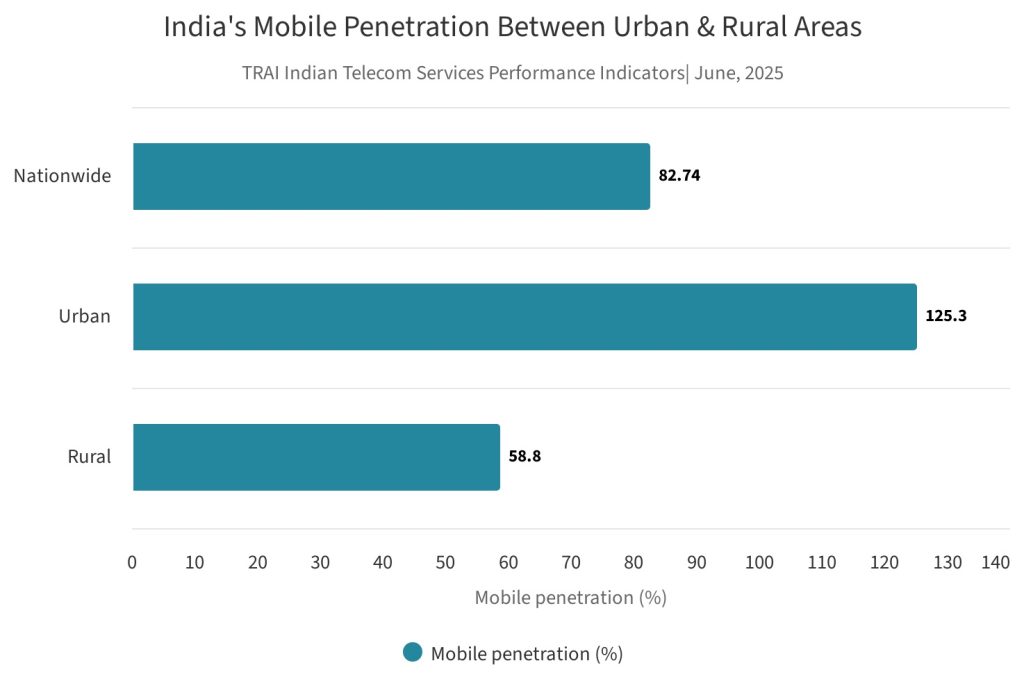
Despite expansion, rural areas lag behind urban centers:
- National teledensity: 82.74%
- Urban teledensity: 125.3%
- Rural teledensity: 58.8%
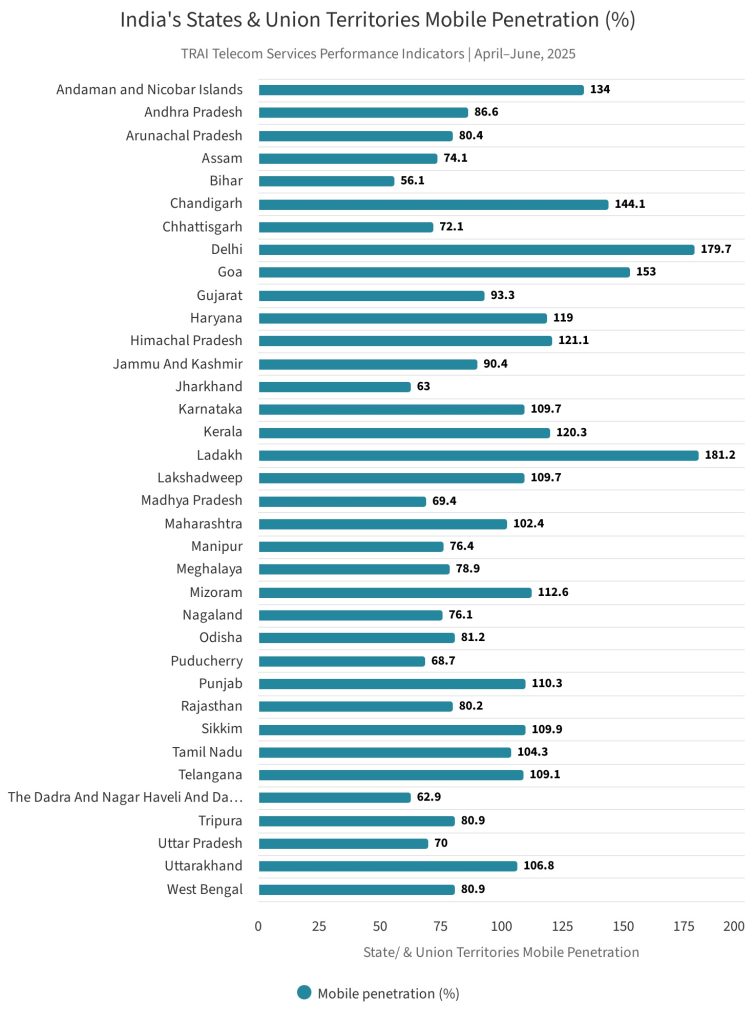
Highest urban penetration:
- Delhi: 179.7%
- Goa: 153.0%
- Chandigarh: 144.1%
Lowest rural penetration:
- Bihar: 56.1%
- Dadra and Nagar Haveli & Daman and Diu: 62.9%
- Jharkhand: 63.0%
Exception: Ladakh – 181.2%, due to military presence, tourists, seasonal labor, and government investment in secure communication infrastructure.
Government Initiatives Supporting Rural Connectivity
India has launched targeted initiatives to improve mobile access in remote areas:
- Digital Bharat Nidhi (formerly USOF): Funds rural telecom infrastructure
- BharatNet Project: Provides high-speed broadband to 250,000+ Gram Panchayats; ~220,000 are service-ready
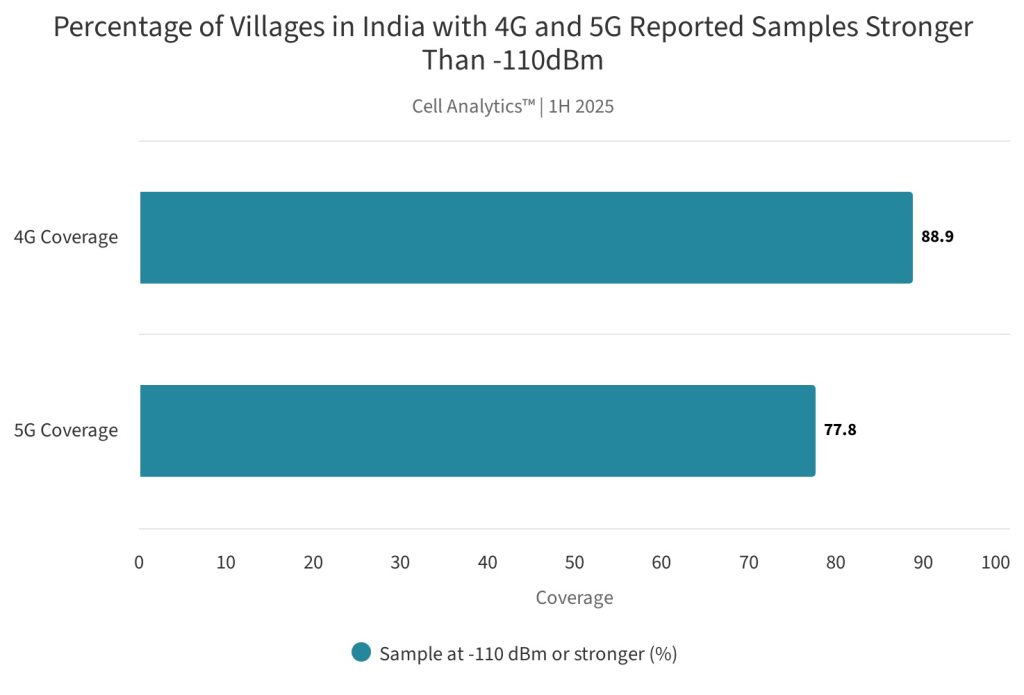
Cell Analytics™ data (1H 2025) reveals:
- 4G coverage: 88.9% of villages report signal strength > -110 dBm
- 5G coverage: 77.8% of villages report signal strength > -110 dBm
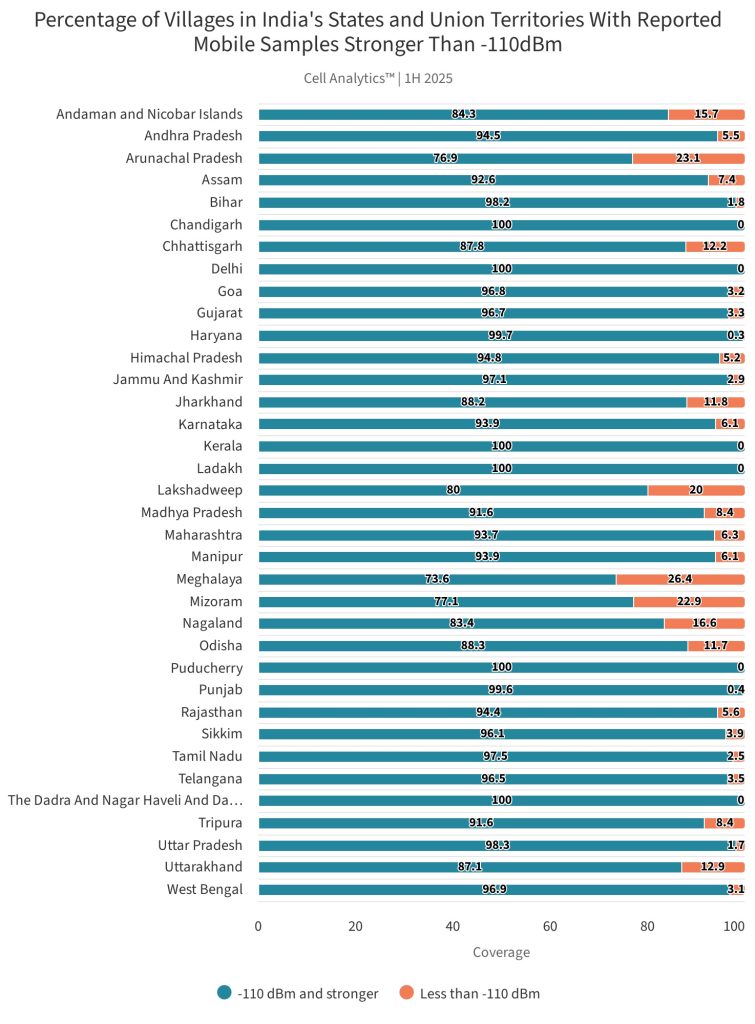
Top coverage states/UTs:
- Delhi, Kerala, Chandigarh, Puducherry: 100% villages with reliable signal
- Punjab: 99.6%, Haryana: 99.7%
Low coverage regions:
- Meghalaya: 26.4% villages without mobile samples
- Arunachal Pradesh: 23.1% villages without mobile samples
Mobile Network Performance Across India
India’s 5G rollout, one of the fastest globally since October 2022, had 469,000+ 5G BTSs deployed by February 2025. Median download speeds nationwide generally exceed 40 Mbps, with urbanized and smaller territories leading.
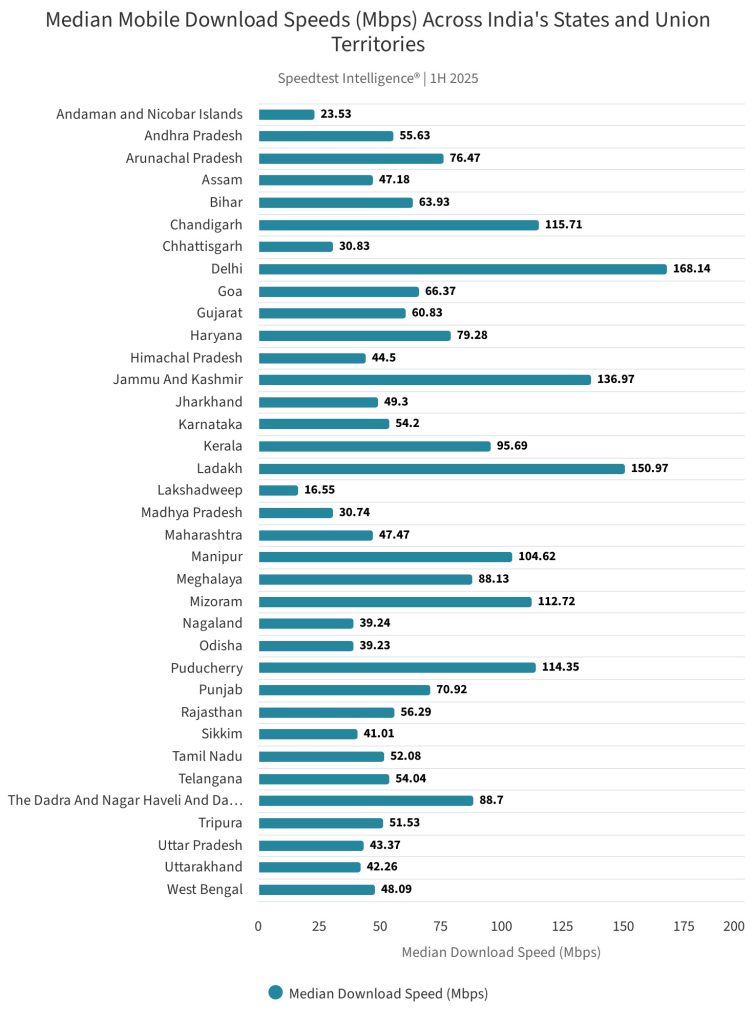
Top regions by median speed:
- Delhi: 168.14 Mbps
- Chandigarh: 115.71 Mbps
- Puducherry: 114.35 Mbps
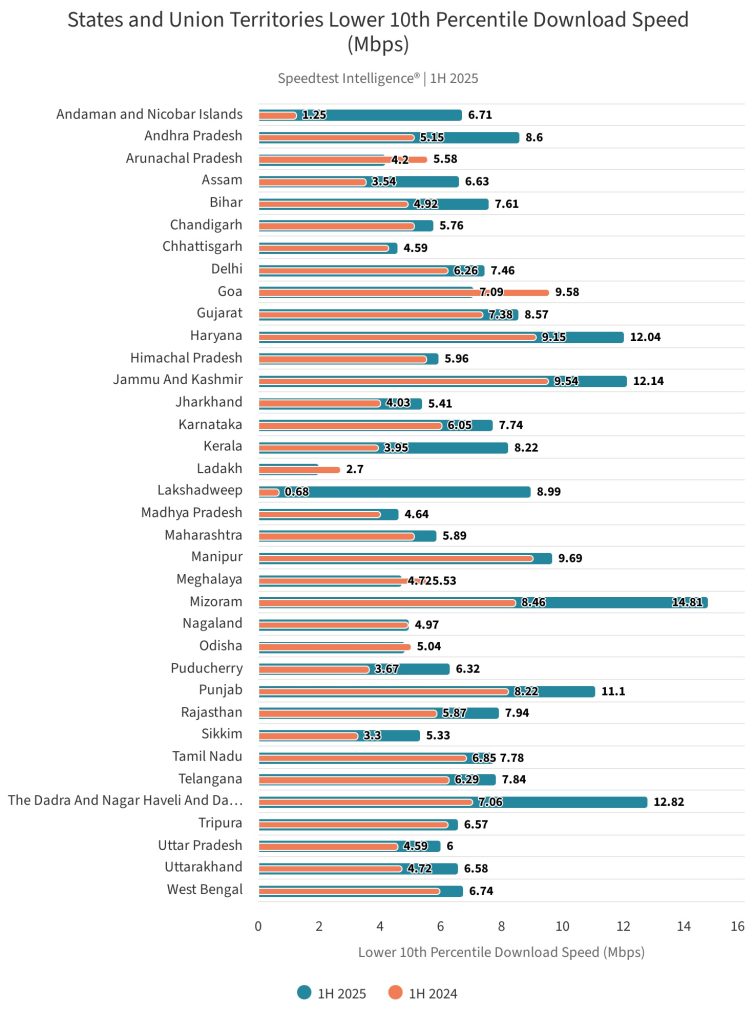
Lower-performing areas show major gains:
- Lakshadweep: 10th percentile speed increased from 0.68 Mbps → 8.99 Mbps
- Andaman & Nicobar Islands: 1.25 Mbps → 6.71 Mbps
Strategic exceptions:
- Ladakh: 150.97 Mbps
- Jammu & Kashmir: 136.97 Mbps
These improvements indicate that connectivity gains are reaching previously underserved regions, enhancing access to services beyond urban centers.
Outlook
India’s digital connectivity journey demonstrates significant progress, yet key challenges remain. While widespread 4G coverage, expanding 5G networks, and improvements in lower-speed regions have strengthened access, last-mile connectivity in rural and remote areas still requires sustained public-private collaboration and targeted investments.
Future growth will depend on:
- Completion of the Amended BharatNet Program and 4G Saturation Project
- Continued deployment of 5G infrastructure and expansion of affordable devices like JioBharat
- Policy and regulatory support to incentivize operators in low-density and difficult terrain areas
With these measures, India is poised to bridge the urban-rural digital divide, enabling equitable access to mobile networks, broadband services, and emerging technologies across all villages.