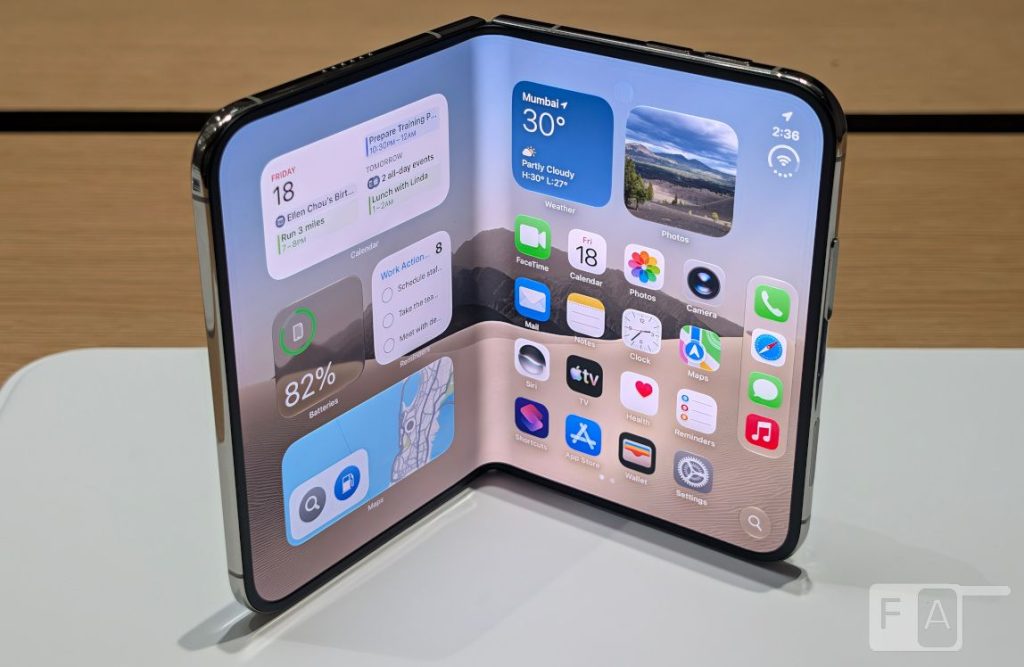
Apple has announced new and expanded agreements with several U.S.-based manufacturers to supply materials and components for its latest devices, including the iPhone Duo and iPhone 18 Pro.
The partnerships fall under the company’s American Manufacturing Program (AMP), an initiative introduced last year as part of a broader four-year, $600 billion domestic investment commitment.
According to company figures, Apple currently engages suppliers across all 50 states, supporting approximately 450,000 domestic jobs. The latest agreements focus on raw material processing, optical components, semiconductor fabrication, and advanced packaging.
Key Component and Material Agreements
- Perryman Company (Houston, Pennsylvania): Apple has committed up to $100 million over the next three years to source Grade 5 titanium for the iPhone Duo’s enclosure. The family-owned specialty metals producer melts, forges, and rolls titanium containing a minimum of 80% recycled content at its Pennsylvania facility to supply the foldable device’s structural frame.
- Qnity Electronics (Delaware): Operating under the AMP since March, Qnity is manufacturing advanced optical films for the iPhone 18 Pro’s variable aperture system. This mechanism adjusts light intake and depth of field within the device’s 48-megapixel Fusion Main camera.
Apple reported that nearly 100 components across both the models—ranging from silicon to structural assemblies—are sourced from domestic facilities in more than a dozen states.
Updates Across Long-Term Domestic Suppliers
The announcement also detailed operational milestones across several other major U.S. manufacturing partners:
-
Broadcom (Fort Collins, Colorado): Following a $1.5 billion capital investment announced in July, Broadcom is expanding and modernizing its facility to manufacture radio frequency components. The multiyear agreement covers the projected production of more than 15 billion domestic chips.
- Corning (Harrodsburg, Kentucky): Corning’s Kentucky plant, a manufacturing partner for Apple since the first iPhone in 2007, continues to supply specialty cover glass, including Ceramic Shield. By the end of 2026, the Harrodsburg facility is slated to produce all cover glass used globally across the iPhone lineup and the Apple Watch.
- Coherent (Sherman, Texas): Coherent supplies vertical-cavity surface-emitting laser (VCSEL) components utilized in Apple’s Face ID and sensor systems, including the optical modules for the updated Dynamic Island on the iPhone 18 Pro series.
- TSMC (Phoenix, Arizona): The foundry’s Arizona site continues to ramp up production of advanced logic silicon across Apple’s product lines, with domestic production for Apple expected to exceed 100 million chips in 2026. Construction on the site’s north campus is ongoing.
- Amkor Technology (Peoria, Arizona): Having broken ground on a packaging and test facility in September 2025, Amkor commenced shell construction earlier this year. Once fully operational, the first two phases are expected to employ over 3,500 personnel, with Apple slated as one of the facility’s primary anchor customers.
Environmental Directives and Training Facilities
Under Apple’s corporate mandate to achieve net-zero carbon emissions across its entire operational footprint by 2030, all direct suppliers must transition their production for Apple to 100% renewable energy before the end of the decade. The supplier contracts also stipulate increased integration of recycled materials.
Complementing its production agreements, Apple opened a 20,000-square-foot Advanced Manufacturing Center (AMC) in Houston, Texas, in August. The training facility—the company’s second dedicated manufacturing education hub in the United States—provides small- and medium-sized enterprises with technical instruction in final assembly processes and printed circuit board assembly (PCBA) design.
The center is co-located within the Houston complex that manufactures Apple’s AI server hardware and is scheduled to begin production of the Mac mini later this year.