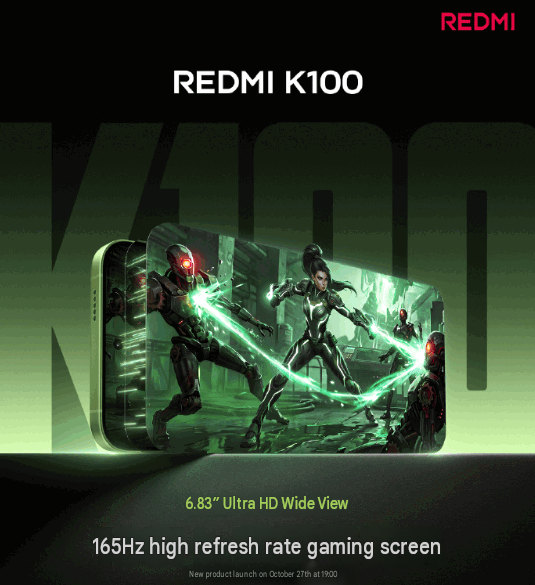
Xiaomi has officially scheduled the release of its REDMI K100 smartphone for October 27 in China after the REDMI K100 Pro and Pro Max was introduced back in August.
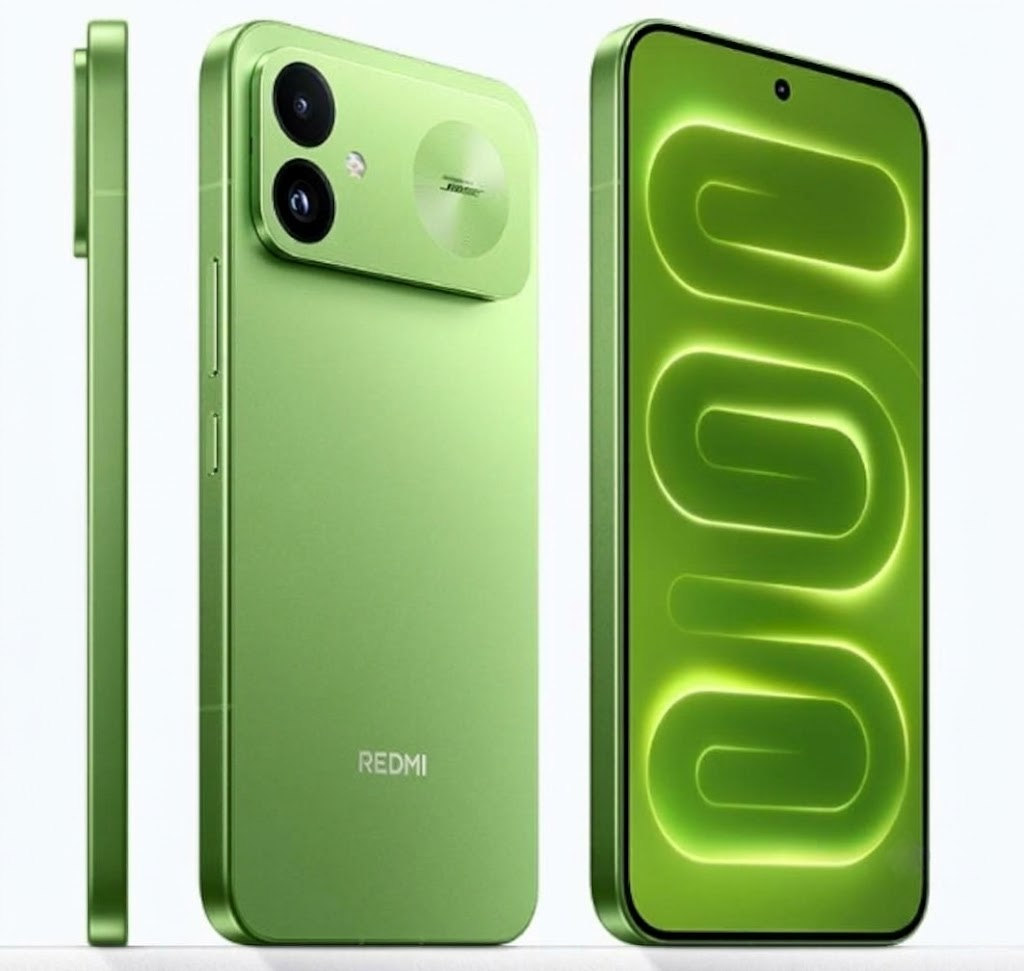
Ahead of the debut, the company shared key specifications regarding the device’s display, performance hardware, and software capabilities, alongside official promotional imagery highlighting a new “Flame Green” colorway. The image confirms a metal frame and Sound by Bose branding.
High-Refresh-Rate Display and Gaming Optimizations
The REDMI K100 features a 6.83-inch display with a 165Hz refresh rate. According to the manufacturer, the device natively supports 165fps modes in more than 40 mobile titles.
Key display and touch specifications announced by the brand include:
- Refresh Rate: 165Hz
- Touch Sampling: 480Hz multi-finger touch reporting rate with a 3500Hz instantaneous touch sampling rate
- Luminance: Up to 3500 nits peak brightness
- Eye Care: Xiaomi Green Mountain Eye Protection 4.0 certification
Hardware Architecture: Snapdragon 8 Elite and Dedicated D2 Graphics
Under the hood, the REDMI K100 is powered by Qualcomm’s Snapdragon 8 Elite flagship platform. In addition to the primary system-on-chip, the standard configuration integrates a D2 dedicated gaming graphics card.
Xiaomi reports that this dual-chip setup aids in frame-rate stabilization and thermal efficiency. In testing with Honor of Kings running on ultra-high graphics presets with the dedicated graphics over-frame mode engaged, the device sustained 144fps while reducing average power consumption by 1.1W compared to baseline operations.
Xiaomi Surge OS 4 Software Integration
The handset will launch running Hyper OS 4. Xiaomi highlights several core resource-management improvements designed to optimize long-term efficiency:
- Load Calculation & Allocation: Finer-grained system resource matching based on real-time task demands.
- Memory Pre-loading: Predictive caching mechanisms that allocate memory to frequently used applications in advance.
- Native App Optimization: Refined execution paths specifically targeted at first-party system services to reduce background overhead.
Full retail pricing, configuration tiers, and regional availability details will be announced during the official presentation on October 27.