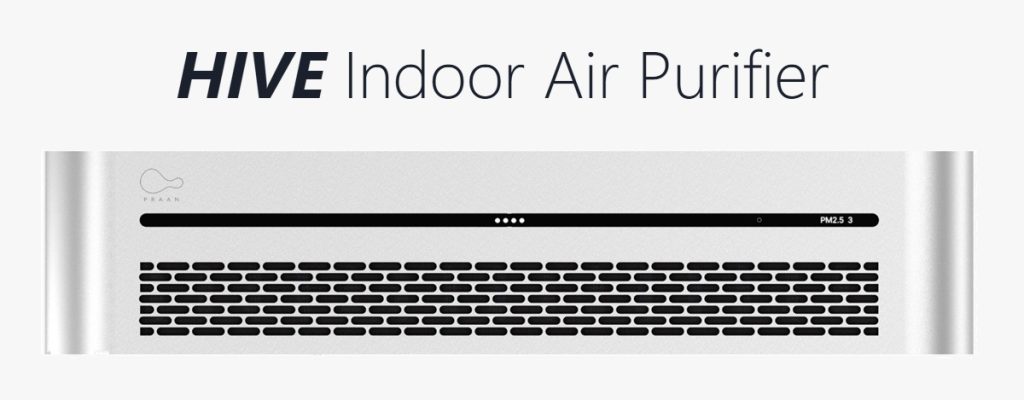
Praan has launched a new generation of HIVE, its air purification system used in homes, workplaces, cafés and enterprises across India. The new model is 62 mm smaller and 30% more affordable than its predecessor, with more than 2 million people expected to benefit from HIVE-powered spaces across over 1,500 locations in eight countries in 2026.
Praan HIVE features
HIVE combines medical-grade air purification with a health and environmental intelligence platform. Its features include:
- H14-grade HEPA filtration: The filtration system is tested to capture particles as small as 0.015 µm, compared with the 0.3 µm benchmark commonly associated with HEPA13 air purifiers.
- Gaseous pollutant filtration: Catalyst-doped activated carbon is engineered to increase adsorption rates by approximately seven times, according to Praan.
- Airflow optimisation: Praan redesigned the internal airflow across the fans, filters and curved internal surfaces to reduce the system’s size while retaining its clean-air performance.
- Environmental monitoring: HIVE continuously monitors particulate pollution, carbon dioxide (CO₂), total volatile organic compounds (TVOCs), temperature, humidity and ambient sound.
- Self-cleaning sensors: These are designed to maintain reliable readings over time.
- EDITH AI assistant: Praan’s AI-powered health and automation assistant lets users talk to it to understand environmental metrics, while HIVE automatically responds to changing conditions.
- Praan Vision: This augmented-reality platform lets users visualise pollutants around them and observe their concentrations fall as HIVE cleans the room.
Together, HIVE’s purification, sensing and intelligence systems provide an ongoing picture of indoor environmental conditions and their potential effects on human physiology.
Design changes and development
Praan said it spent the past year re-engineering HIVE’s airflow architecture, electronics, sensing systems and manufacturing processes to reduce its size and price without reducing performance. The company initially developed air purification systems for industrial environments, where particulate concentrations could exceed 100,000 µg/m³, before expanding its focus to indoor air quality.
Praan first unveiled an early HIVE prototype at CES in 2023 and has since continued to rebuild the platform based on experience gained from deployments across homes and enterprises. The company also said customers have reordered HIVE as many as 37 times within the same year without paid advertising.
Quick Specs: Praan HIVE
- Filter: HEPA14, medical-grade
- Particle capture: As small as 0.015 µm
- Coverage area: Up to 350 sq. ft.
- ACH: 5
- CADR: 245 CFM (416.26 m³/h)
- Noise level: 52–80 dBA
- Gas/VOC adsorption: ACF-K gas adsorption sponge, claimed to be around 7x faster than traditional activated carbon systems
- Sensors: PM1.0, PM2.5, PM10, TVOC, temperature, humidity, carbon dioxide, ambient sound, RFID and infrared
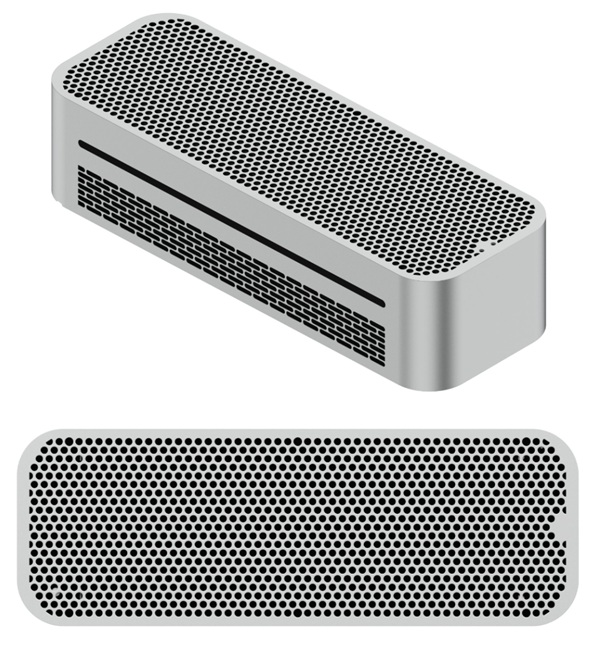
- Dimensions: 622 × 224 × 150 mm
- Weight: 8.50 kg
- Cord length: 1.5 m
- Connectivity: 2.4GHz Wi-Fi, Bluetooth Low Energy
- Filter life tracking: Real-time tracking based on usage and dust exposure
- Build material: Aerospace-grade aluminium
- AI assistant: Built-in conversational AI assistant
- Augmented reality: Built-in real-time visualiser
Future plans
Praan is developing systems that combine air purification, fresh air, humidity control, sensing and environmental intelligence to expand its work into other aspects of indoor environmental management. The company aims to bring cleaner air to 200 million people over the next 12–18 months, with a longer-term goal of reaching billions.
Pricing and availability
The new Praan HIVE is available for Rs. 49,999, inclusive of taxes, at Praan.io. The previous generation was priced at Rs. 60,000 plus GST, bringing its total price to Rs. 70,800.
Speaking on the launch, Angad Daryani, Founder & CEO of Praan, said,
When we started Praan, we were solving pollution in some of the harshest environments imaginable. Once we had solved air pollution in factories where particulate levels could exceed 100,000 µg/m³, we asked ourselves: if we can solve it there, why can’t we solve the air people breathe every day? Air purifiers have existed for decades, yet they still aren’t in every room of every home. We wanted to change that by building an aspirational product that delivers better air, makes the invisible visible and helps people understand the environment around them.