
At CES 2026, Intel introduced the Intel Core Ultra Series 3 processors, the company’s first AI PC platform built on Intel 18A process technology, designed and manufactured in the United States. The platform supports over 200 designs from global partners and is Intel’s most widely available AI PC platform to date.
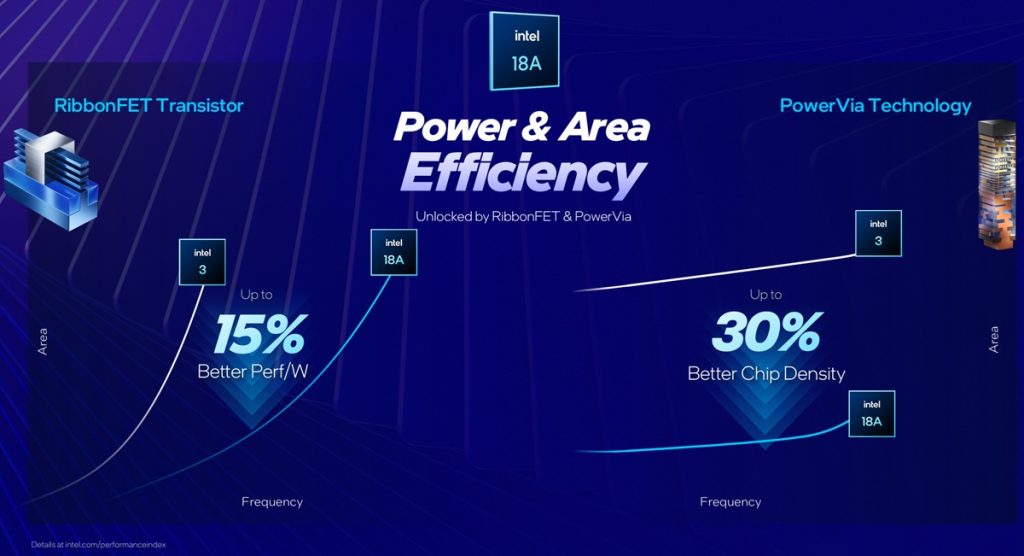
Intel Core Ultra X9 and X7 Processors
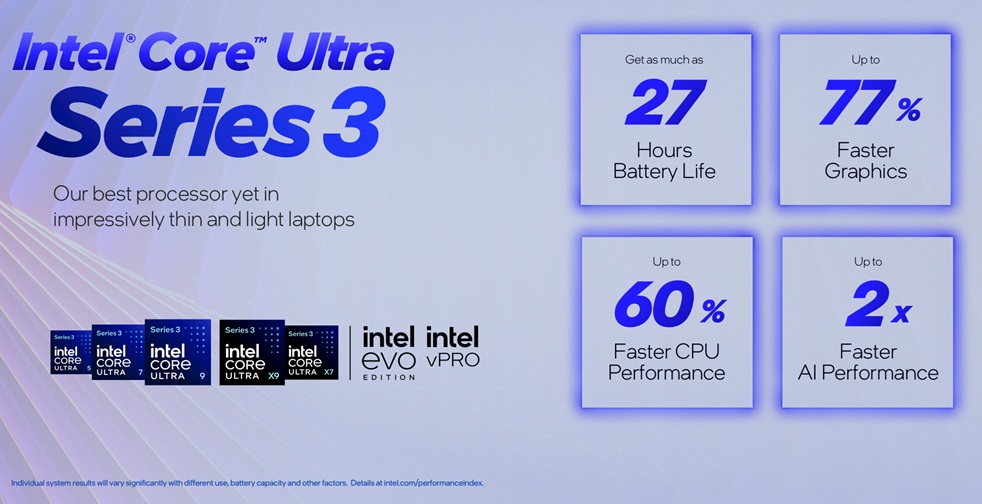
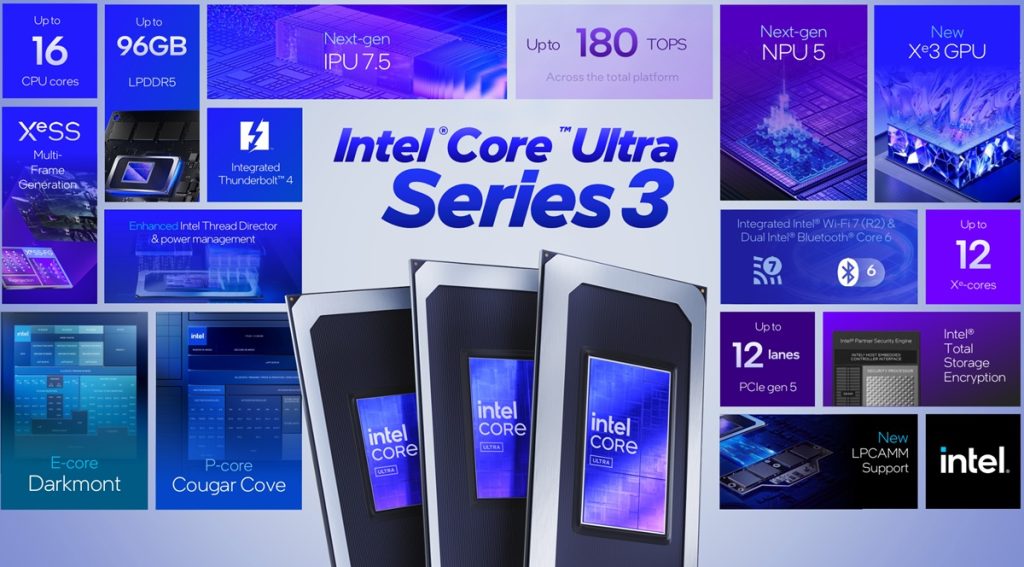
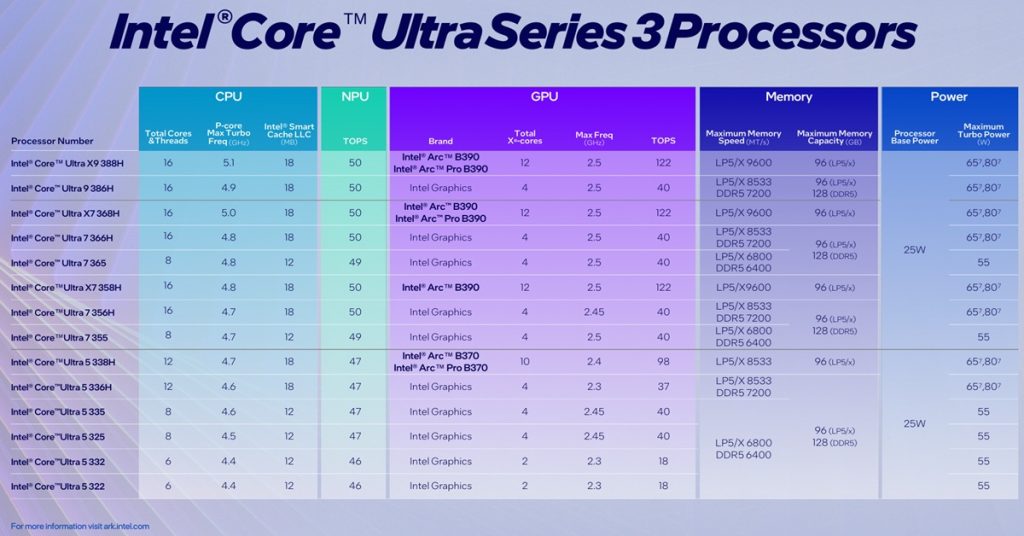
The Series 3 mobile lineup introduces a new class of Intel Core Ultra X9 and X7 processors with integrated Intel® Arc™ graphics, designed for multitasking, creation, gaming, and productivity. Key specifications include:
- Up to 16 CPU cores
- Up to 12 Xe cores
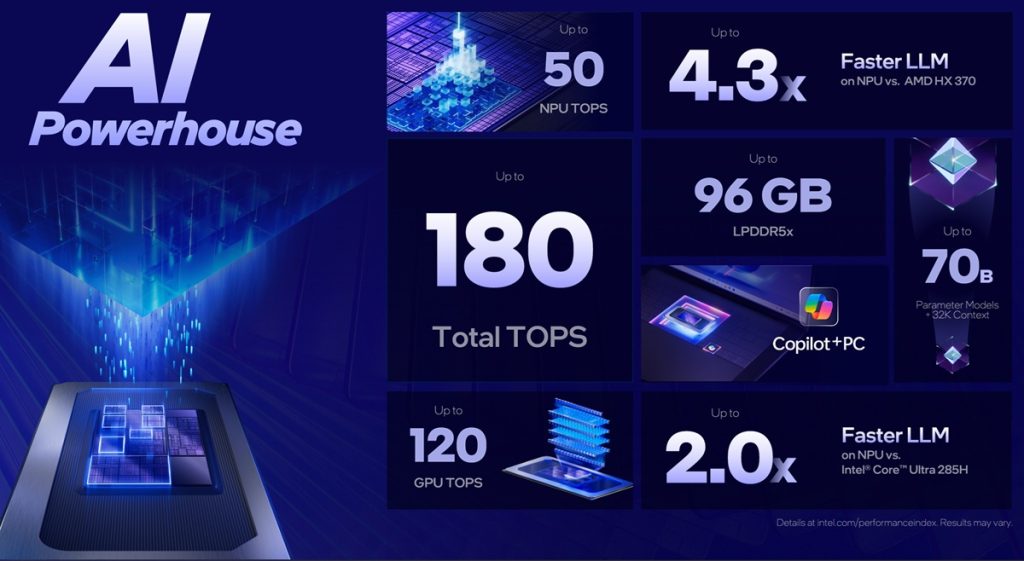
- 50 NPU TOPS AI acceleration
- Up to 60% better multithread performance, 77% faster gaming performance, and 27 hours of battery life
The Series 3 family also includes Intel Core processors for mainstream laptops. These processors use the same architecture as Series 3, enabling efficient and performant designs at lower price points.
Edge and Industrial AI Applications
Series 3 processors are also certified for embedded and industrial use, supporting extended temperature ranges, deterministic performance, and 24/7 operation.
In edge AI workloads, Series 3 provides:
- 1.9x higher large language model (LLM) performance
- 2.3x better performance per watt per dollar in end-to-end video analytics
- 4.5x higher throughput for vision language action (VLA) models
The integrated AI acceleration enables a single-chip system-on-chip (SoC) solution, reducing total cost of ownership compared with traditional multi-chip CPU and GPU architectures.
Availability
Consumer laptops with Intel Core Ultra Series 3 processors are available globally starting Jan. 27, 2026, with pre-orders beginning Jan. 6, 2026. Edge systems will be available in Q2 2026.
Speaking on the announcement, Jim Johnson, Senior Vice President and General Manager, Client Computing Group, Intel, said:
With Series 3, we are laser focused on enhancing power efficiency, adding more CPU performance, a bigger GPU in a class of its own, more AI compute and app compatibility you can count on with x86.