
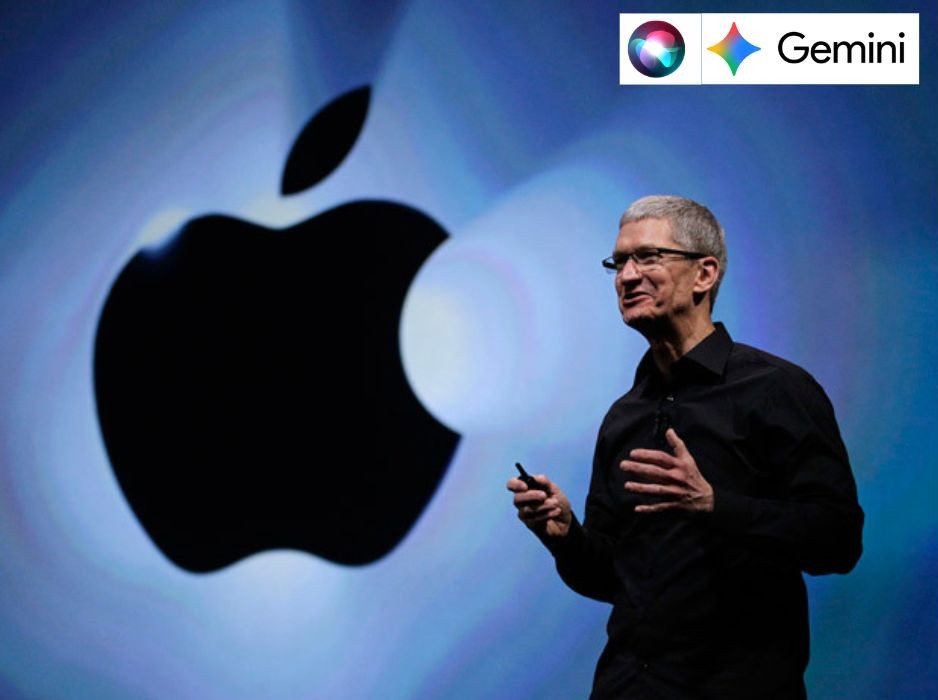
Apple is set to reveal a major update to Siri next month, according to Bloomberg’s Mark Gurman. The company has overhauled its AI strategy, entered a partnership with Google, reshuffled leadership, and is developing two new versions of Siri. These updates coincide with Apple’s 2026 Mac launch plans and new design leadership under CEO candidate John Ternus.
Siri and AI Challenges
After delays to Apple Intelligence and Siri, Apple executives considered third-party AI solutions. Gurman reported that software chief Craig Federighi and other leaders explored this approach, raising concerns among the AI team. Leadership reassured staff that internal models remained a priority, but talent departures occurred, including foundation models lead Ruoming Pang. Apple Intelligence lagged behind rival platforms, and the Siri delay was a significant setback.
Search for AI Partners
Gurman noted that Apple initially explored partnerships with Anthropic PBC and OpenAI, but both presented challenges. Anthropic sought multi-billion-dollar annual contracts over several years, while OpenAI posed potential conflicts due to talent recruitment and hardware ambitions under former Apple designer Jony Ive.
Google emerged as the most viable option. Improvements in Google’s Gemini models, combined with a favorable ruling on the Apple-Google $20 billion-per-year search deal, enabled the partnership. By November, Apple finalized an agreement for Google to supply Gemini models for Siri and Apple Intelligence. These models initially run on Apple’s Private Cloud Compute servers, with plans to later leverage Google’s infrastructure for more advanced Siri versions.
Upcoming Siri Updates
Apple plans a public reveal of the first updated Siri in February, ahead of iOS 26.4 beta testing. This version, internally called Apple Foundation Models v10, uses Gemini models with 1.2 trillion parameters and is designed to deliver improved personal assistant capabilities.
A fully reimagined Siri, codenamed Campos, is expected at WWDC 2026 with iOS 27, iPadOS 27, and macOS 27. It will be conversational, context-aware, and capable of sustained dialogue, aiming to compete with ChatGPT, Google Gemini, and Microsoft Copilot. Apple Foundation Models v11, a more advanced iteration of Gemini, may run on Google’s cloud TPUs to enhance performance and responsiveness.
Organizational Changes and AI Strategy Shift
Craig Federighi now leads Apple’s AI initiatives following the sidelining of former AI chief John Giannandrea. Projects from the Giannandrea era, including World Knowledge Answers and AI-enhanced Safari, have been scaled back or paused. Apple is focusing on integrating AI across core apps rather than deploying separate chatbots.
Device-level AI models will continue to be developed in-house, but cloud-based models are now the primary priority. Apple plans higher-performance internal servers to support these efforts. Talent retention remains a concern, with engineers leaving for more stable or higher-paying positions. A planned external acquisition of a model developer was canceled, but the company continues to prioritize user-facing implementation over internal model expansion.
Outlook
Gurman expects Apple’s redesigned Siri to mark a major reset of the company’s AI strategy. By leveraging Google’s Gemini models, Apple aims to deliver a context-aware, conversational assistant capable of sustained dialogue. Cloud-based models are increasingly treated as a commodity, while device-level AI and user interfaces remain an internal focus.
A key question remains whether Apple will return to large-scale AI model development in-house or continue relying on third-party partnerships.