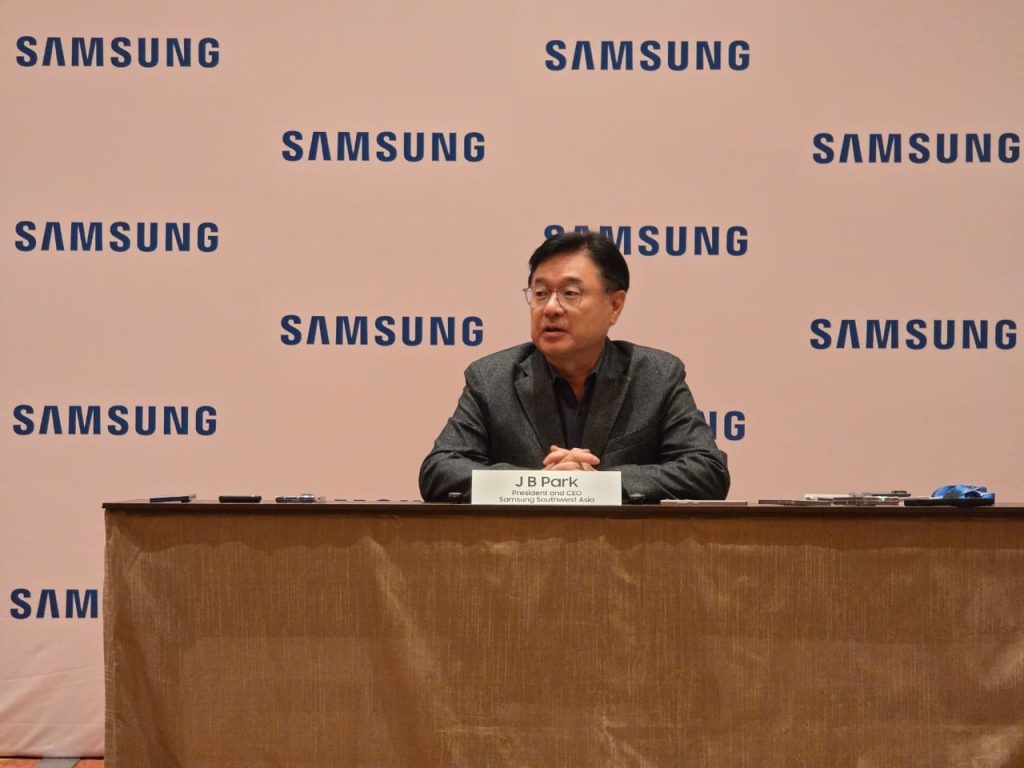
 Earlier this month, CES drew the global tech industry to Las Vegas, spotlighting cutting-edge displays and the next wave of autonomous innovation. FoneArena had the chance to meet JB Park, President and CEO of Samsung Southwest Asia, for a close look at how the global giant plans to weave artificial intelligence into the very fabric of Indian households. Moving beyond the buzzwords, Park laid out the vision where AI isn’t just a smartphone feature, but a silent orchestrator of domestic life—one that understands the nuances of a Kancheepuram silk saree as easily as the rhythm of a Mumbai kitchen.
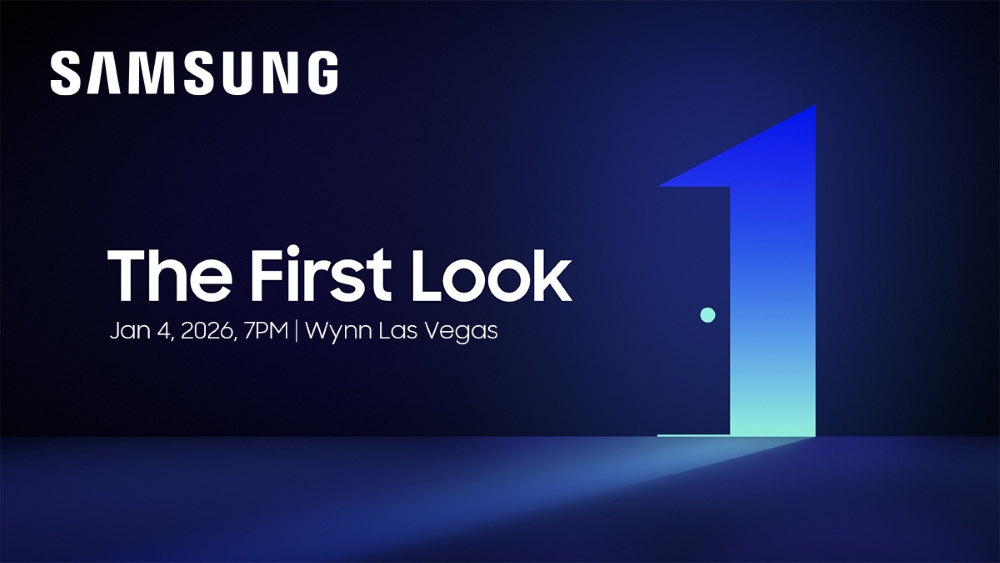
Samsung unveiled its Companion to AI Living vision at CES this year at their event The First Look where we got to hear more about the kind of device innovation we can expect to see across the company’s product portfolio. We got to see the Galaxy Z Trifold for the very first time along with the jaw-dropping Micro RGB 130 inch TV. There was some interesting showcase of innovations in domestic appliances and how AI is being integrated.
800 million mobile devices to have AI globally by end of 2026
Starting this year, the company will enable Wi-Fi across its home appliance portfolio and introduce built-in screens on premium refrigerators and washing machines, allowing these products to stay updated over time. With AI expected to expand across hundreds of millions of devices globally, Samsung plans to use its SmartThings platform to continuously monitor, control, and optimize connected appliances in an energy-efficient way, ensuring that even long-life products can evolve through software rather than frequent hardware replacements.
The India story
While the AI vision was showcased on a global stage, the natural next question was how and when these experiences would reach Indian consumers. Samsung has developed India-specific AI algorithms across its home appliance portfolio to reflect the country’s diversity in clothing and food. In washing machines, the AI can automatically detect textiles such as sarees and adjust wash cycles accordingly, while kitchen appliances feature embedded Indian recipes that adapt to locally used ingredients. Connected refrigerators can suggest Indian dishes based on available food items and seamlessly pass cooking instructions to microwave ovens, combining voice interaction, visual guidance, and automated cooking for a more localized experience.
India at the core of Samsung’s R&D
Samsung is positioning India as a critical pillar of its global AI strategy, backed by a workforce of more than 10,000 engineers across multiple R&D hubs. Its consumer electronics research is centered in Delhi, mobile R&D in Noida, and advanced multi-category and semiconductor architecture work in Bengaluru, where an additional 4,000 engineers contribute to chip and platform design. These teams are not just localizing products but shaping global software architecture, platform upgrades, and next-generation AI capabilities, as Samsung actively transitions its engineering base toward AI-first development.
I think India is and will be dominating the future of software and AI engineering
The company increasingly sees Bengaluru as a counterpart to Silicon Valley in its global innovation ecosystem. While Samsung Research America continues to play a key role in frontier development, Samsung Research Bengaluru is described as an equal contributor to AI breakthroughs and global rollout. With sustained investment in talent—from school-level problem-solving programs to advanced R&D—Samsung believes India is on track to become a dominant force in software and AI engineering, signaling a shift from the manufacturing-led growth of past decades to a future driven by intelligence, code, and deep-tech innovation.
Trade-in for coming soon for home appliances
Samsung aims to replicate its Galaxy Club mobile trade-in success within the home appliance and TV categories, transitioning away from the traditional 10-to-20-year ownership cycle. By introducing a model inspired by automotive leasing, Park envisions a structured upgrade path—potentially on a 60-month cycle—that allows consumers to recoup the resale value of older units. This initiative seeks to establish a certified, brand-backed secondary market, enabling users to stay current with rapidly evolving AI-driven hardware without the burden of high upfront costs for every upgrade.
On designing for the India market, he mentioned that Samsung operates a Design Center in Noida that focuses on industrial design for mobile phones and home appliances, including refrigerators and washing machines. The teams work up to two years ahead of launch, creating designs tailored specifically for Indian consumers, many of which are not offered in other global markets.
Galaxy Z Trifold India launch
Samsung said the TriFold remains a highly limited product, currently available only in a few select markets such as South Korea, the US, and parts of the Middle East and Southeast Asia, rather than a device designed for mass global rollout. For India, the company indicated that the decision will depend on whether there is sufficient demand at the ultra-premium price point to justify production at scale, noting that devices like the TriFold require significant volumes to be viable. While acknowledging that Indian consumers are increasingly open to premium and experimental form factors, Samsung confirmed that while the TriFold is not coming to India anytime soon, the company has not completely ruled out a future launch.
Next Flagship device launch in February
Mr.Park expressed strong optimism about 2026, pointing to CES as the starting point and the flagship launch in February as a major milestone. With AI-driven features embedded across products, he believes the year holds significant promise for Samsung’s business.