
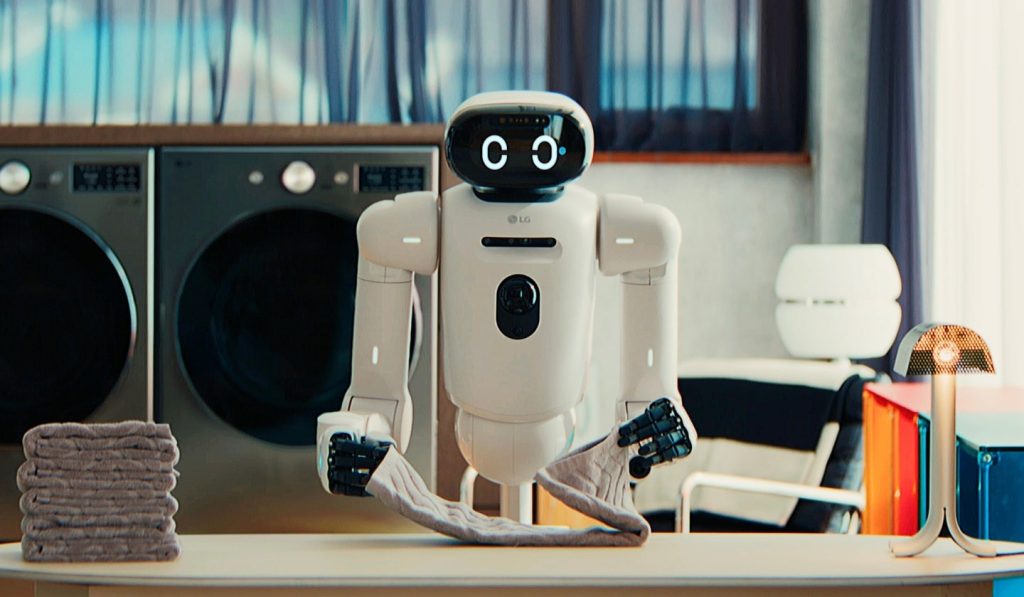
LG Electronics is extending Physical AI from factory environments into residential spaces with its LG CLOiD™ robot, first unveiled at CES 2026. The company’s robotics strategy is based on a deep understanding of living environments across homes, mobility, commercial sites, and industrial settings, supported by core robotics technologies and a group-wide Physical AI ecosystem.
Four interconnected pillars of Physical AI
LG’s Physical AI approach is built on four interconnected pillars that form its technological backbone and enable AI intelligence to connect with real-world physical action:
- Decades of consumer insights and operational data from millions of connected home appliances worldwide
- Over 20 years of robotics development across residential, commercial, and industrial environments
- Core robotics technologies, including actuators, motors, and precision motion systems that enable physical interaction with the real world
- A group-wide Physical AI ecosystem enabled through collaboration across LG companies
These four pillars work together to connect AI intelligence with physical execution in real environments.
Vision of the “Zero Labor Home”
LG is developing a long-term concept called the Zero Labor Home. In this future model, intelligent robots, connected appliances, and AI orchestration systems work together to manage household tasks with minimal human intervention.
The system is designed to understand user routines, anticipate needs, and perform actions autonomously. The goal is to reduce manual effort in daily household activities and provide users with more time for personal and family use.
LG CLOiD robot in the home ecosystem
The LG CLOiD™ robot is positioned as a key step toward this vision. It works in integration with the LG ThinQ platform and is designed to assist with everyday household activities while acting as a physical interface between AI intelligence and the home environment.
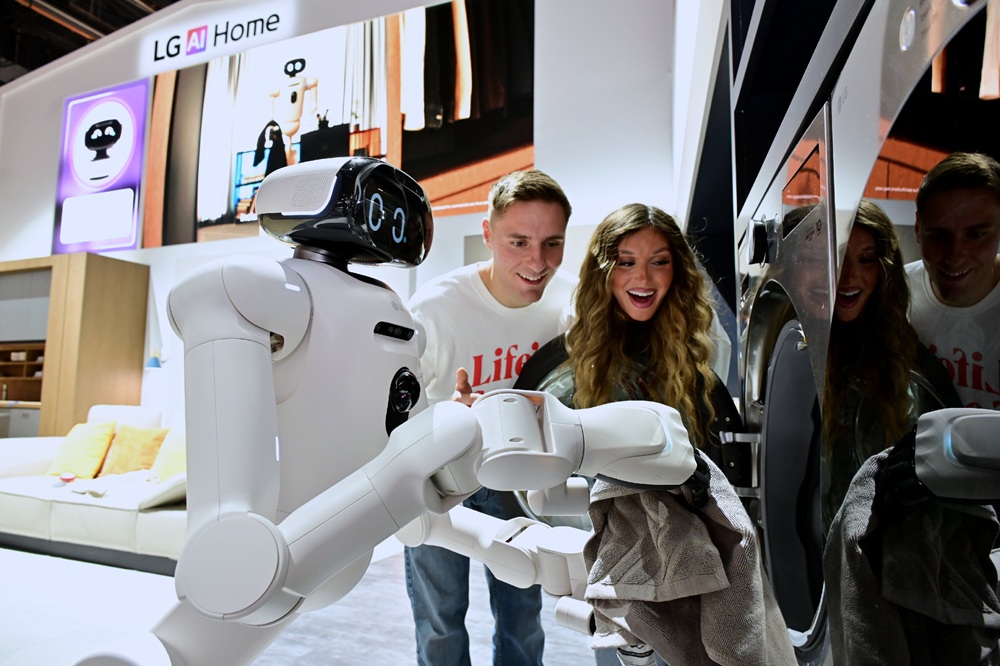
The robot is intended to:
- Support daily household tasks
- Operate within the connected ThinQ ecosystem
- Bridge AI systems with physical home environments
Deep expertise in home and robotics environments
Home environment expertise:
LG has long-term experience in home appliances, supported by large-scale data from connected devices. Combined with the ThinQ ecosystem, this provides detailed understanding of user routines and behavior patterns.
More than 20 years of robotics development:
Since introducing its first cleaning robot in 2003, LG has expanded its robotics work into commercial, logistics, and industrial sectors. The company has accumulated over 20 years of real-world operational data from diverse environments.
Core hardware technologies:
LG’s robotics systems are built on advanced hardware including actuators, motors, and precision motion technologies that allow machines to move, interact, and operate in physical spaces.
Group-wide Physical AI ecosystem:
LG has developed an integrated ecosystem connecting perception, intelligence, and physical action through LG AI Research (EXAONE AI), LG Innotek (sensing and vision), ROBOSTAR (industrial robotics), LG Energy Solution (batteries), LG CNS (software integration), and LG Electronics (home appliances).
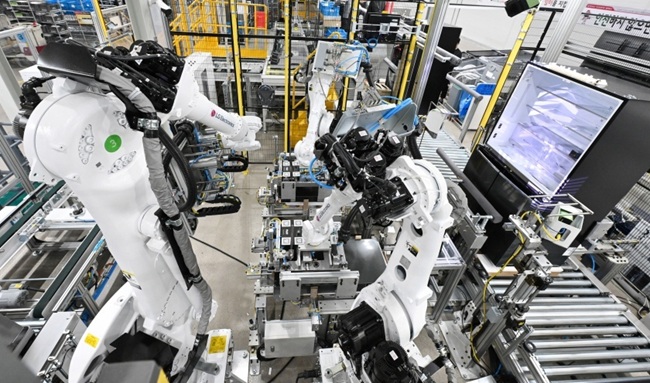
This system is further strengthened by LG’s smart factory operations, where robotics, digital twins, autonomous logistics, and AI-based automation are already deployed at scale, generating continuous operational data and validation.