
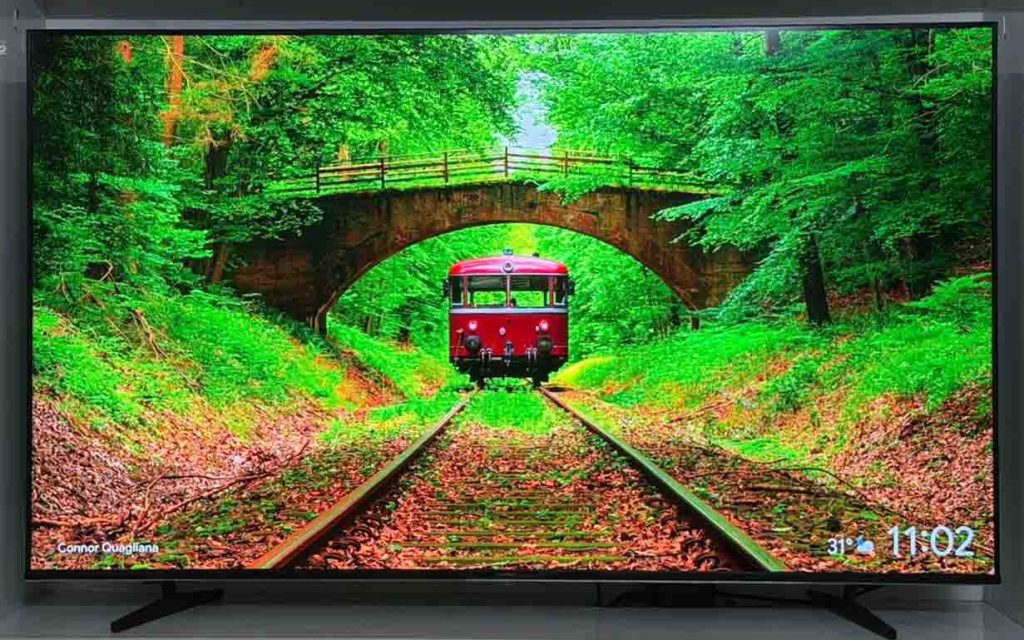
Lumio, a homegrown Indian tech brand, made its debut in 2025 with the Vision 9 QLED TV. For 2026, the company returns with an updated model targeting improvements across four key areas: performance, display, sound, and software. The new Vision 9 packs a 4K QD-MiniLED panel with a native 144Hz refresh rate, making it a compelling option for gamers. But at Rs. 72,999, does it deliver without cutting corners? We put it through its paces to find out.
Design and Build
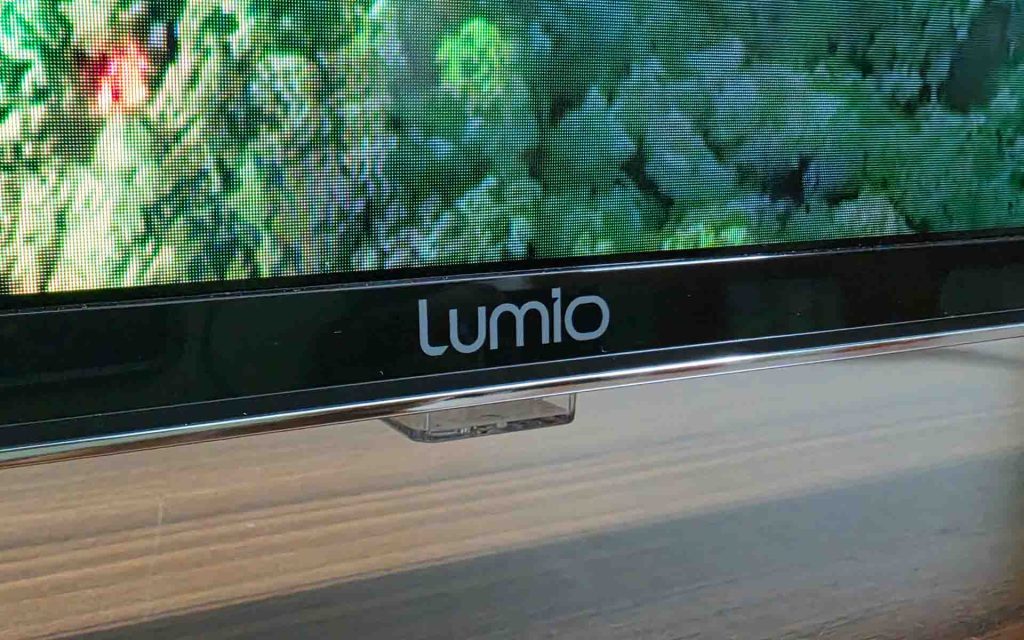
The Lumio Vision 9 sports a modern, clean design. Bezels are thin on the left, right, and top edges, with a thicker bottom chin housing the Lumio logo at its center. Just below sits a small indicator LED that glows blue to reflect the TV’s status. The black plastic exterior feels well-built and although the TV is not as thin as premium OLED panels, it is reasonably thick for an LCD.
One minor gripe carried over from the previous generation is the status LED. It is noticeably bright and distracting in dark environments, and the light does not diffuse evenly through the plastic casing. There is a setting to turn off the LED or change the brightness level, but it feels unnecessarily complicated.
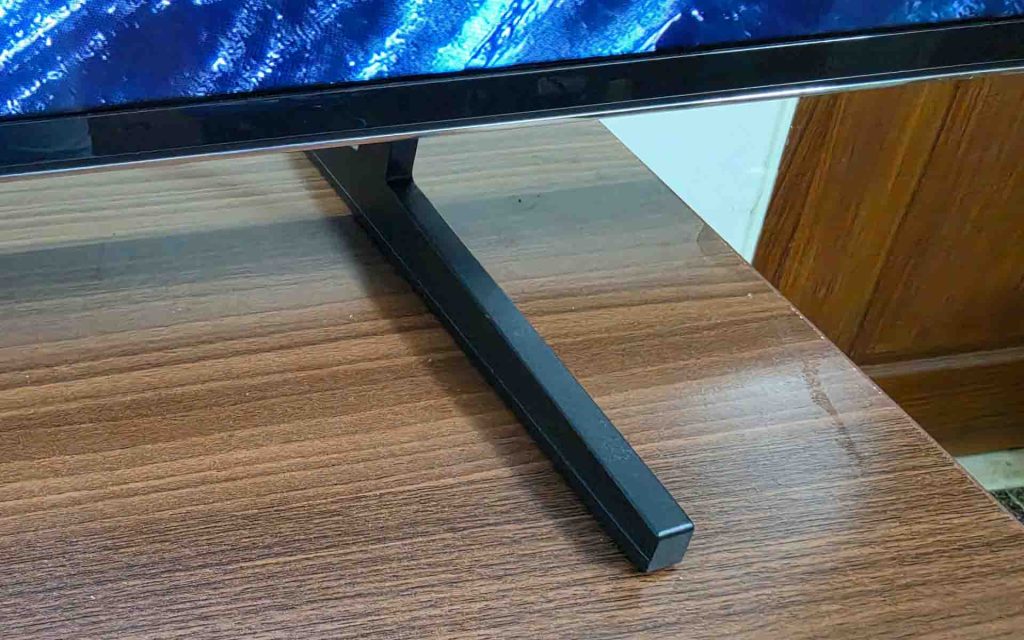
Speaker grills run along the bottom edge, and two subwoofer units sit on the back panel. The ports face left while the power input is on the right edge. Lumio includes two metal stands that attach to either side of the TV. Wall mounting is also supported, though we opted for the stands and placed the TV on a table. They are sturdy and complement the minimal aesthetic well.
Ports and Connectivity
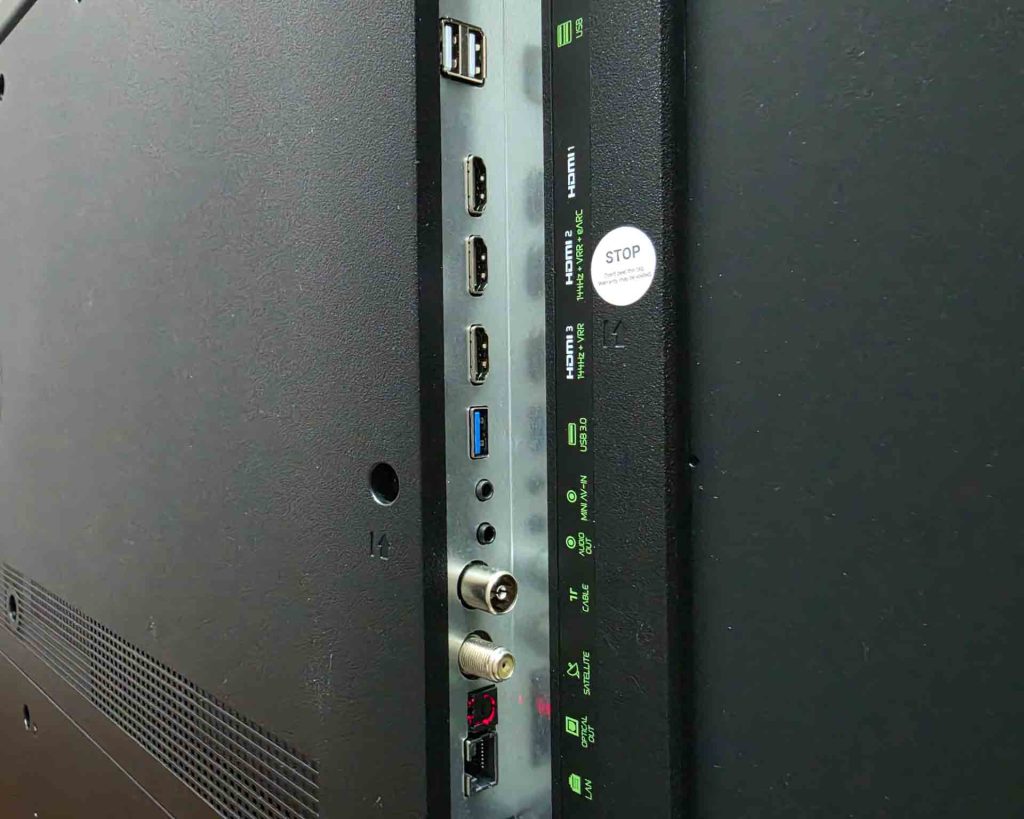
The Vision 9 offers a healthy selection of ports for its price range:
- 3x HDMI 2.1 — Ports 2 and 3 support 4K 144Hz, ALLM, VRR, and QMS (Quick Media Switching), with eARC on Port 2
- 1x USB 3.0 with exFAT and NTFS support
- 2x USB 2.0
- 1x 100Mbps RJ45 port
- 1x Mini AV input
- 2x Tuners covering DVB-T/C and DVB-S/S2, with PAL and SECAM support
- 1x Optical audio output
- 1x 3.5mm audio jack
Having two HDMI 2.1 ports that support 4K 144Hz is particularly convenient if you want to connect a gaming console and a PC simultaneously. The USB 3.0 port’s exFAT support is a welcome addition as well, since it allows users to connect external drives formatted for both Windows and macOS. For wireless connectivity, the TV supports Wi-Fi 5 and Bluetooth 5.0. This is sufficient for streaming OTT content, but if you plan to stream games locally, we recommend using the wired LAN port to avoid latency spikes.
Display
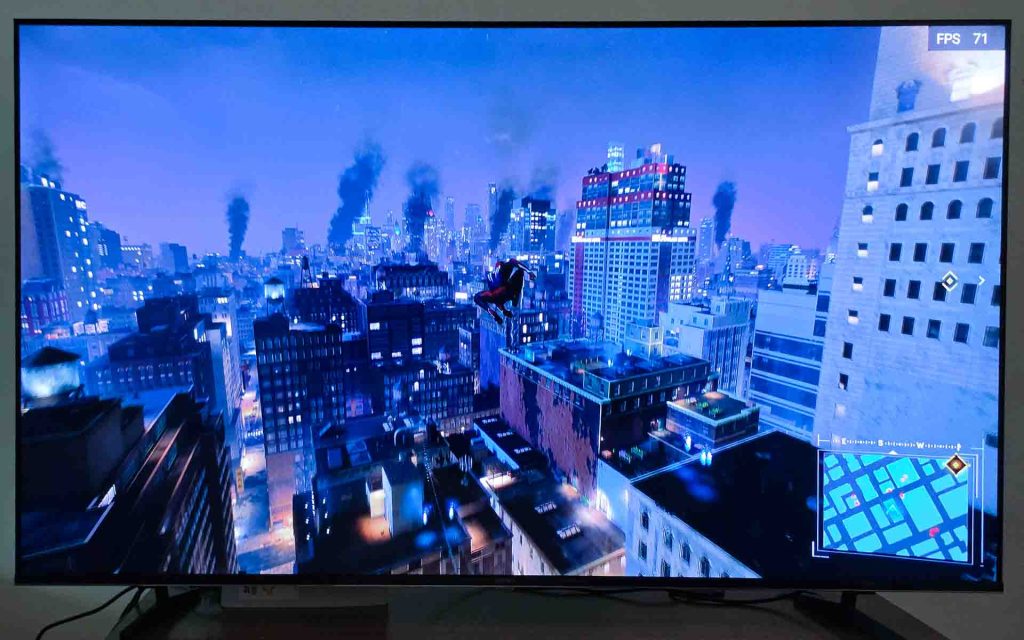
For 2026, Lumio made an interesting panel choice with the Vision 9. Where the previous model used an IPS panel, the new model switches to an EVA (Enhanced VA) LCD panel, enabling native 4K gaming at 144Hz. EVA panels offer several advantages over standard VA panels, including improved viewing angles and a higher native contrast ratio of 7,000:1. Coupled with the MiniLED backlight array, the TV achieves a dynamic contrast ratio of 1,00,000:1, which is impressive for this panel type.
Like its predecessor, the Vision 9 uses a QD-MiniLED panel delivering 800 nits of peak brightness in HDR and 450 nits of typical brightness. This is marginally lower than the previous generation, but the difference is not noticeable in real-world use. The trade-off is well worth it given the improved refresh rate. The MiniLED array also enables local dimming, which makes a meaningful difference when viewing HDR content. Blooming around bright objects is minimal and rarely distracting, even in high-contrast scenes. The TV supports both Dolby Vision and HDR10, and content looked great in our testing.
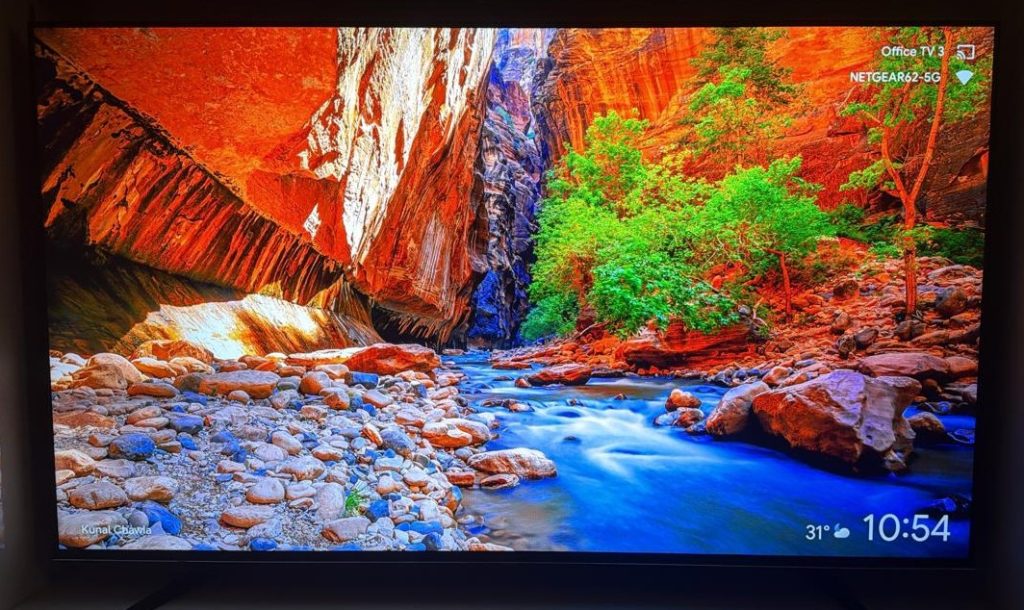
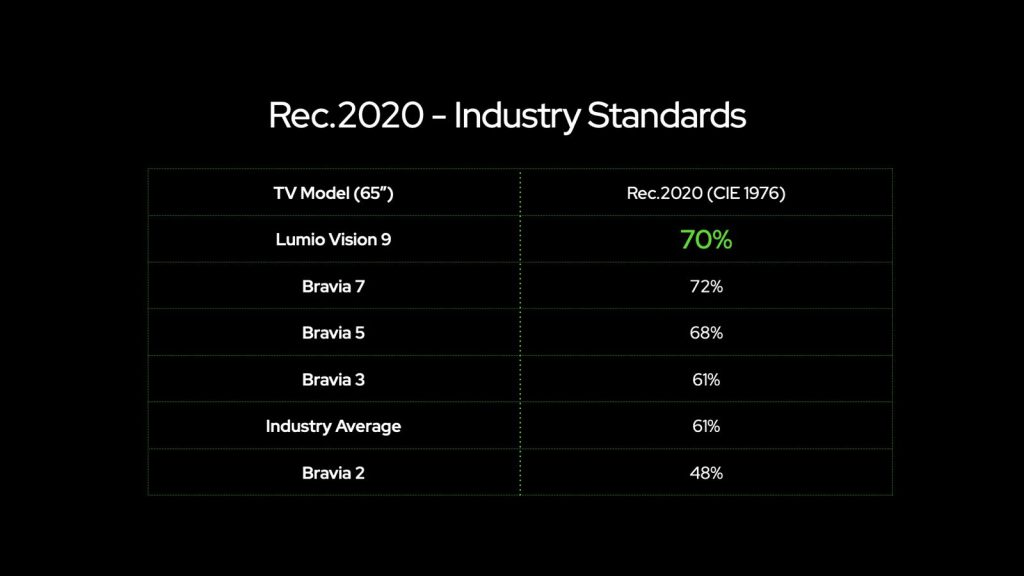
On paper, the 2026 Vision 9 covers a slightly lower colour gamut than the 55-inch Vision 9 2025 model, a consequence of the EVA panel. It supports 95% of the DCI-P3 colour space and 70% of Rec. 2020, which the company says is on par with Sony Bravia TVs and better than the industry average.
To address this, Lumio upgraded their DOPE Display picture engine to version 2.0, specifically tuned for the EVA panel. It delivers better shadow detail in HDR and HLG content, along with improved controls over gamma, hue, saturation, and white balance for each picture mode.
Lumio has clearly put in considerable work here, and the results show. Colours are vibrant, content looks fantastic, and the display holds up well across a variety of material. The bigger gains, however, are in gaming, which we cover in the next section.
Performance and Gaming
Lumio has built a reputation for snappy performance in their Android TVs, and the 2026 Vision 9 is their strongest showing yet. The TV is simply fast. From booting up to navigating the OS, switching inputs, and opening apps, the Vision 9 feels responsive and smooth throughout.
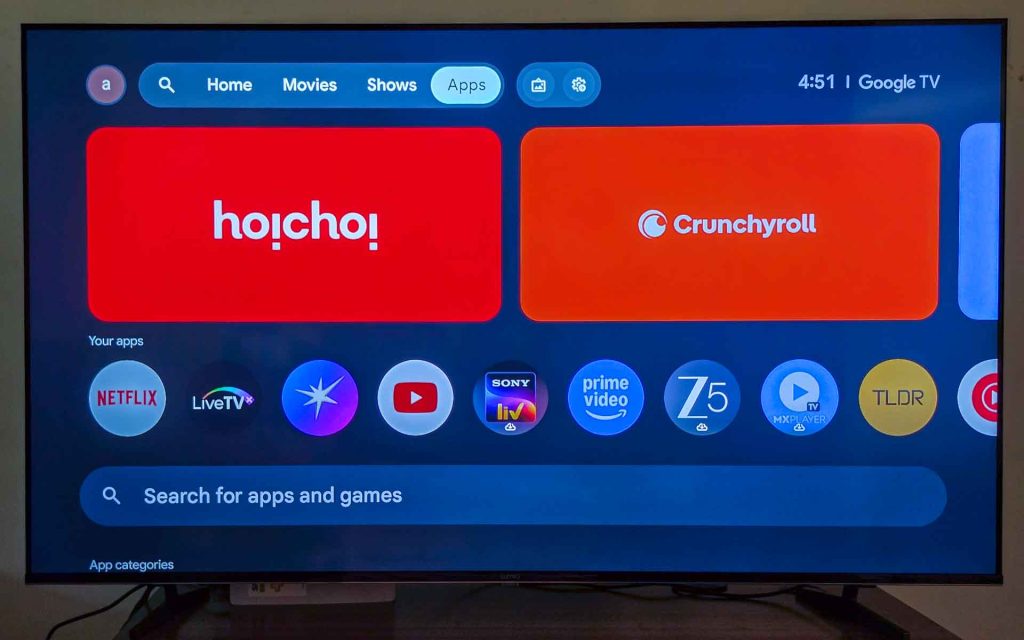
Driving this is the MediaTek Pentonic 700 processor paired with 3GB of RAM. Most TVs ship with 2GB, so the extra RAM keeps more apps in memory and contributes to a consistently smoother experience. For storage, the Vision 9 includes 64GB of internal storage, which Lumio claims is 50% faster than the previous generation. Faster storage has a direct impact on app load times, and the difference is noticeable.
Slowness is a common complaint with Android TVs, particularly as they age. Lumio appears committed to addressing this through regular software updates, and their track record with the 2025 Vision 9 gives us reason to be cautiously optimistic.
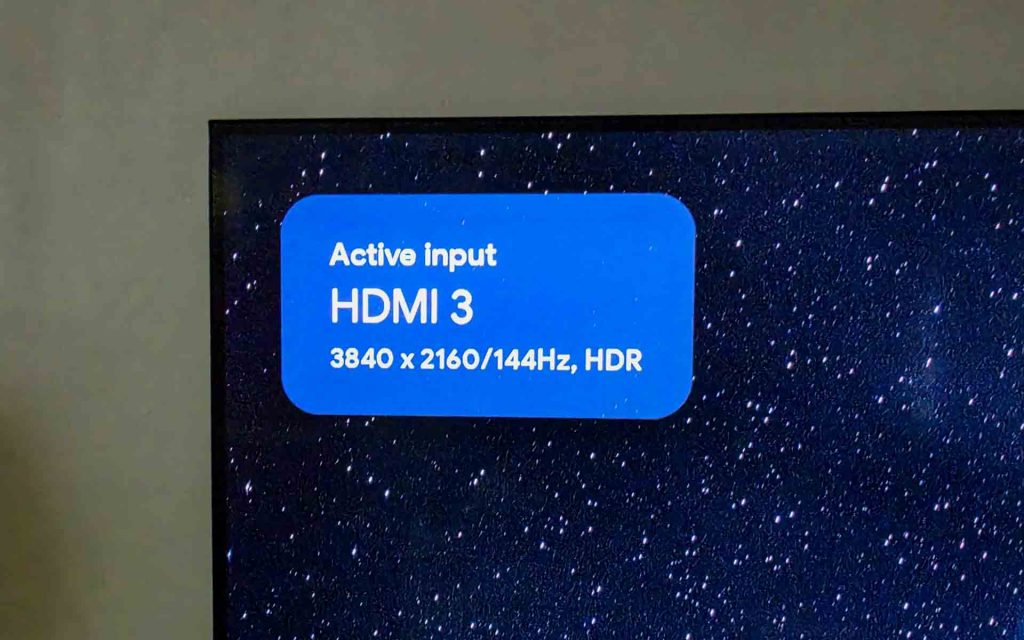
The Vision 9’s headline gaming feature is native 4K at 144Hz. Thanks to the EVA panel, the TV supports a native 144Hz refresh rate at full 4K resolution, or up to 240Hz at 1080p. ALLM and VRR support round out the gaming credentials. VRR is particularly valuable at 4K, where a game’s frame rate is more prone to fluctuation, and screen tearing can be distracting.
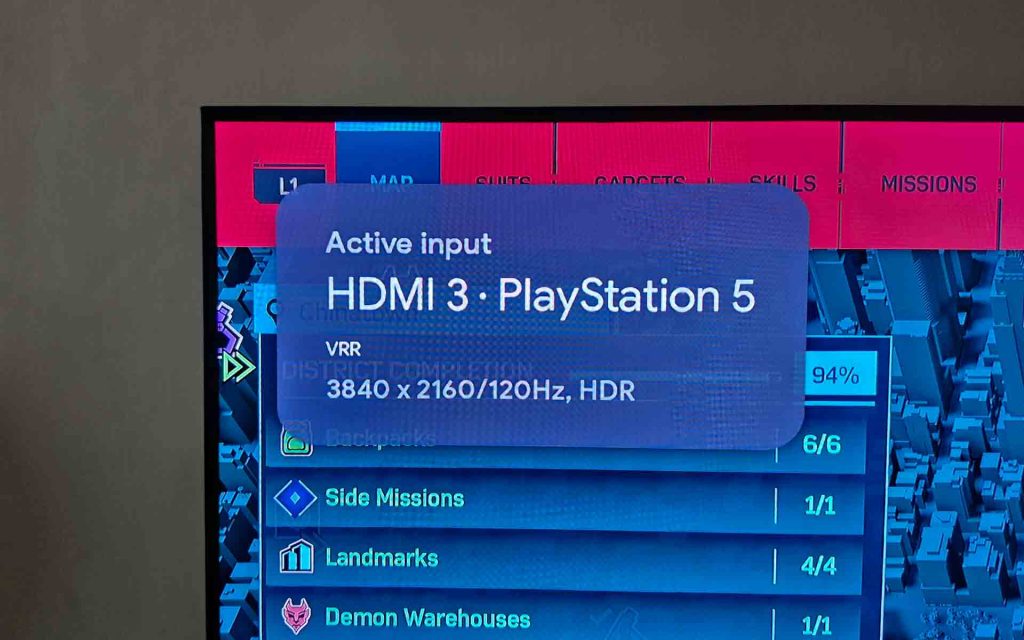
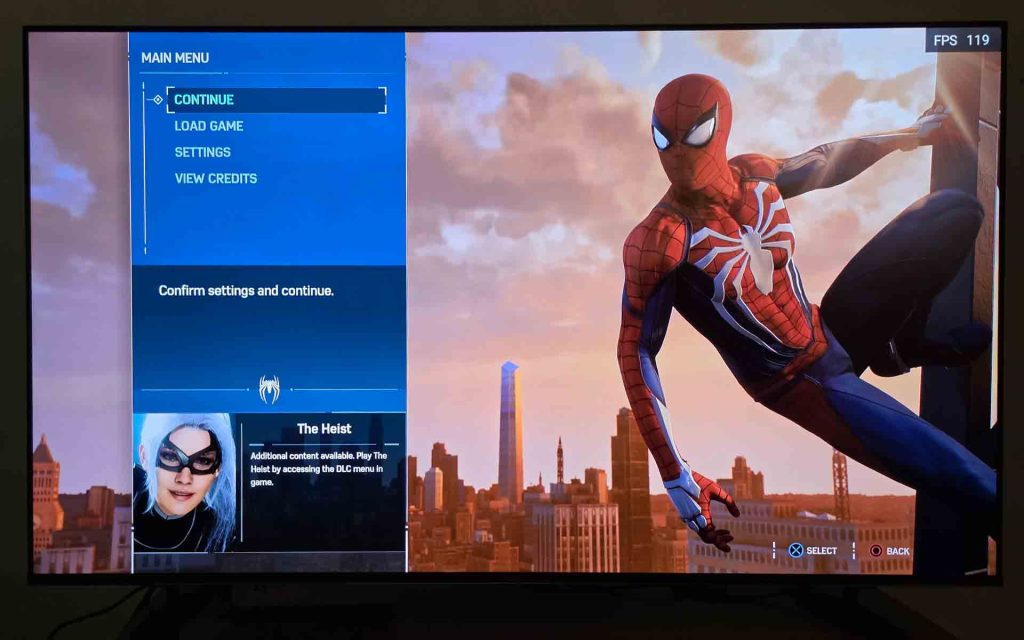
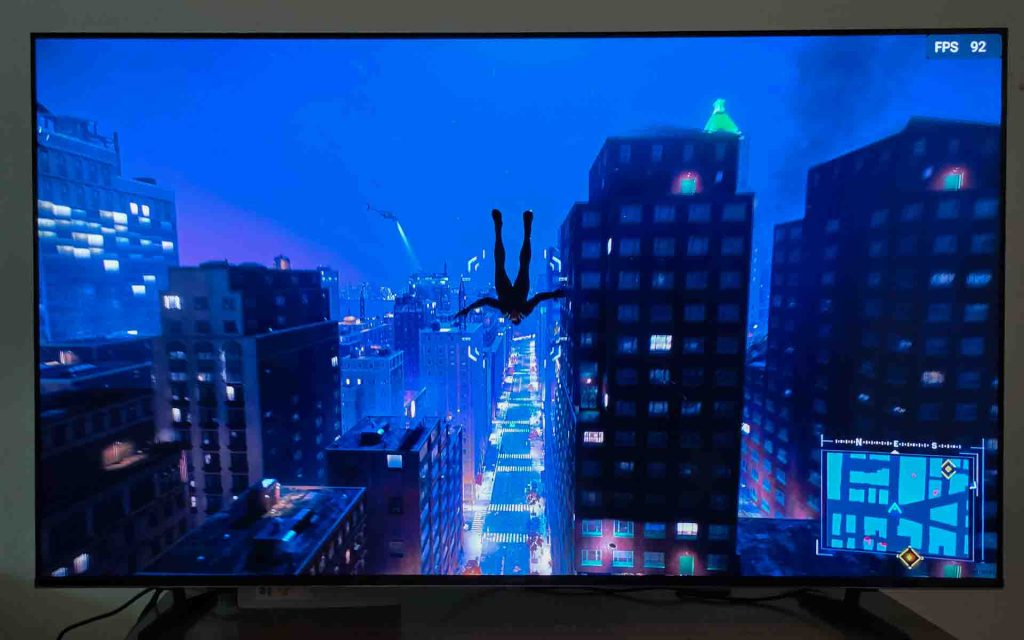
We tested the Vision 9 with a PlayStation 5, and the experience was excellent. Playing Spider-Man 2 at 4K in HDR was smooth, and VRR kept the experience stutter-free throughout. To push the full 144Hz at 4K, we connected a PC. Forza Horizon 5 ran beautifully on the large screen, and Cyberpunk 2077 looked stunning in HDR. For under Rs. 80,000, the Vision 9 makes a strong case as the best gaming TV at this price.
Sound
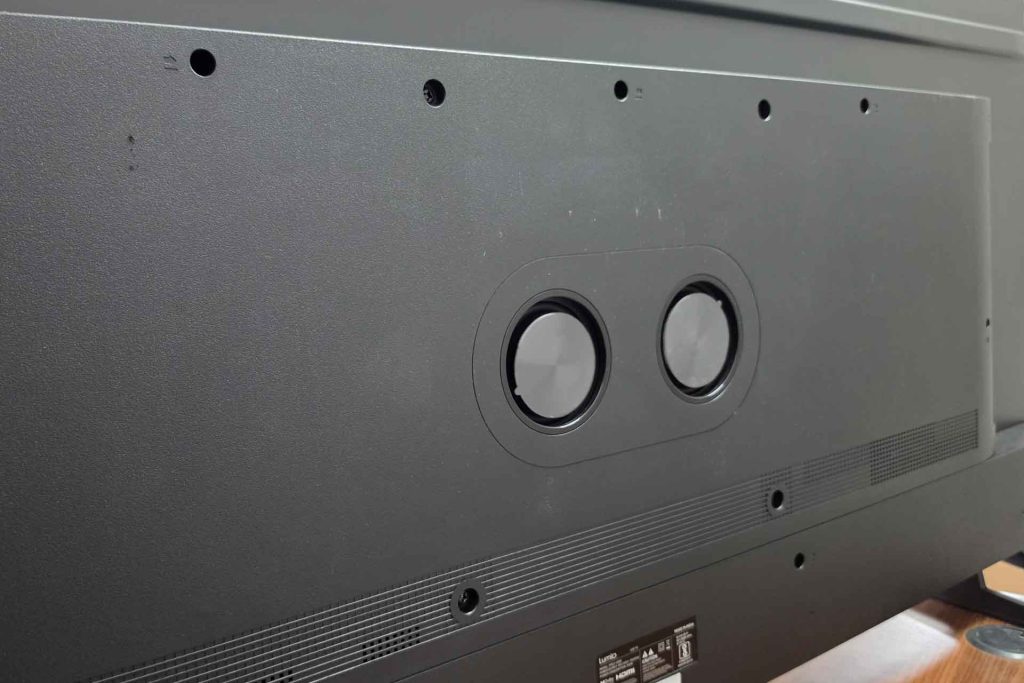
Complementing the display is a seriously impressive speaker system. The Vision 9 features six dedicated drivers: two subwoofers, two full-range drivers, and two tweeters, with a total output of 50W. Lumio tunes the system with their proprietary DGS (Damn Good Sound) 2.2 audio processing, and the TV also supports Dolby Atmos and Dolby Audio.
Most TVs struggle to deliver meaningful bass, but the Vision 9 stands out here. The subwoofers reach down to 38Hz, adding genuine depth to the listening experience. Bass-heavy content such as explosions, thunder, and gunshots comes through with real impact. The mids and highs are equally clear and well-defined, making for a surprisingly complete soundstage. With most TVs, we would recommend pairing with a soundbar or external speakers. The Vision 9 however, does not need one. Its built-in speakers comfortably exceed expectations.
Software and Remote
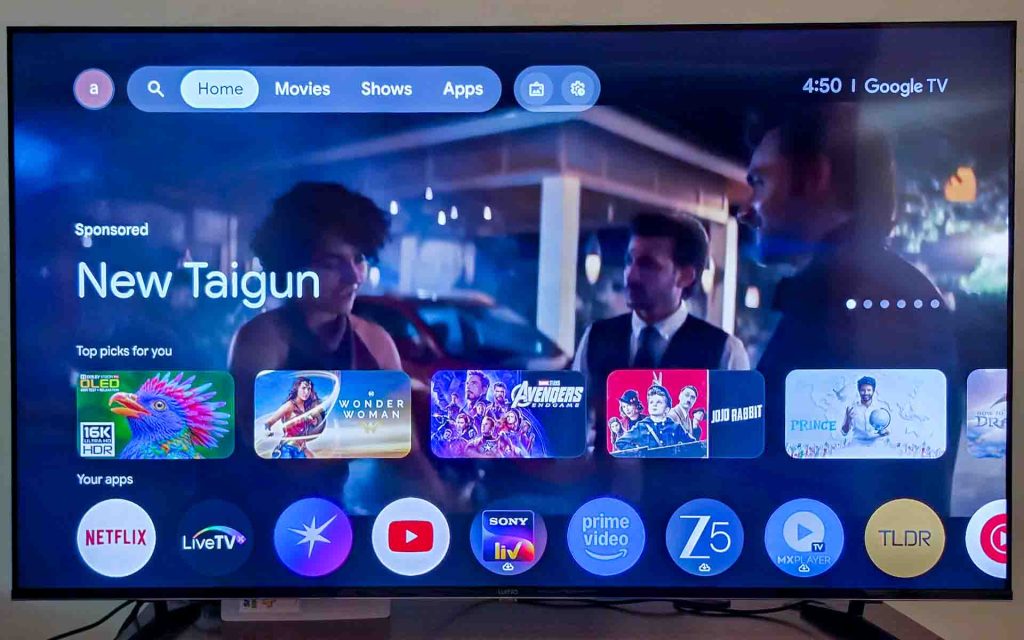
The Vision 9 runs Google TV based on Android 14. As with other Android-powered TVs, the Play Store gives access to a wide range of apps, including Netflix, Prime Video, and JioHotstar. Google Cast and Google Assistant are both built-in and worked reliably during our testing.
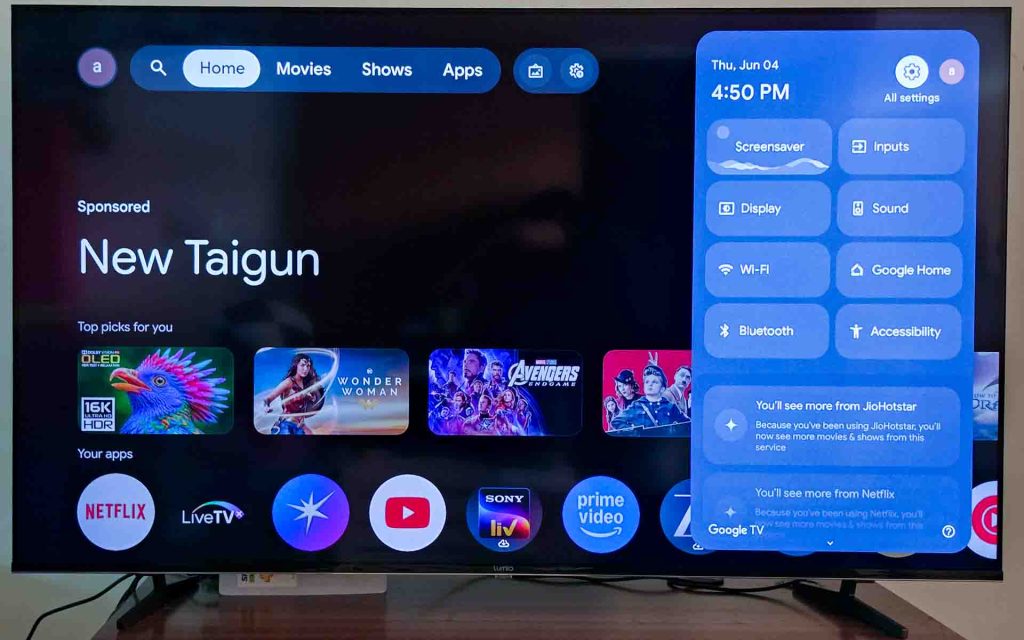
As covered in the Performance section, the OS runs with noticeable smoothness. App launches are quick, input changes are near-instant, and there are no hitches or slowdowns during regular use. Lumio has clearly invested in optimizing the software experience, and it shows.
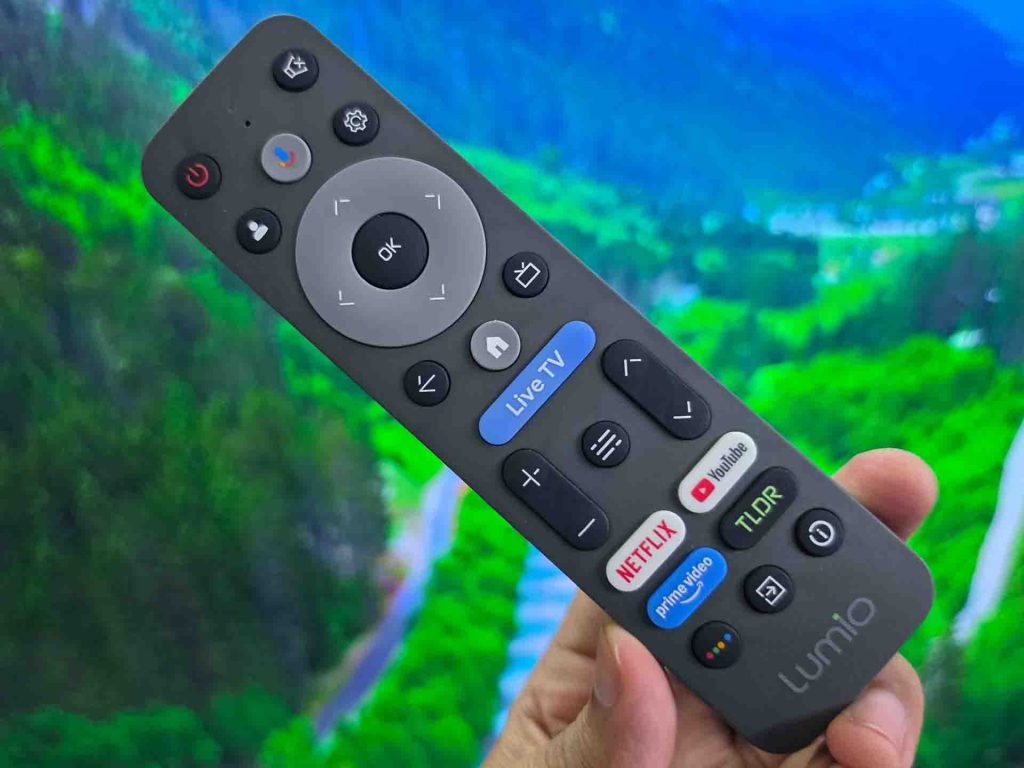
The remote is another area where Lumio has put real thought. The button layout is intuitive, and the shortcuts are genuinely useful. You can switch inputs, access Settings, and call up Google Assistant from anywhere. The Info button is a neat addition: pressing it displays the current resolution and refresh rate of the display. Gaming enthusiasts in particular will find this handy.
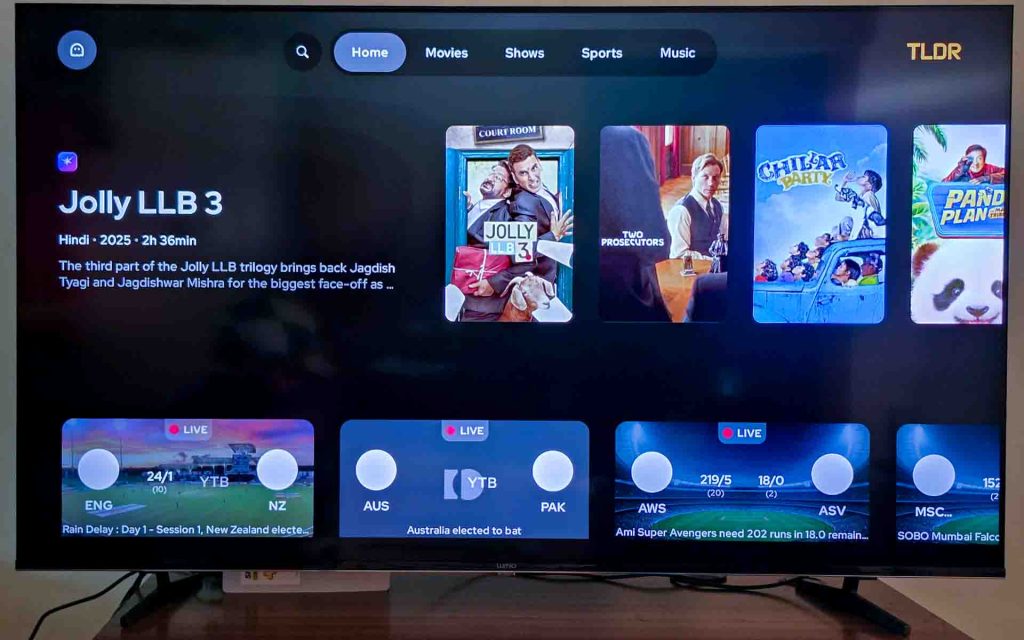
Alongside dedicated buttons for Netflix, YouTube, and Prime Video, there is a fourth button for Lumio’s TLDR app. This is a content discovery platform that aggregates content from multiple streaming services into a single screen. You can browse movies, shows, live sports, and music, then navigate directly to the relevant app to start watching. Like the OS itself, TLDR is smooth and responsive.
Verdict
The Lumio Vision 9 is a well-rounded TV that punches above its weight at Rs. 72,999. The switch to an EVA panel brings meaningful gains in refresh rate and contrast, and Lumio has done enough with the DOPE Display engine to keep colour performance competitive. The speaker system is genuinely impressive for a built-in solution, and the Google TV experience is among the smoothest we have tested on an Android TV.
Where the Vision 9 truly stands out, however, is gaming. Native 4K at 144Hz or 1080p at 240Hz, VRR, and ALLM make it one of the most capable gaming TVs available under Rs. 80,000. Paired with a strong port selection and a thoughtfully designed remote, it is hard to find fault at this price.
If you are in the market for a large-screen TV that handles both entertainment and gaming without compromise, the Lumio Vision 9 deserves serious consideration. It is a strong debut for an Indian brand in the premium midrange segment and one that competitors will need to take note of.
The Lumio Vision 9 (2026) comes in two sizes—65 inches and 55 inches, starting at Rs. 51,999. The 65-inch model we reviewed was launched at Rs. 72,999, and it is currently available for purchase on Amazon for Rs. 69,999.