
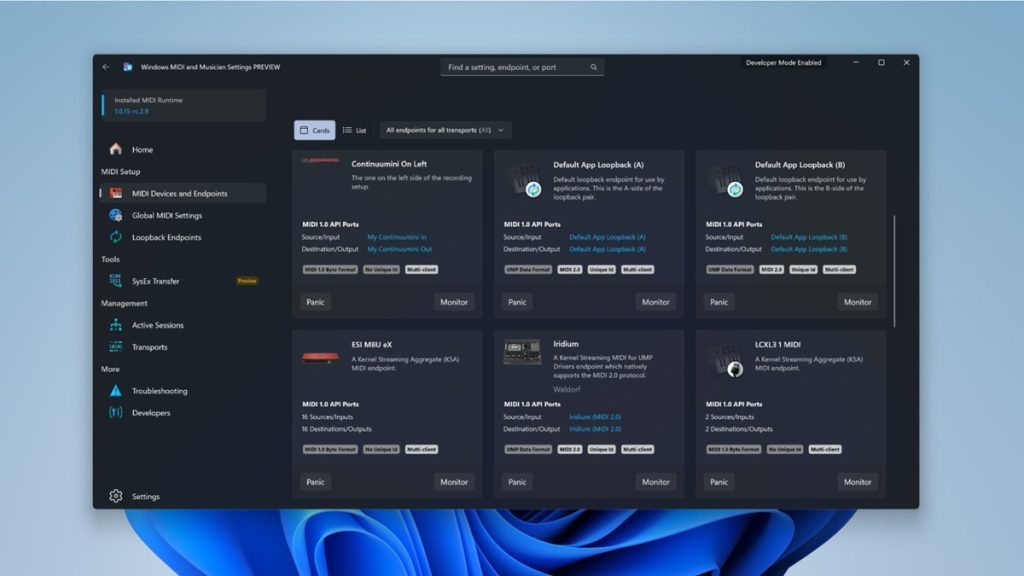
Microsoft has introduced a rebuilt MIDI platform inside Windows 11 that adds native support for MIDI 2.0 while strengthening existing MIDI 1.0 functionality.
The new architecture — called Windows MIDI Services — replaces decades-old components with a unified stack focused on compatibility, device communication, timing precision, and multi-application workflows.
The update allows existing MIDI software to continue operating without modification while enabling newer capabilities defined in modern MIDI standards.
MIDI background: why the update matters
MIDI was introduced in 1983 as a cross-industry standard to allow electronic musical instruments to communicate with each other. According to Microsoft, early development — including contributions from companies such as Roland Corporation — established a simple digital messaging format that enabled sequencing, synchronization, lighting control, and instrument playback across compatible devices.
MIDI 1.0 enabled:
- Instrument and controller synchronization
- Sequencing and beat production
- Standard MIDI files (.mid)
- Support across USB, Bluetooth, and other transports
However, long-standing technical limits include:
- Controller value ranges restricted to 0–127
- Limited device discovery mechanisms
- Channel constraints for expressive performance
- Legacy transport speed ceilings
- Minimal articulation and metadata standards
To address these constraints, the MIDI Association published MIDI 2.0 and the Universal MIDI Packet (UMP) specification in 2020, later refined in 2022–2023. MIDI 2.0 introduces bidirectional communication, higher-resolution control data, per-note articulation, automatic discovery, and transport independence — while remaining interoperable with MIDI 1.0.
Windows MIDI Services: platform architecture changes
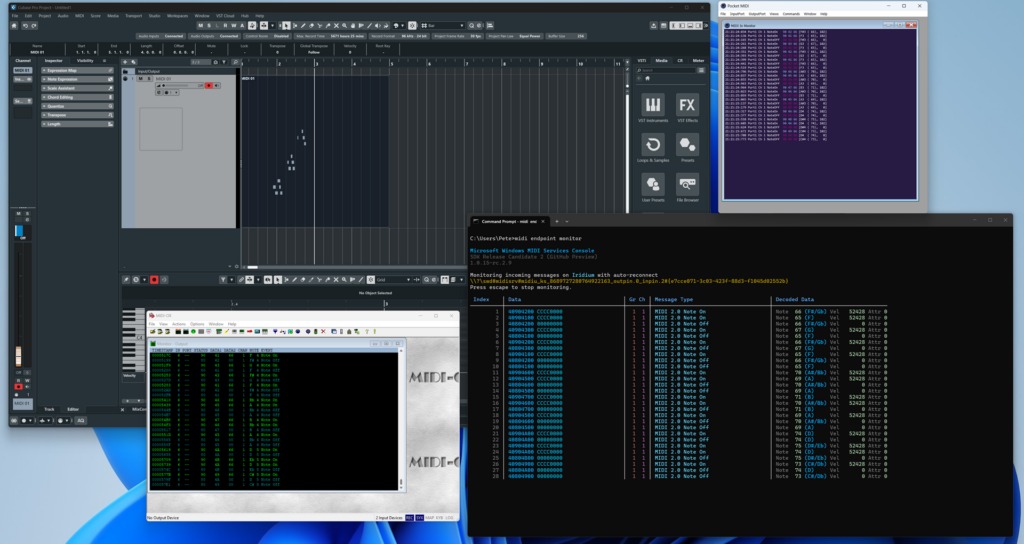
Windows MIDI Services replaces the legacy Windows MIDI stack with a unified infrastructure supporting both MIDI standards. The design goals focus on compatibility, extensibility, and improved system behavior.
Key platform characteristics include:
- Shared MIDI 1.0 and MIDI 2.0 infrastructure
- Automatic compatibility handling between protocols
- Preservation of existing application workflows
- Foundation for future MIDI transports and tools
No application updates are required for current MIDI 1.0 software to function.
Device access, routing, and interoperability
Multi-client MIDI access
Multiple applications can open and use the same MIDI endpoint simultaneously.
- Works across MIDI 1.0 and MIDI 2.0
- Removes exclusive device locking
- Vendor-specific drivers are generally unnecessary
Built-in loopback and app-to-app routing
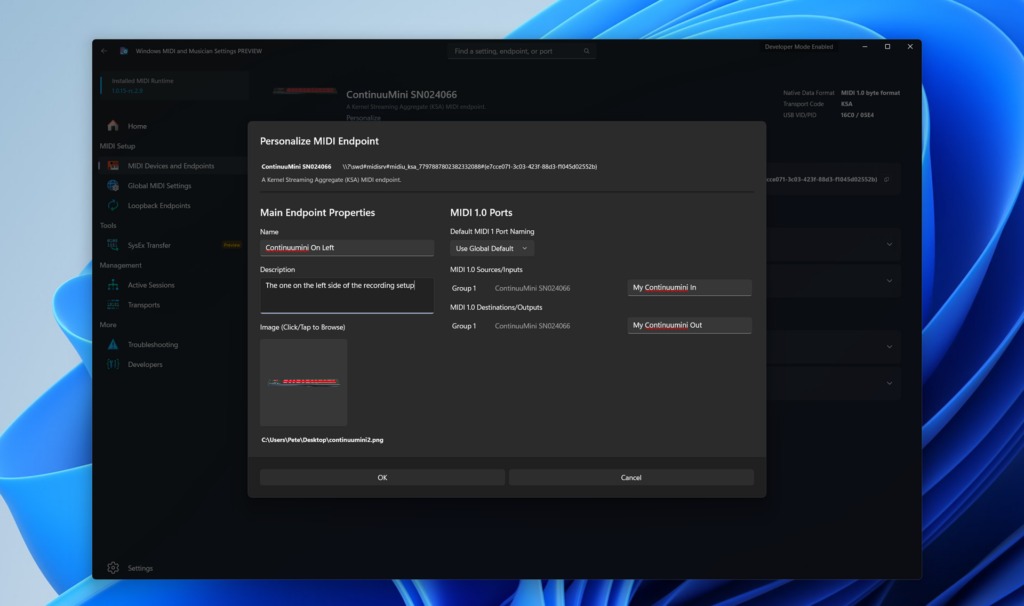
Windows includes native MIDI loopback endpoints that allow software to communicate internally.
- App-to-app MIDI routing without external drivers
- Works on x64 and Arm64 systems
- Compatible with browser WebMIDI environments
- Applications can present as virtual MIDI devices
- These endpoints function across both MIDI standards.
Protocol translation and device compatibility
Windows MIDI Services automatically bridges MIDI 2.0 hardware with MIDI 1.0 software.
This includes:
- Protocol negotiation
- Value scaling between high-resolution and legacy ranges
- Compatibility handling for mixed environments
Applications using the new SDK gain access to MIDI 2.0 message structures, timestamps, and scheduling, while MIDI 1.0 apps receive compatible translated data.
Endpoint naming and device organization
The update expands control over how MIDI endpoints appear in applications.
Users can:
- Preserve classic names for compatibility with existing DAW projects
- Use device-provided naming
- Assign custom endpoint labels
Additional metadata — including images and descriptions — is supported through a forthcoming MIDI Settings management tool.
Timing accuracy and message scheduling
To improve synchronization reliability:
- Incoming and outgoing MIDI messages support timestamps
- Timing precision reaches sub-microsecond resolution
- Applications can schedule outgoing messages
This capability is available through the Windows MIDI Services SDK.
USB MIDI driver modernization
Windows continues supporting the legacy USB MIDI driver while adding a newer class driver optimized for the updated service.
Driver improvements include:
- Updated power management behavior
- Faster communication paths to the MIDI service
- Support for MIDI 1.0 and MIDI 2.0 devices
Device compatibility remains unchanged.
Tools, scripting, and ecosystem development
Microsoft plans companion utilities for configuration and development:
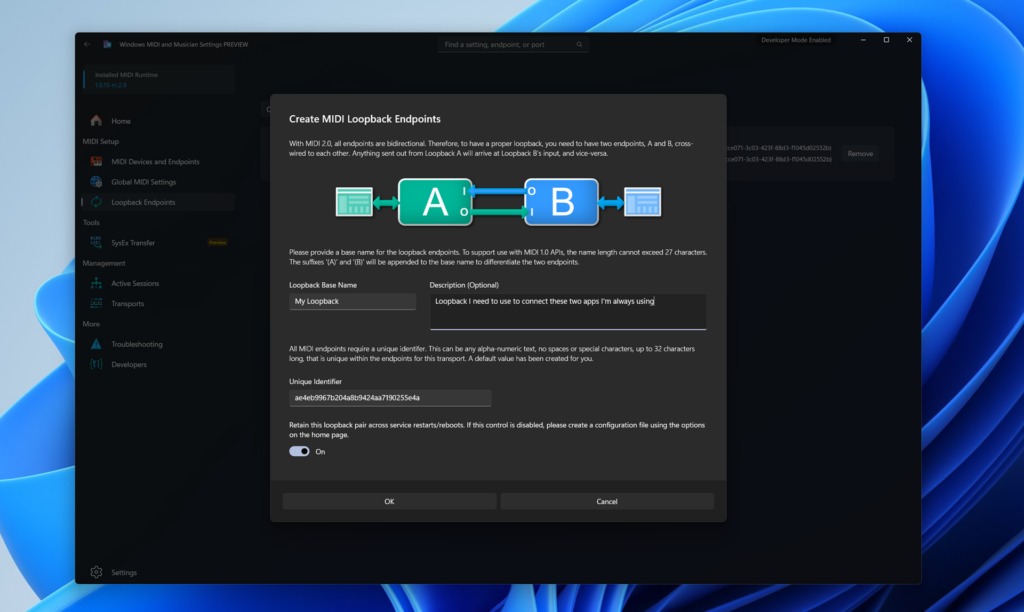
- MIDI Settings management app
- Loopback endpoint creation tools
- MIDI console utilities
- PowerShell scripting integration
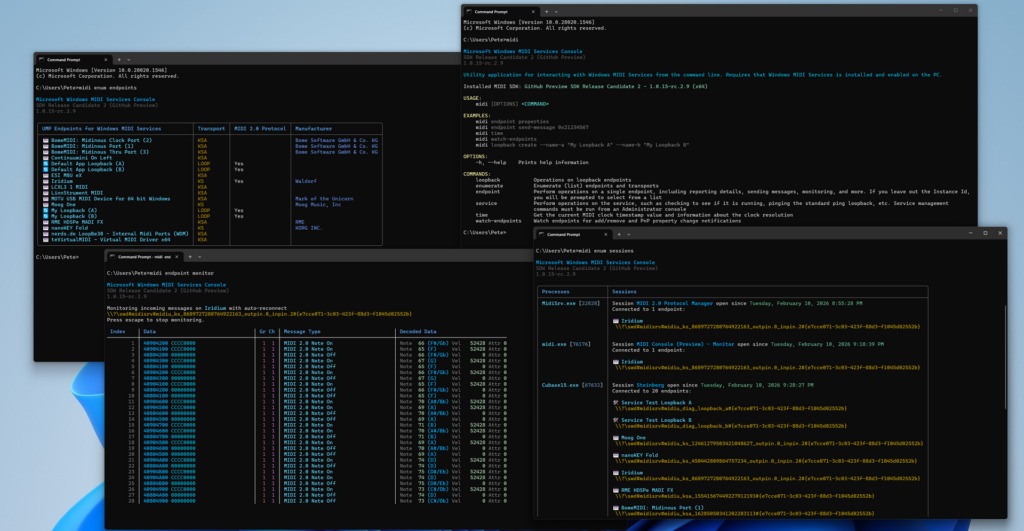
Development is conducted openly with community and industry collaboration, including testing and driver contributions.
What’s Next
Microsoft’s MIDI roadmap includes planned work on:
- Low-latency USB audio driver support with ASIO integration
- BLE MIDI transports for MIDI 1.0 and MIDI 2.0
- Network MIDI 2.0 support
- Virtual MIDI routing and patch-bay capabilities
- Ongoing timing and performance refinements
These developments extend compatibility while supporting newer MIDI workflows.
Availability
Windows MIDI Services core components are included in supported retail releases of Windows 11 and are being enabled through a phased rollout.
- Once active, existing MIDI 1.0 applications gain multi-client access, compatibility improvements, and timing enhancements automatically.
- Optional SDK runtime packages and management tools will be distributed separately as they are finalized.