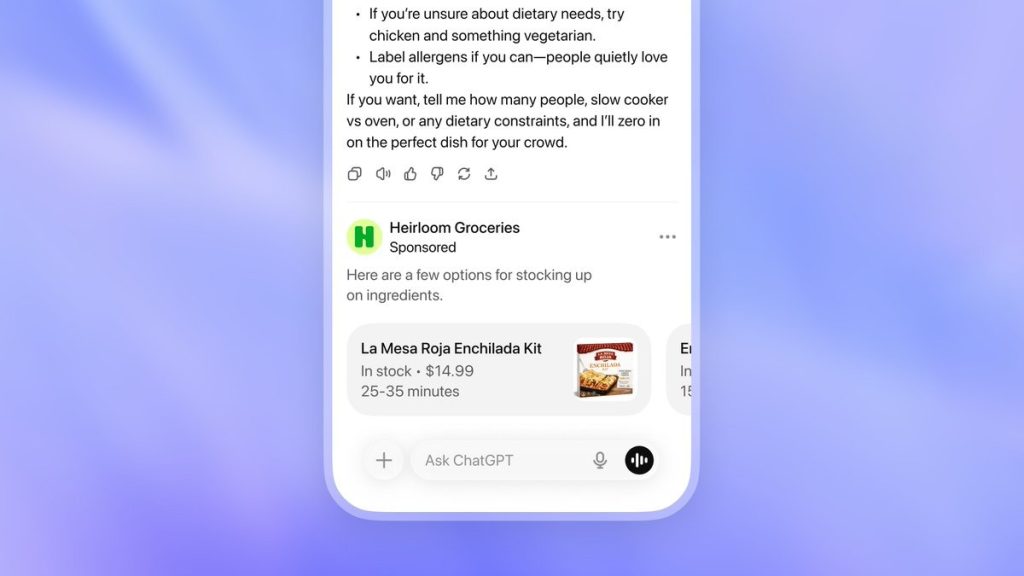
OpenAI has announced a limited test introducing advertisements inside ChatGPT for logged-in adult users in the United States. The company says ads will be clearly labeled as sponsored, visually separated from ChatGPT responses, and will not influence how answers are generated.
The pilot focuses on learning how ads can be integrated while maintaining privacy protections, answer independence, and user control. Paid subscription tiers — Plus, Pro, Business, Enterprise, and Education — will remain ad-free during this test.
Purpose of the ad test
OpenAI says ChatGPT is used by hundreds of millions of people for learning, work, and everyday decision-making. Supporting free and lower-cost access requires ongoing infrastructure investment.
According to the company, advertising is being explored as a funding model to sustain platform performance and improvements while keeping broader access available. Users who prefer not to see ads can upgrade to Plus or Pro plans, or choose an ad-free option in the Free tier in exchange for fewer daily message limits.
Ads do not influence ChatGPT responses
OpenAI states that advertising does not affect how ChatGPT generates answers. Responses continue to be optimized solely for usefulness and relevance to the user.
Sponsored content is clearly labeled and displayed separately from AI responses. During the test, ads are selected by matching advertiser submissions with the topic of a user’s conversation, previous chats, and prior ad interactions. For example, someone researching recipes may see ads related to meal kits or grocery services. When multiple advertisers qualify, the system prioritizes relevance to the active conversation.
Privacy protections and safeguards
OpenAI says advertisers do not receive access to individual chats, chat history, stored memories, or personal identifying details. Advertisers are only provided aggregate performance metrics such as impressions or clicks.
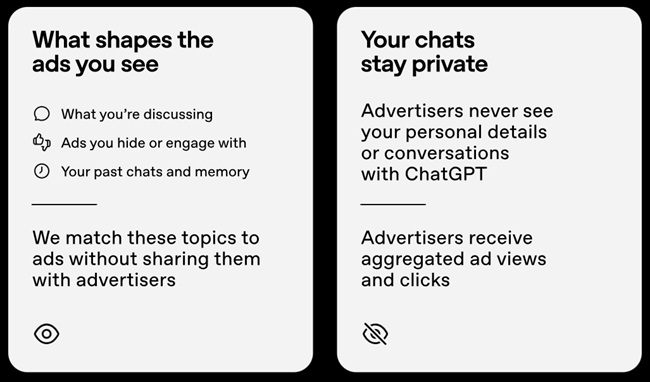
The company also says ads will not appear for accounts identified as belonging to users under 18. Advertising is excluded from sensitive or regulated topics, including health, mental health, and politics. OpenAI says safeguards will evolve as the test progresses and lessons are learned.
The company adds that future expansion will continue to emphasize privacy protections and guardrails designed to limit narrow targeting and reduce exposure to harmful or misleading advertising.
User controls for advertising
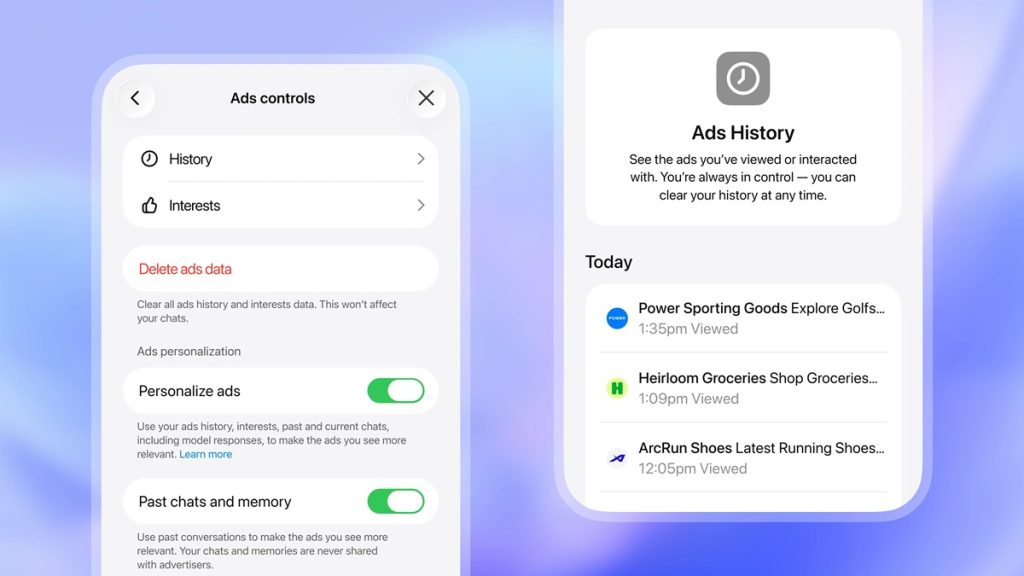
Users will be able to manage their ad experience through built-in controls, including:
- Dismissing ads
- Providing feedback
- Viewing why an ad was shown
- Deleting ad-related data
- Adjusting personalization settings
OpenAI says these controls are intended to give users visibility and choice over how ads are delivered.
Long-term advertising approach
OpenAI says people often use ChatGPT while researching options or comparing decisions. The company believes ads, when relevant and clearly separated, can surface products or services aligned with those activities.
Feedback and performance data from the pilot will guide future refinements. OpenAI says the separation between ads and AI answers will remain intact, and privacy safeguards will continue to be central to the program.
The company also plans to explore additional advertising formats and participation models for businesses over time. Organizations interested in future participation can register through OpenAI’s advertiser program.
What remains unchanged
OpenAI reiterates that core principles remain in place:
- ChatGPT answers remain independent
- Conversations stay private
- Users maintain control over their experience
The current rollout is described as a learning phase focused on gathering feedback before any broader expansion.
Availability
The ad test is limited to logged-in adult users in the United States on the Free and Go subscription tiers. Plus, Pro, Business, Enterprise, and Education users will not see ads.