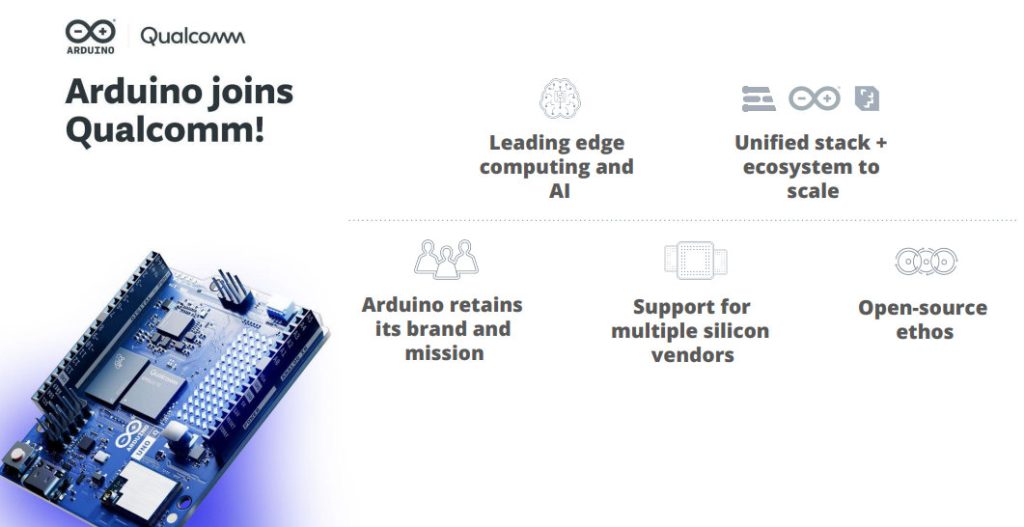
Qualcomm has announced a definitive agreement to acquire Arduino, a leading open-source hardware and software company. The move is part of Qualcomm’s broader strategy to enhance its edge computing platform and provide developers with greater access to its portfolio of technologies.
This acquisition follows Qualcomm‘s recent integrations of Edge Impulse and Foundries.io, signaling a concerted effort to build a comprehensive, full-stack platform that encompasses hardware, software, and cloud services. The completion of the transaction is contingent upon regulatory approval and customary closing conditions.
Strategic Vision and Future of Arduino
According to the announcement, the acquisition aims to merge Qualcomm Technologies’ strengths in processing, graphics, AI, and computer vision with Arduino’s accessible and affordable platform. The goal is to enhance developer productivity across various industries.
Arduino is expected to maintain its independent brand identity, tools, and mission. The company will continue its open-source approach and support for a wide range of microcontrollers and microprocessors from multiple semiconductor manufacturers. Following the acquisition, Arduino’s community of over 33 million active users will gain access to Qualcomm’s technology stack and global ecosystem, facilitating the path from rapid prototyping to commercialization for entrepreneurs, students, and professionals.
Introduction of Arduino UNO Q and App Lab
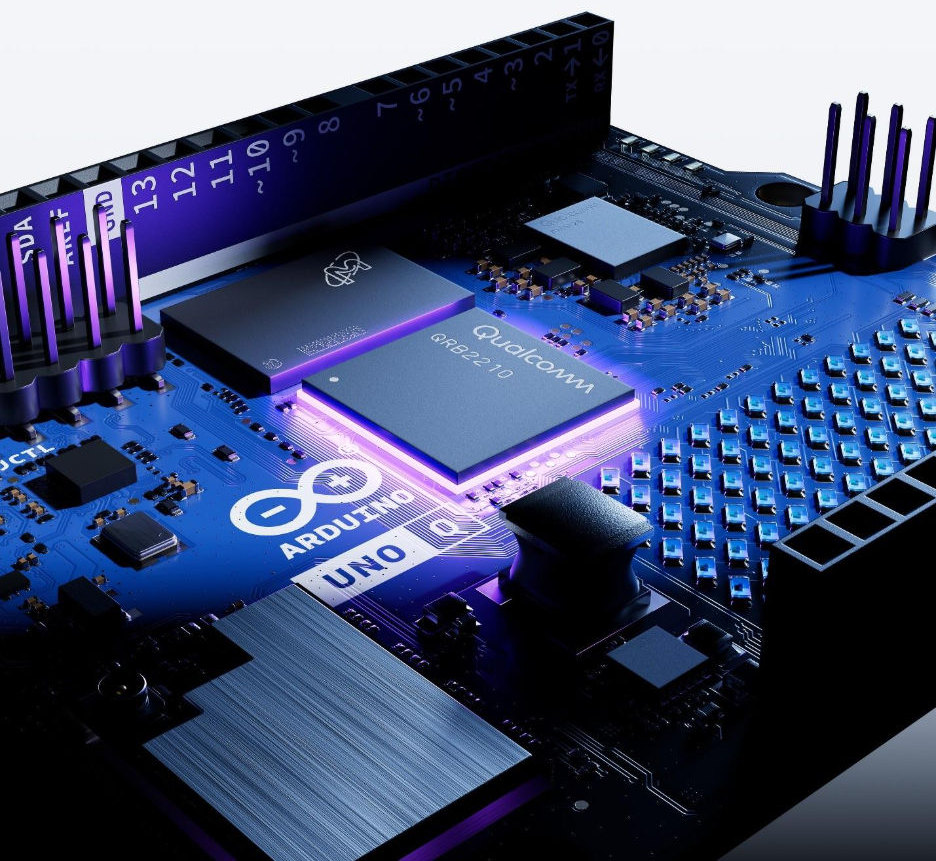
Coinciding with the announcement, the companies introduced the Arduino UNO Q, a new single-board computer. The UNO Q features a “dual brain” architecture, combining a Linux-capable microprocessor with a real-time microcontroller. It is powered by the Qualcomm Dragonwing™ QRB2210 processor, which runs a full Linux environment, and is designed for AI-powered vision and sound applications in areas like smart home and industrial automation.
In addition to maintaining compatibility with the existing Arduino IDE, the UNO Q will be the first board to support the new Arduino App Lab. This integrated development environment (IDE) is designed to unify development across Real-time OS, Linux, Python, and AI workflows. The App Lab will also feature seamless integration with the Edge Impulse platform, aiming to simplify the process of building, training, and deploying AI models for tasks such as object detection, anomaly detection, and keyword spotting.
Commenting on this, Nakul Duggal, Group General Manager, Automotive, Industrial and Embedded IoT, Qualcomm Technologies, Inc. said:
With our acquisitions of Foundries.io, Edge Impulse, and now Arduino, we are accelerating our vision to democratize access to our leading‑edge AI and computing products for the global developer community. Arduino has built a vibrant global community of developers and creators. By combining their open-source ethos with Qualcomm Technologies’ portfolio of leading edge products and technologies, we’re helping enable millions of developers to create intelligent solutions faster and more efficiently—including a path towards global commercialization by leveraging the scale of our ecosystem.
Fabio Violante, CEO, Arduino, said:
Joining forces with Qualcomm Technologies allows us to supercharge our commitment to accessibility and innovation. The launch of UNO Q is just the beginning— we’re excited to empower our global community with powerful tools that make AI development intuitive, scalable, and open to everyone.