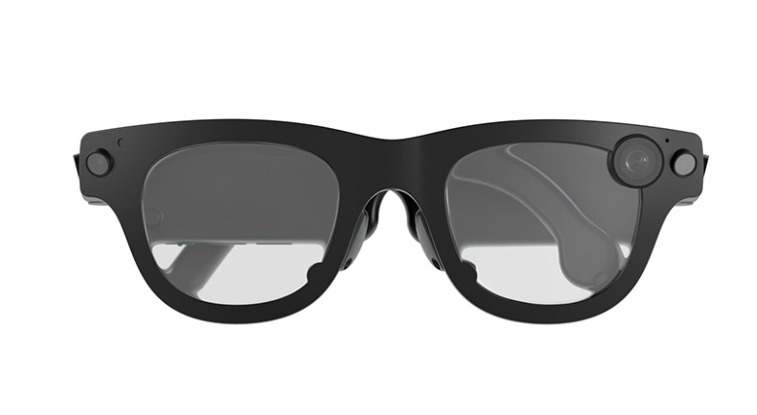
Earlier this year, Meta announced Aria Gen 2, the company’s latest research smart glass. The company shared more about the technology inside Aria Gen 2, including an in-depth overview of the form factor, audio capabilities, battery life, upgraded cameras and sensors, on-device compute, and more.
Meta introduced Project Aria in 2020, enabling accelerated research across a variety of use cases using smart glasses. Aria glasses are used by researchers internally at Meta, and by over 200 academic and corporate partners, says the company.
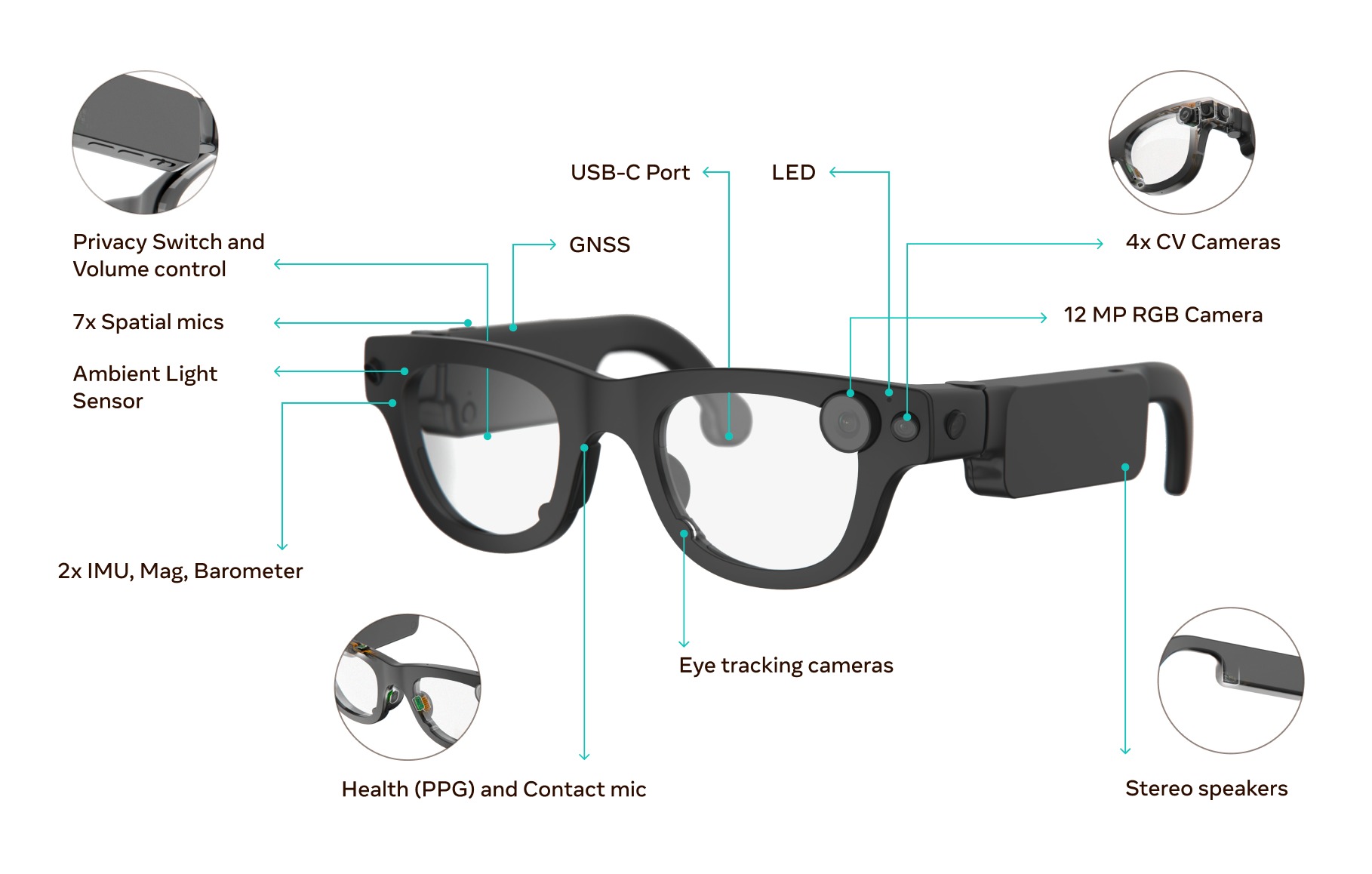
Aria Gen 2 is a wearable device that combines the latest advancements in computer vision, machine learning, and sensor technology. Compared to Aria Gen 1, Aria Gen 2 includes:
- upgraded sensor suite featuring an RGB camera, 6DOF SLAM cameras, eye-tracking cameras, spatial microphones, IMUs, barometer, magnetometer, and GNSS.
- nosepad boasts a PPG sensor for measuring heart rate and a contact microphone to distinguish the wearer’s voice from that of bystanders.
- Meta’s custom processor
- lightweight design (weighing in at 74–76g, depending on size)
- audio feedback via open-ear force-canceling speakers, enabling user-in-the-loop system prototyping
Meta Aria Gen 2 Technological Advancements
Computer Vision (CV) Camera Enhancements
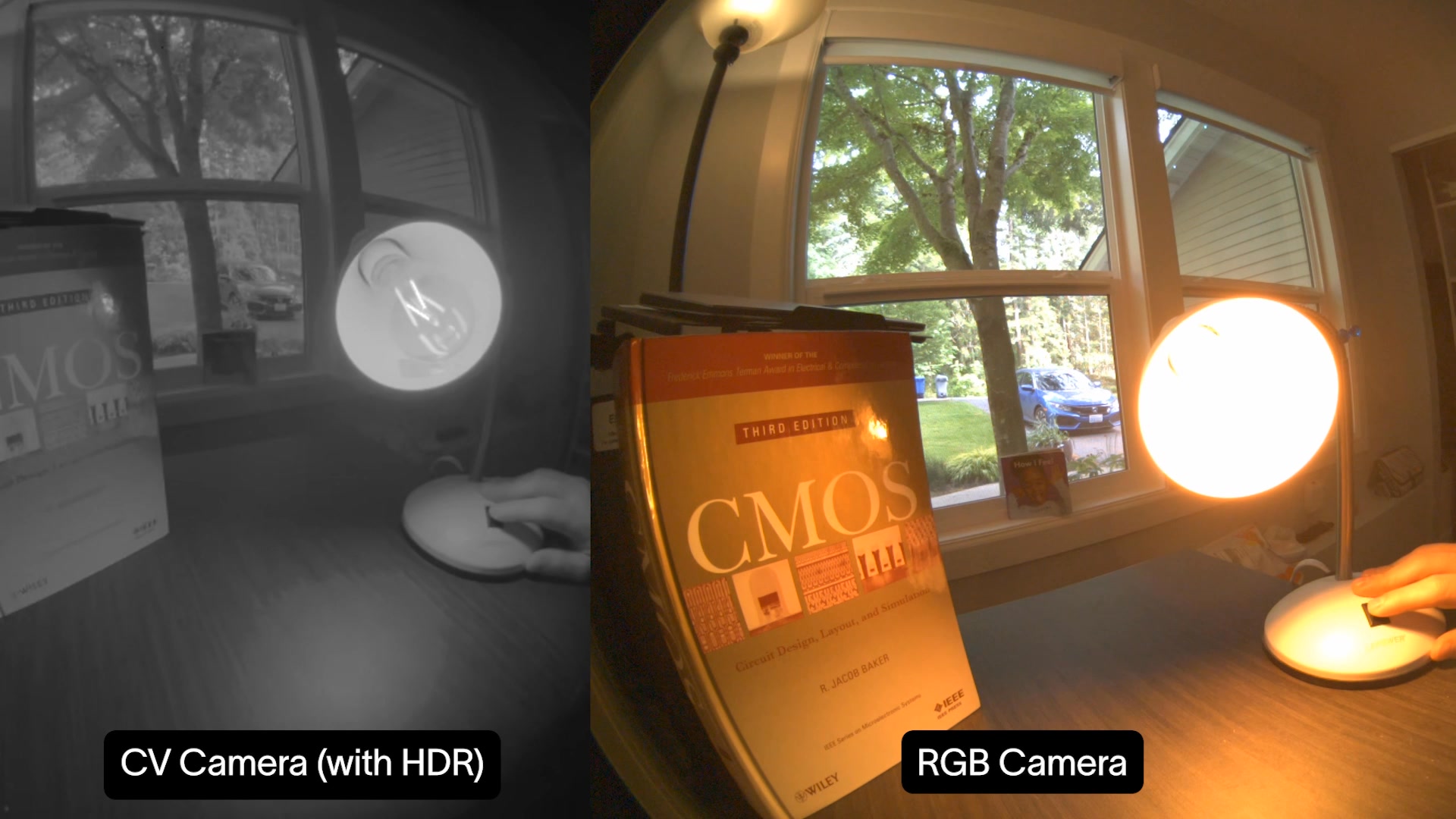
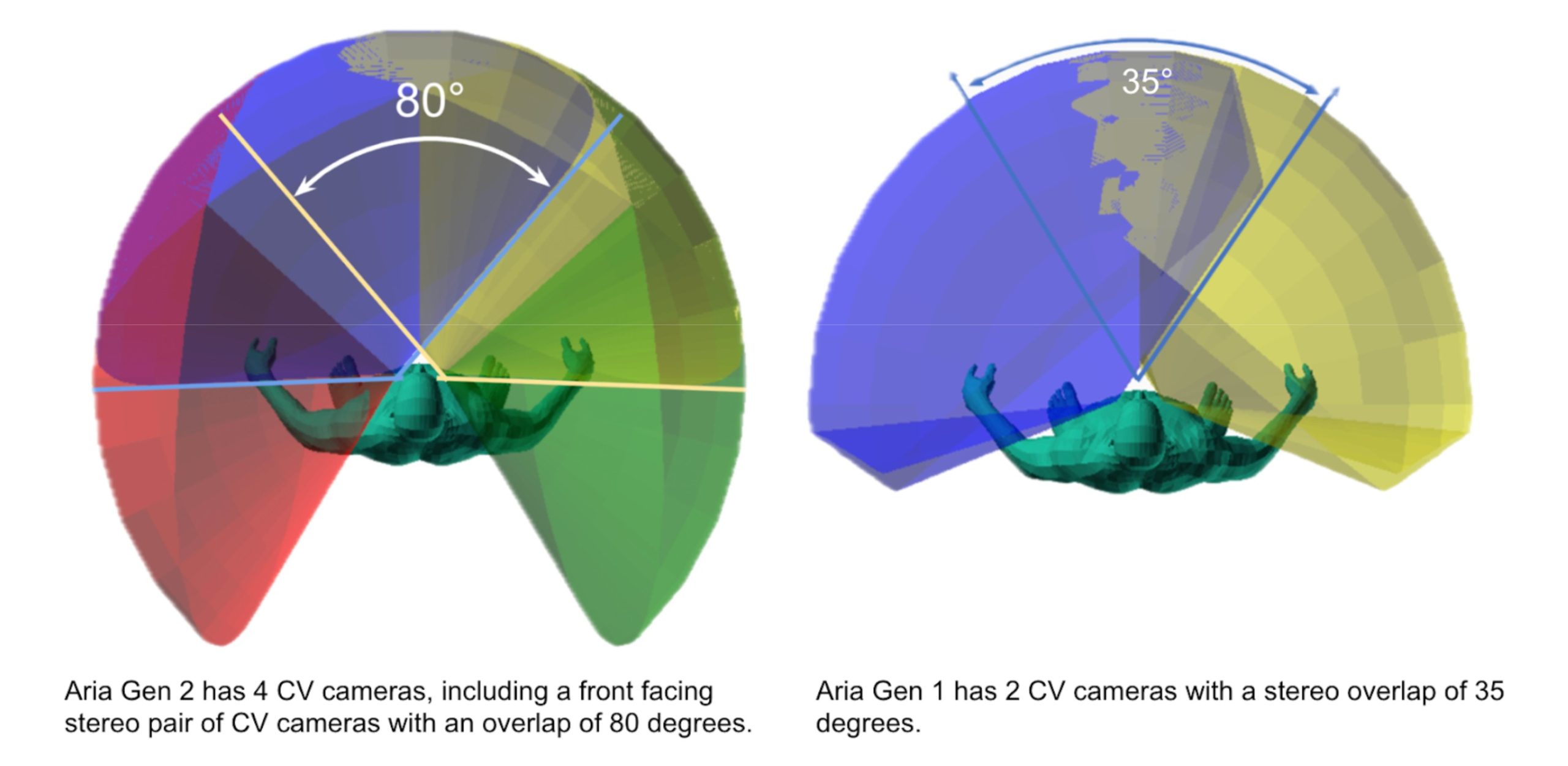
Aria Gen 2’s global shutter camera sensor offers a high dynamic range of 120 dB. It includes four computer vision (CV) cameras that provide a wider field of view, with stereo overlap increased to 80° from Gen 1’s 35°, enhancing depth perception and spatial awareness.
New Sensors
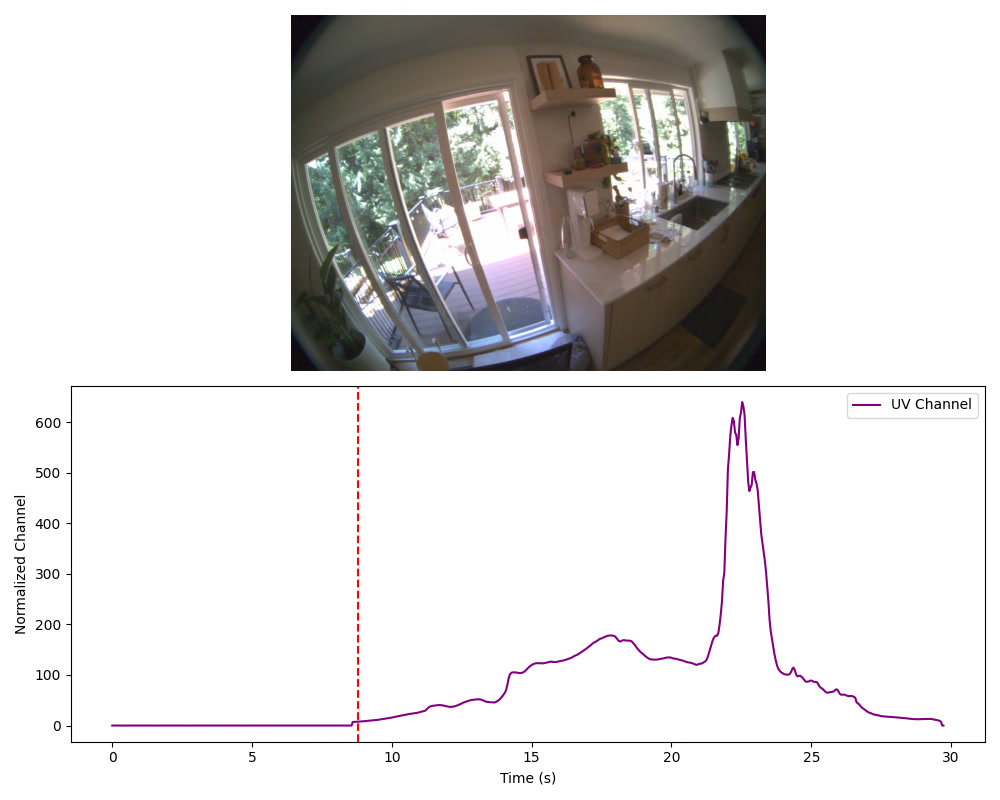
Aria Gen 2 includes a calibrated ALS, enabling better exposure control algorithms and unlocking new capabilities at low frame rates. Further, it also includes a contact microphone embedded in the nosepad for better capturing of voices, and a PPG sensor for capturing the heart rate of the wearer.
Device Time Alignment
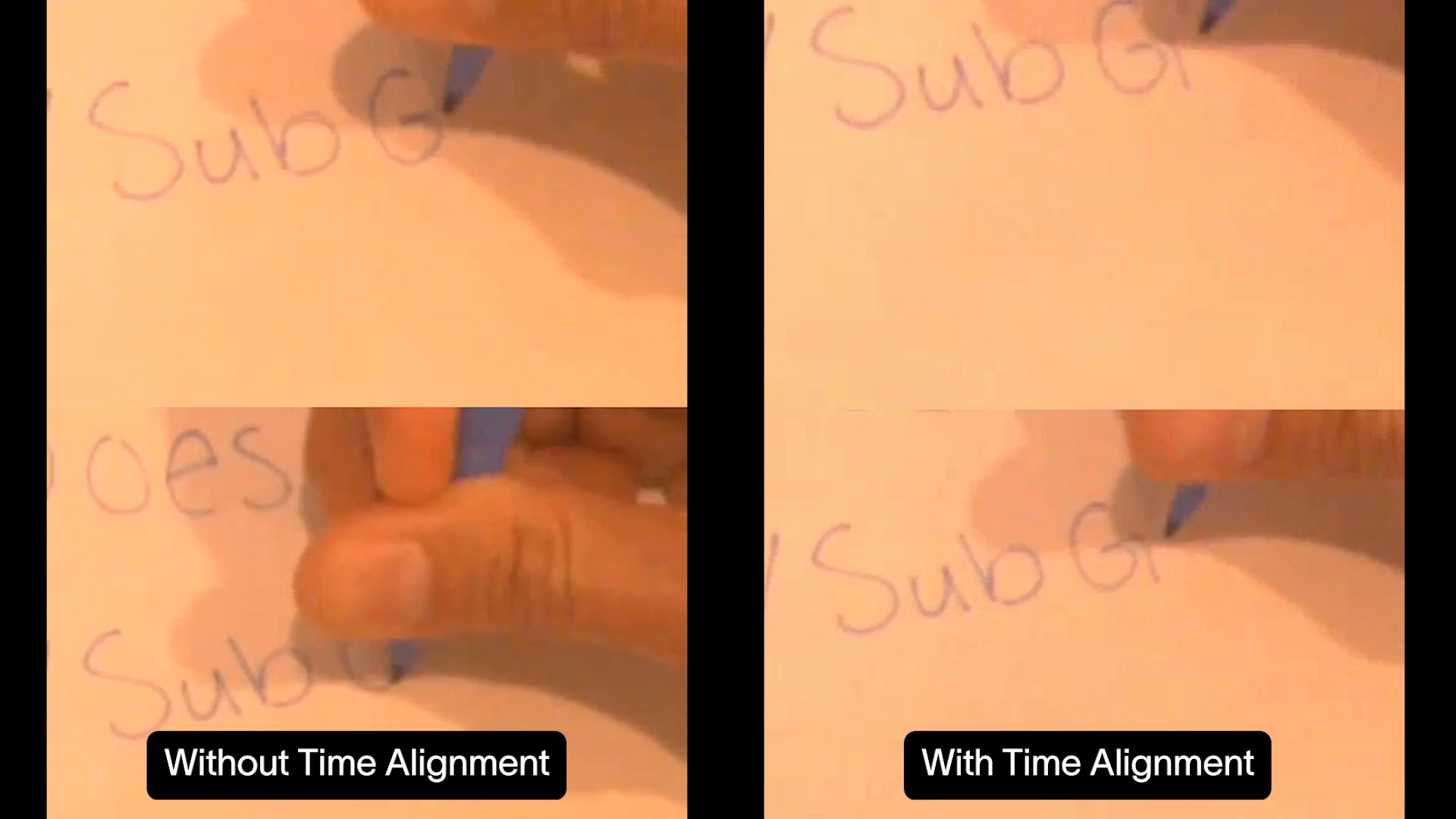
Aria Gen 2 utilizes SubGHz radio technology to broadcast timing information, enabling precise time alignment with other Aria Gen 2 devices or compatible devices that support SubGHz radio.
Eye Tracking and Head Tracking
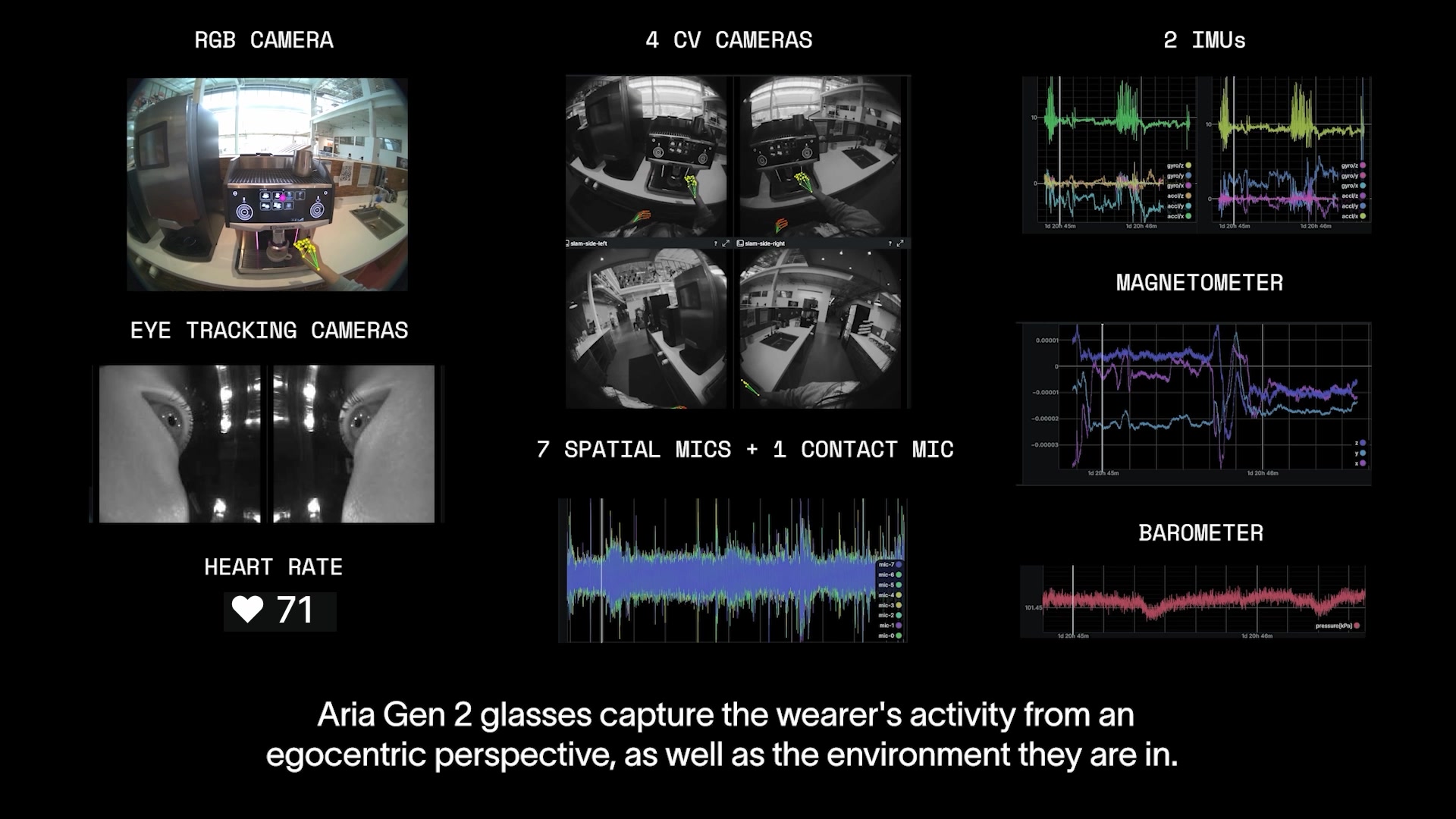
Aria Gen 2 also boasts an advanced camera-based eye tracking system that tracks gaze per eye, vergence point, blink detection, pupil center estimation, pupil diameter, corneal center, etc. The head tracking solution, on the other hand, tracks the wearer’s hand in 3D space.
Availability
This is exclusively available for research purposes only. Applications to work with Aria Gen 2 will open later this year, and researchers interested in staying informed can join the Aria Gen 2 interest list.