
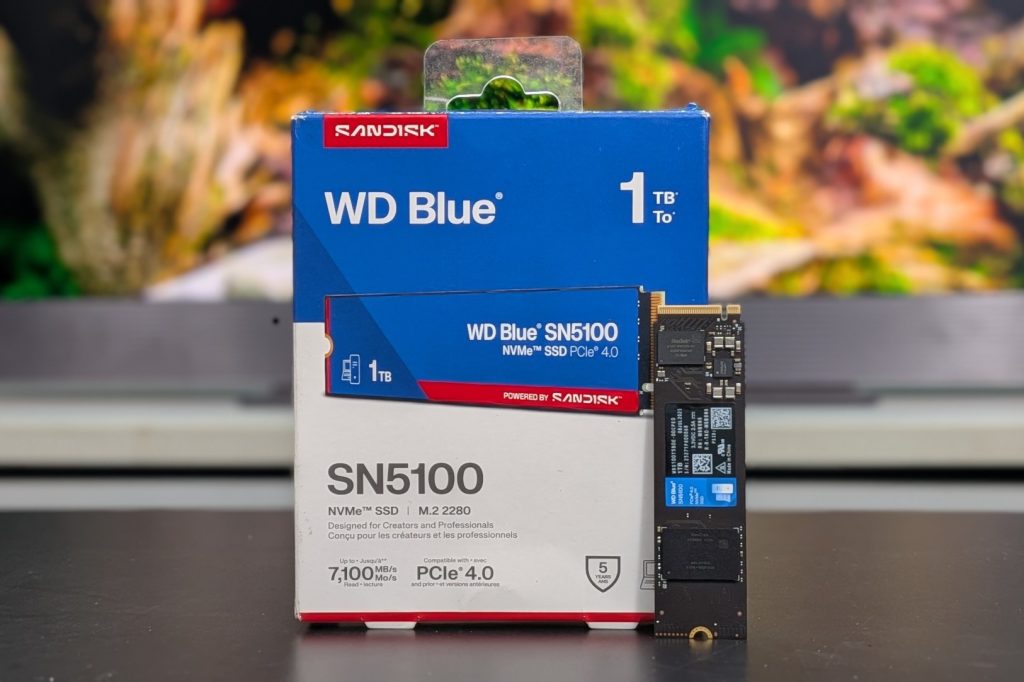
The need for faster, more reliable data storage is ever-increasing and Solid State Drives have become the de facto over the past decade. While HDDs still enjoy better storage density, SSDs have replaced them as the primary storage device in PCs and laptops, partially due to drop in prices.
The WD Blue SN5100 NVMe SSD is one such product, offering up to 4TB of ultra-fast storage capacity at PCIe Gen 4 speeds. How does the device perform? Read on in our review to find out.
Form Factor and Specifications
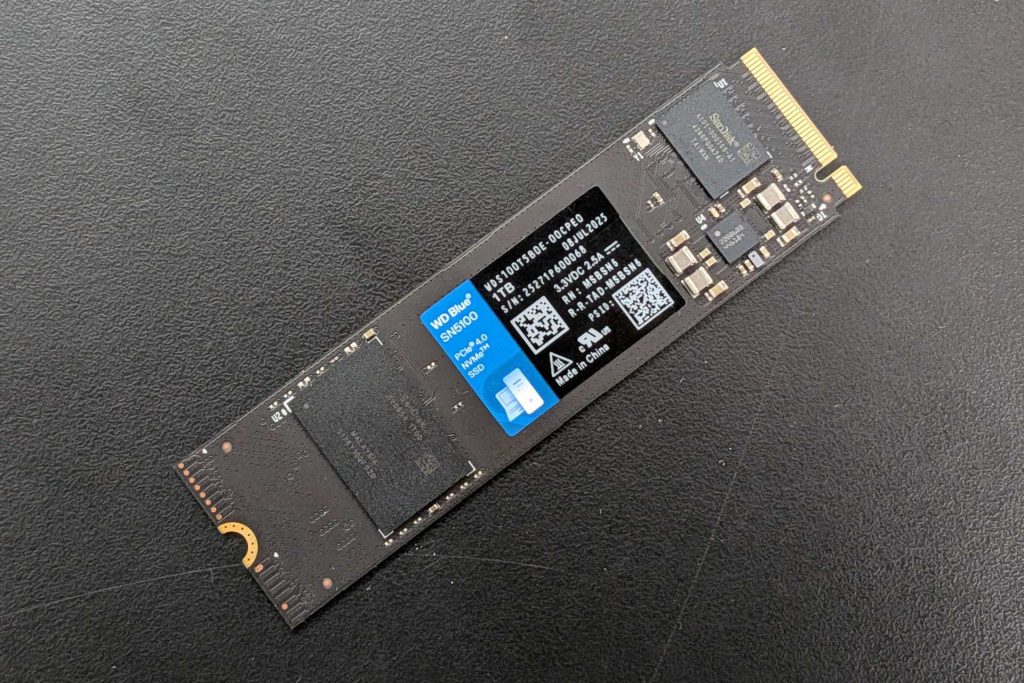
The WD Blue SN5100 comes in 4 storage options – 500GB, 1TB, 2TB and 4TB, and our review unit is the 1TB variant. All variants use the M.2 2280 form factor, which is the most common.
Here are the specifications:
| Storage capacities | 500GB, 1TB, 2TB, 4TB |
| Form Factor | M.2 2280 |
| Interface | PCIe Gen 4.0 x4, NVMe |
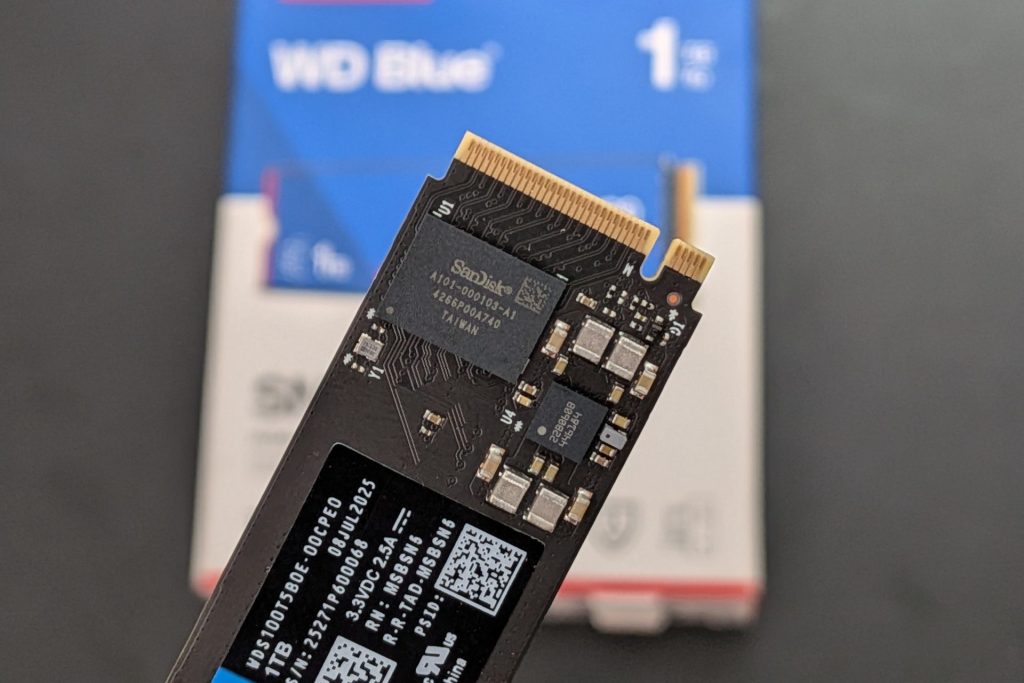
| NAND Type | SANDISK QLC 3D CBA NAND |
| Sequential Read | 7,100 MB/s |
| Sequential Write | 6,700 MB/s |
| Dimensions | 80 x 22 x 2.38mm |
Performance Benchmarks
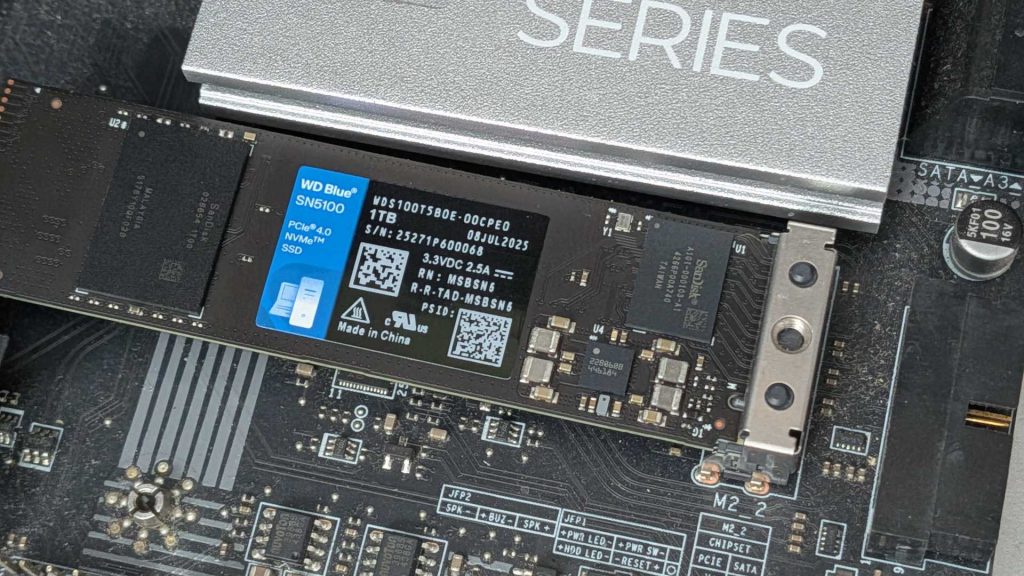
We benchmarked the WD SN5100 SSD on our test rig, which is equipped with the following
- AMD Ryzen 9 7950X processor
- 2x16GB Corsair Vengeance DDR5 RAM running at 5200MT/s
- NVIDIA GeForce RTX 3070Ti GPU
- MSI PRO X870E-P WIFI motherboard
- WD SN770 2TB SSD (Boot Drive)
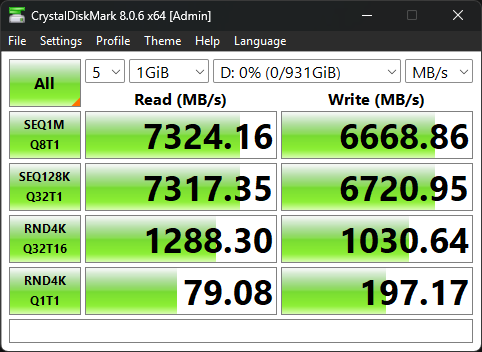
As mentioned in the specifications, the WD SN5100 is an NVMe SSD that utilizes the PCIe Gen 4.0 x4 interface. The product claims a blistering fast sequential read speed of 7,100 MB/s, however we found that it can be limited by which M.2 port is used to connect the SSD on the motherboard.
In our testing, we achieved different results depending on which M.2 port was used on the MSI motherboard. Our fastest result was captured when the drive was connected via the PCIe Gen 5.0 x4 port, which connects directly to the CPU’s PCIe lanes. We observed transfer speeds as rated on the box, as shown in the screenshot below.
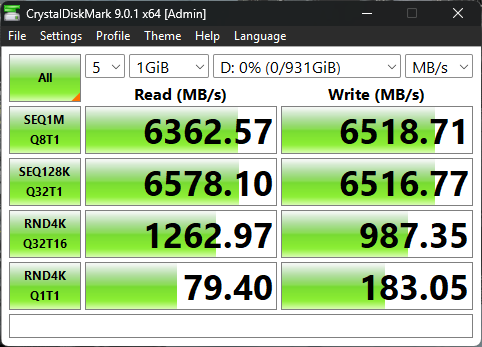
When the drive was connected to the PCIe Gen4 x4 M.2 port on the motherboard, we observed slightly lower speeds than rated. This is likely because the PCIe lanes are connected through the chipset instead of directly to the CPU
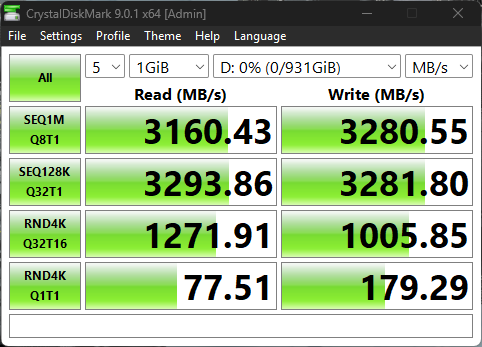
Lastly, when we connected the drive to a PCI Gen4 x2 M.2 port, the transfer speeds dramatically reduced, showing a clear bottleneck.
Here are the other benchmark test results:
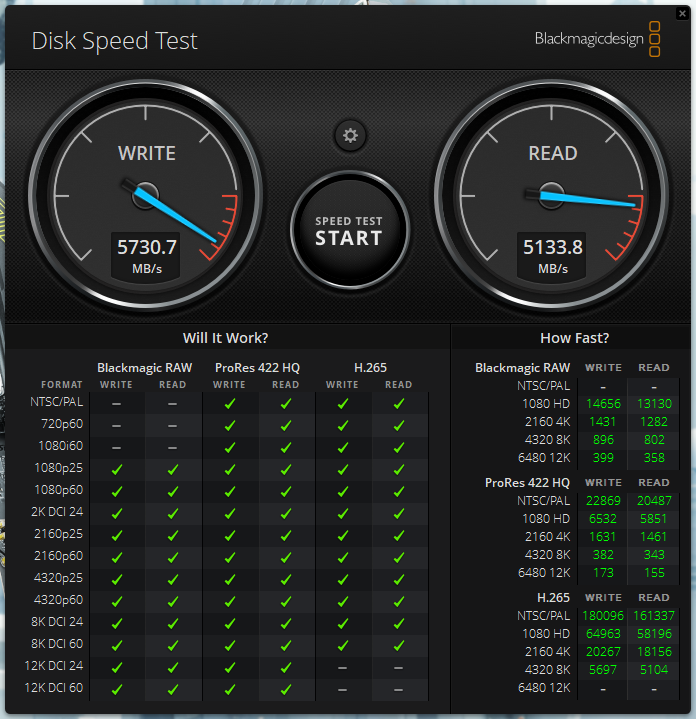
In BlackMagic’s Disk Speed Test, the drive achieved 5730.7MB/s write speeds and 5133.8 MB/s read speeds.
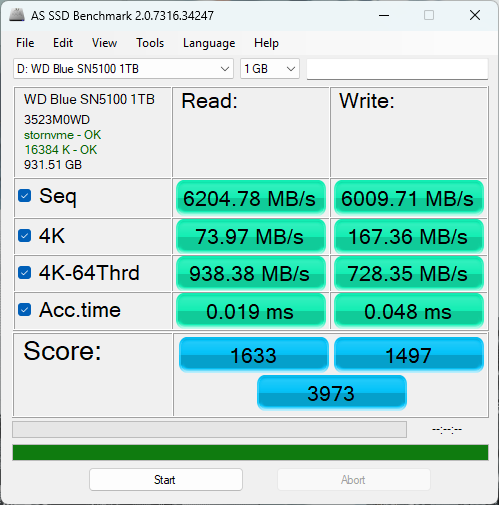
In the AS SSD Benchmark, the SN5100 SSD got a score of 1633 for Reads and 1497 in Writes, with a total combined score of 3973.
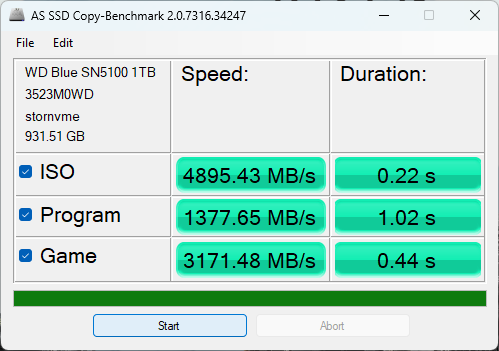 In the AS SSD Copy Benchmark, it achieved a speed of 4895.43 MB/s in the ISO category, 1377.65 MB/s in the Program category, and 3171.48 MB/s in the Game Category.
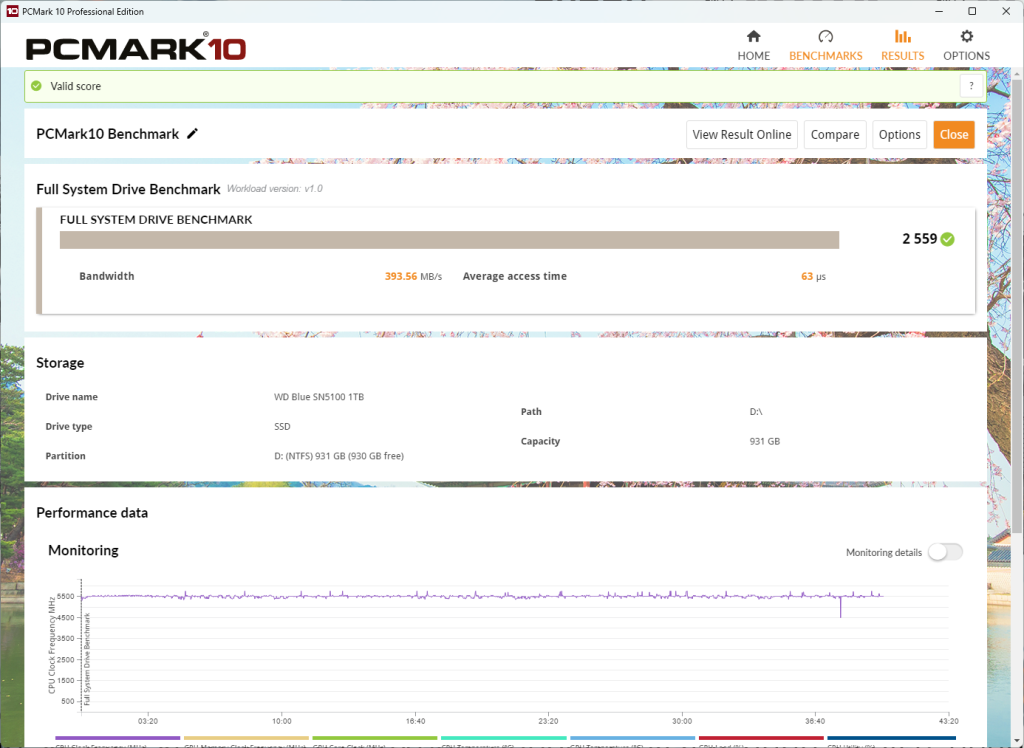
In the PCMark 10 Full System Drive Benchmark, the drive achieved a score of 2599.
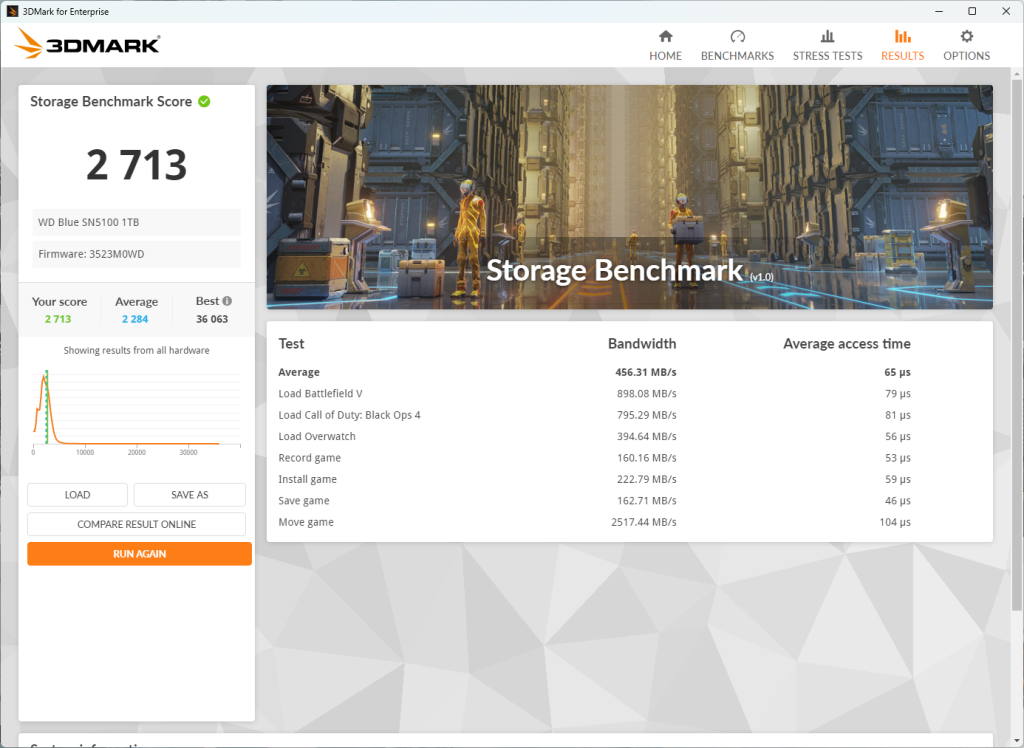
In 3DMark’s Storage Benchmark, it achieved a score of 2713.
Conclusion
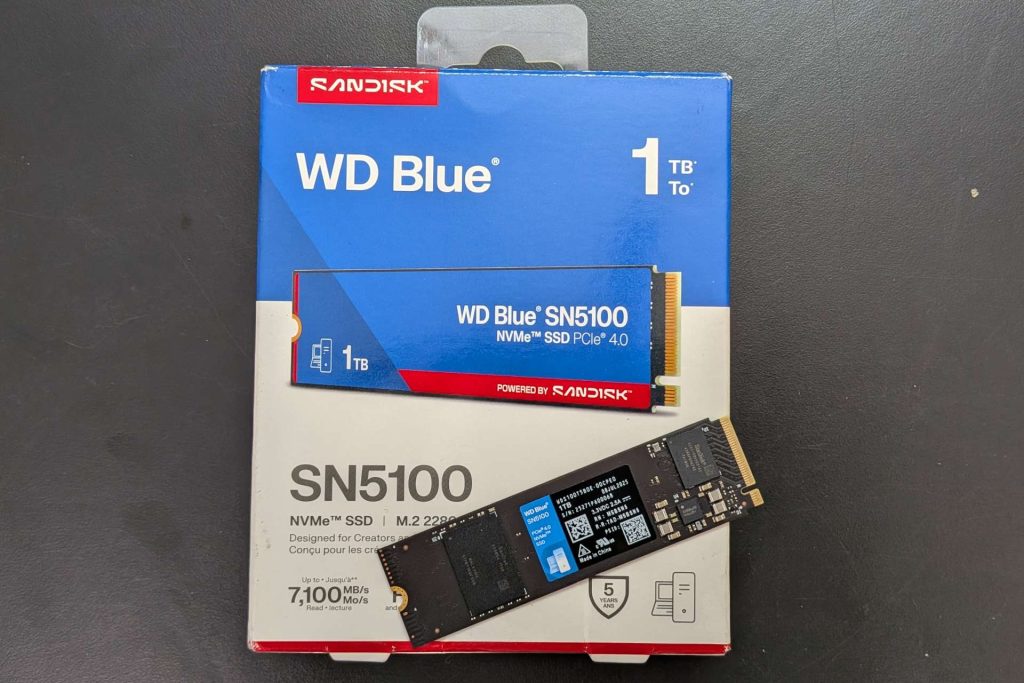
At the time of publishing this review, the WD Blue SN5100 NVMe SSD (1TB) is priced at Rs. 12,100 on Amazon. For this price, you get a fast PCIe Gen 4 SSD that is well suited for everyday users, content creators, and even gamers. Performance is solid and consistent, as long as the drive is installed in a compatible PCIe Gen 4 slot.
With component prices becoming increasingly unpredictable, especially due to rising demand from AI data centres, storage prices may also see upward movement in the near future. If you’re planning to upgrade to a PCIe Gen 4 SSD, the WD SN5100 makes a strong case for itself with its balance of speed, reliability, and pricing.
Overall, it’s an easy recommendation for users looking for a dependable NVMe upgrade. We would recommend to not wait to long if it fits your budget today