
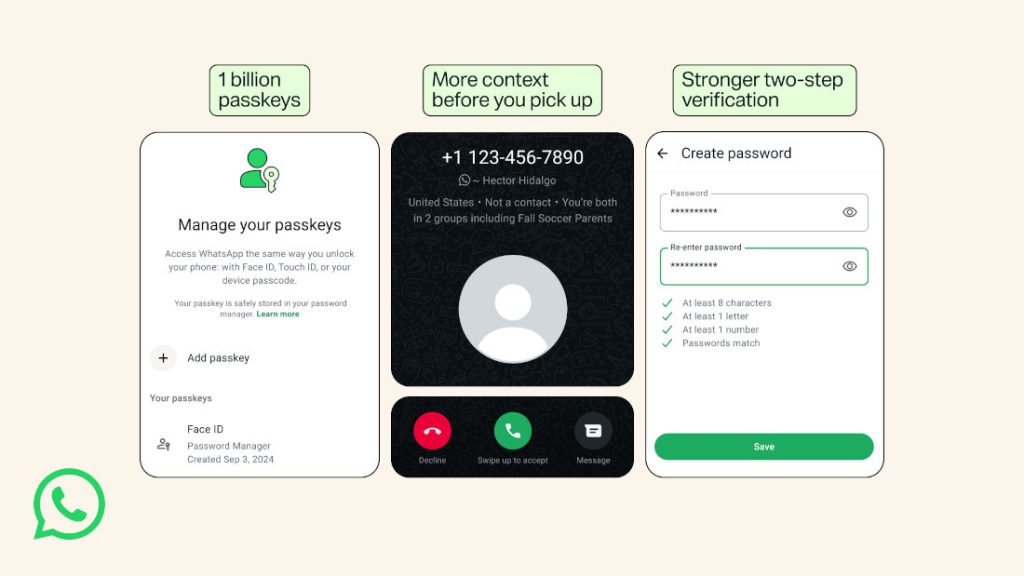
WhatsApp has announced a series of new security updates aimed at strengthening user account protection, expanding authentication methods, and combating unwanted incoming calls.
The messaging platform confirmed that over one billion users currently use passkeys for authentication, prompting new cross-platform enhancements alongside broader security measures.
Expanded Multi-Device Passkey Support
Passkeys, which allow users to log in using biometric authentication (such as fingerprint or facial recognition) or their device screen lock, eliminate the need for SMS verification codes. With the latest update, WhatsApp now supports adding multiple passkeys to a single account.
This change accommodates users operating across different platforms, such as iOS and Android devices, allowing secure biometric access regardless of the hardware used. Users can configure this feature through Settings > Account > Passkeys.
Enhanced Two-Step Verification
The platform has also updated its two-step verification framework. Previously restricted to a six-digit numerical PIN, two-step verification now supports full alphanumeric passwords with special characters. This change significantly increases complexity, mitigating brute-force risks and account takeover attempts in instances where an initial one-time passcode may be intercepted or compromised.
Caller Context for Unknown Numbers on Android
To address potential fraud and unsolicited outreach, WhatsApp has introduced contextual information for calls from unsaved contacts on Android devices. When an unknown number calls, the interface displays relevant details prior to answering, including:
- The country code or origin of the phone number
- Any mutual groups shared between the recipient and the caller
This additional context is designed to help users evaluate unsolicited calls and identify potential scam attempts before picking up.
These new security additions operate alongside WhatsApp’s default end-to-end encryption, which applies across all personal messaging and calling features on the platform.