
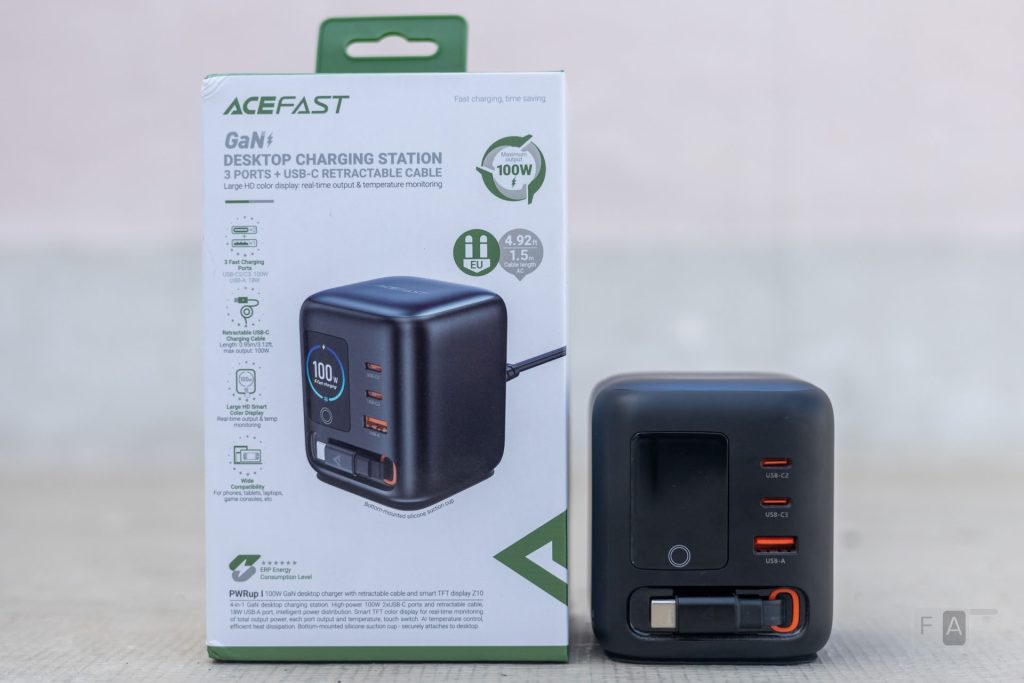
The advent of GaN technology has fuelled a rapid rise in charger options across brands. The desktop charger segment, in particular, offers many interesting choices suited to different charging needs. The ACEFAST Desktop Power Station Z10 is one such charger. It offers multiple charging ports, an informative display, and up to 100W of power output. In this review, we test these claims and determine whether the Z10 justifies its price.
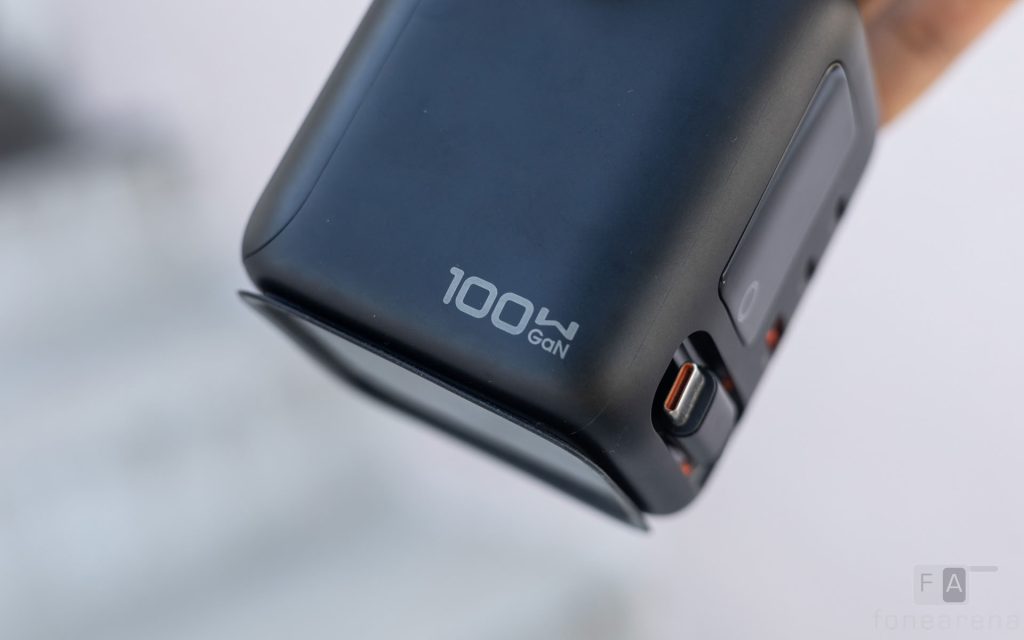
What’s in the Box
- 1 Desktop charging station
- AC power cord
- Manual
Build Quality and Design
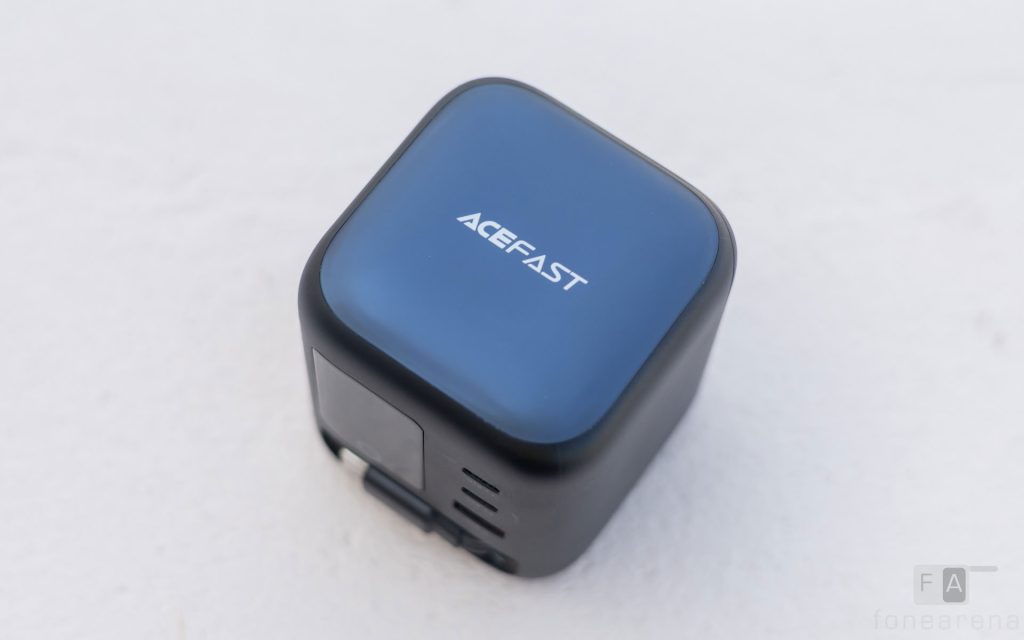
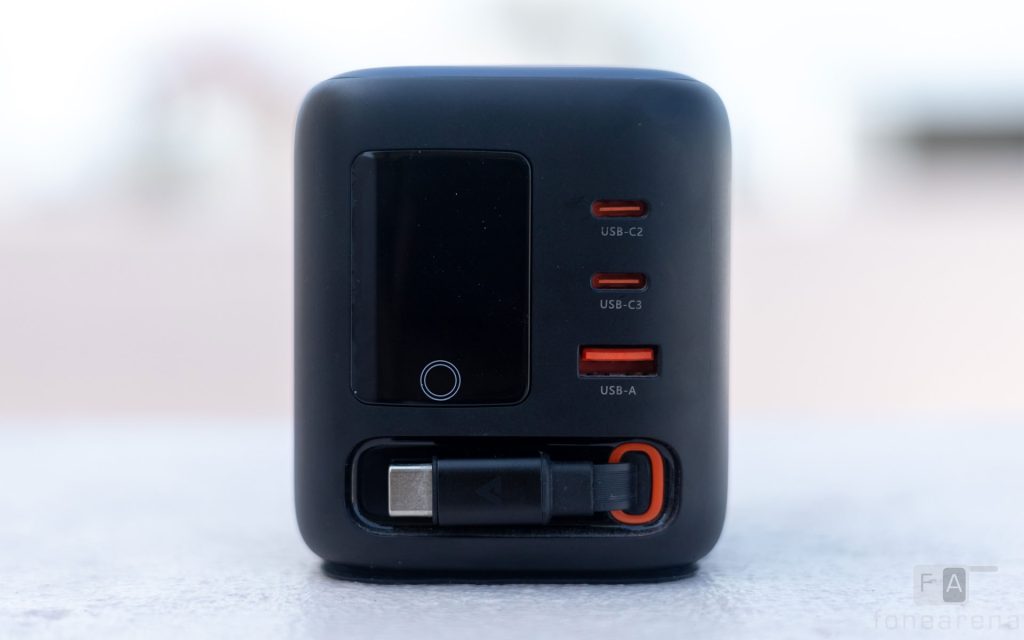
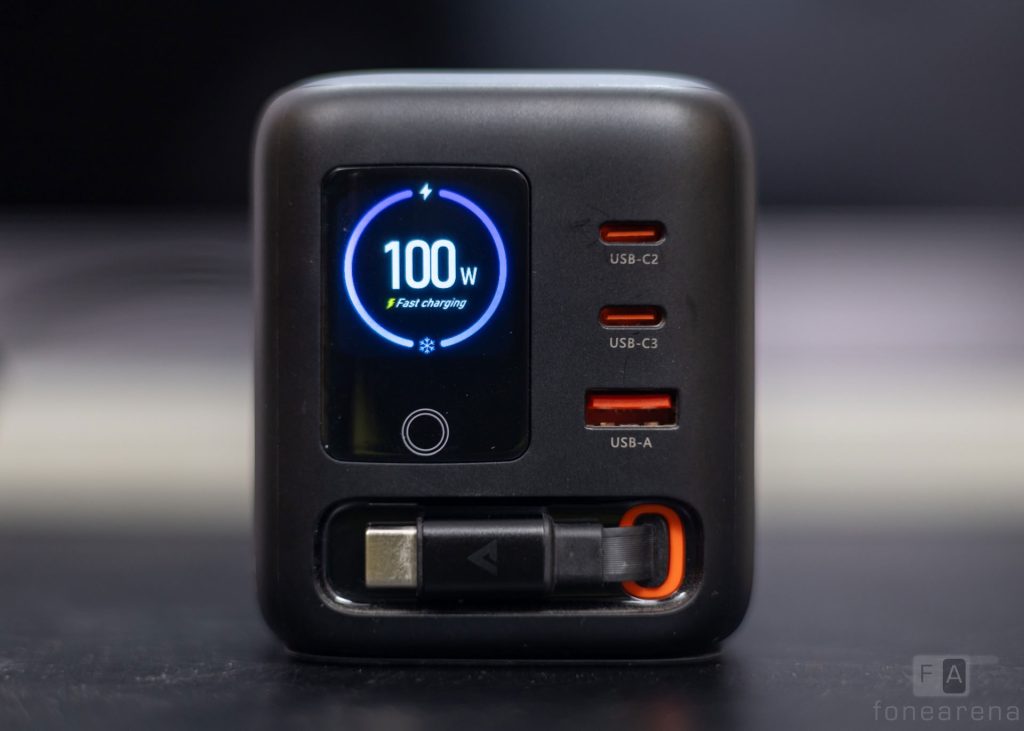
The ACEFAST Z10 has a simple, cuboidal shape with an exterior made from flame-retardant PC. It has a smooth, matte black finish all around, except for the top panel, which has a blue grey finish with “ACEFAST” printed on it. The charging outputs, along with the TFT information display, are on the front panel. One of these outputs is an integrated, retractable USB-C cable that extends up to 95cm. The cable uses a spring-coil mechanism and is held magnetically in place when not in use.
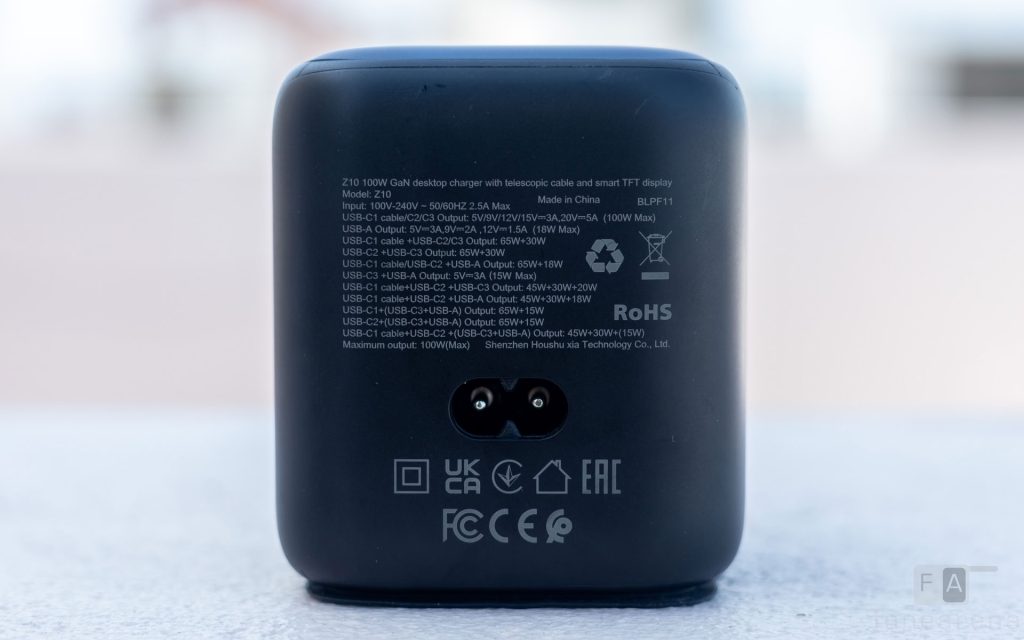
The two-pin power input is on the rear panel, alongside a printed guide detailing all the charging speeds the Z10 supports.
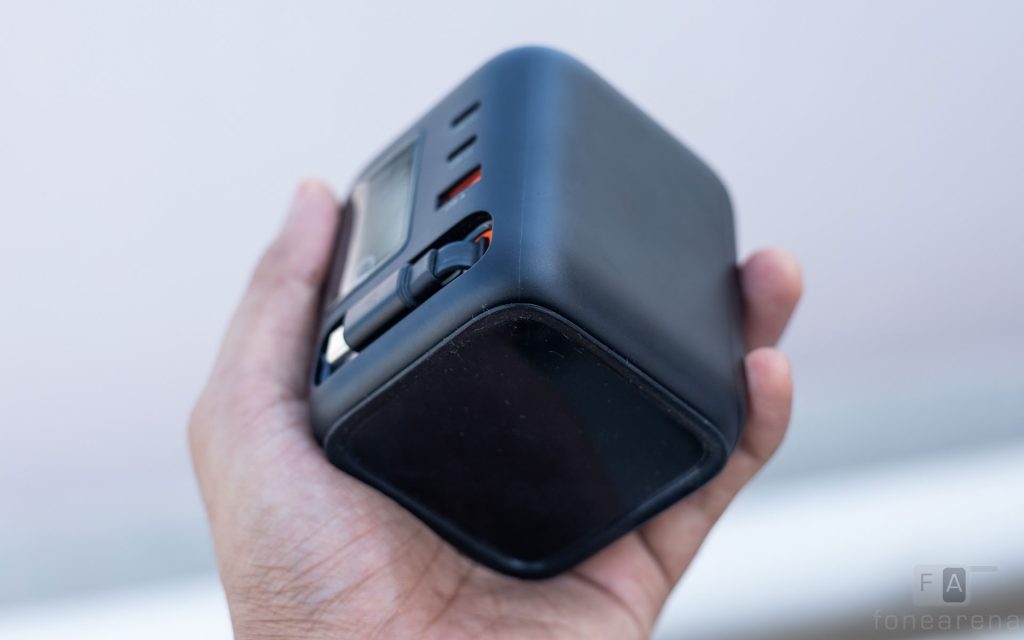
A thoughtful addition is the silicone suction base, designed to keep the charger fixed in place on the desk. While the idea is neat, we found the suction to be a little weak. It would often shift when plugging in cables, which defeats the purpose.
The device measures 82.4 x 75.3 x 71.7mm and weighs 484g, which is reasonably compact for the amount of power it can deliver.
Charging Methods
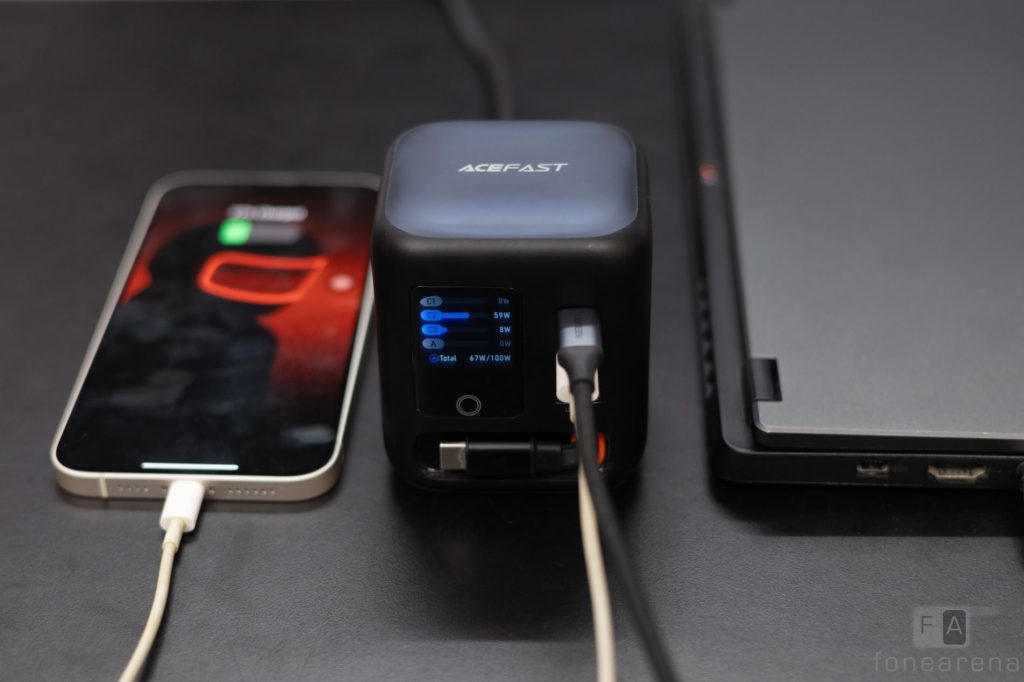
The Z10 charging station offers four wired charging outputs in total. The two USB-C ports and the retractable USB-C cable can each output up to 100W individually. The station supports various charging standards, including PPS, PD3.0, PD2.0, QC4+, QC3.0, QC2.0, AFC, FCP and SCP. The USB-A port, meanwhile, tops out at 18W and supports QC3.0, QC2.0, AFC, FCP and SCP.
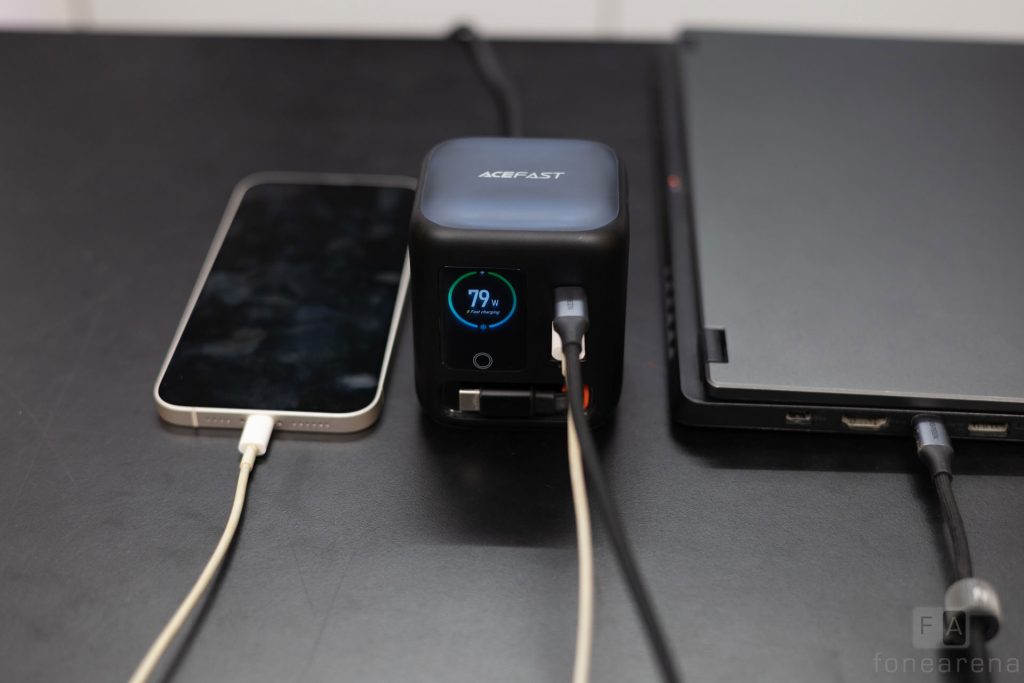
When multiple ports are used together, the charging station automatically distributes power among the connected devices based on their requirements.
| Ports in use | Power split | Total output |
| Any two of USB-C cable, USB-C1, USB-C2 together | 65W + 30W | 95W max |
| USB-C cable or USB-C1 + USB-A | 65W + 18W | 83W max |
| USB-C2 + USB-A | 5V/3A | 15W max |
| USB-C cable or USB-C1 + (USB-C2 + USB-A) | 65W + 15W | 80W max |
| USB-C cable + USB-C1 + USB-C2 | 45W + 30W + 20W | 95W max |
| USB-C cable + USB-C1 + USB-A | 45W + 30W + 18W | 93W max |
| All four ports in use | 45W + 30W + 15W | 90W max |
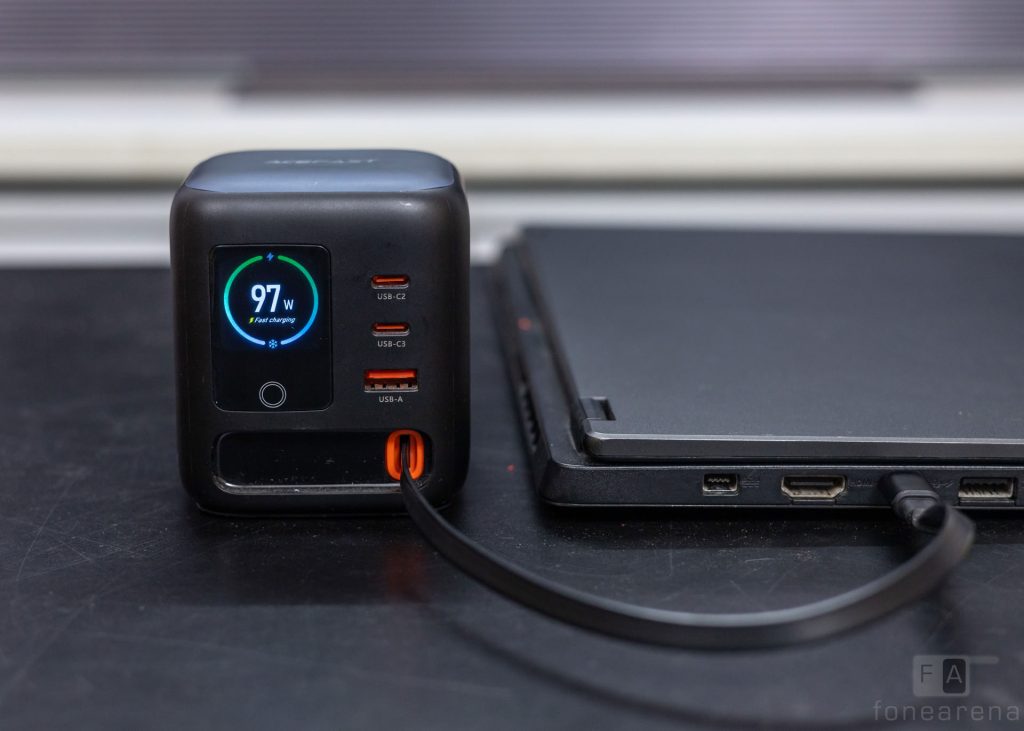
When connecting a Windows laptop to the integrated USB-C cable, we recorded a peak output of 97W. After a minute or so, the output settled to a steady 80W.
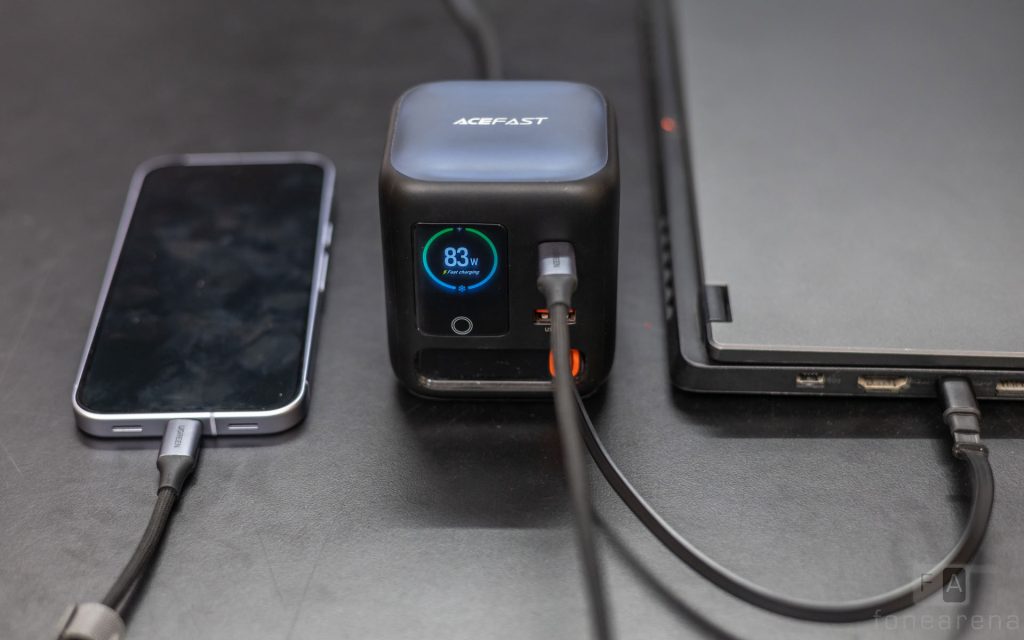
Upon connecting a Pixel 10 Pro, the Z10 took a moment to redistribute power between the two outputs. We recorded a total output of 83W, with the laptop receiving 60W and the phone receiving 23W.
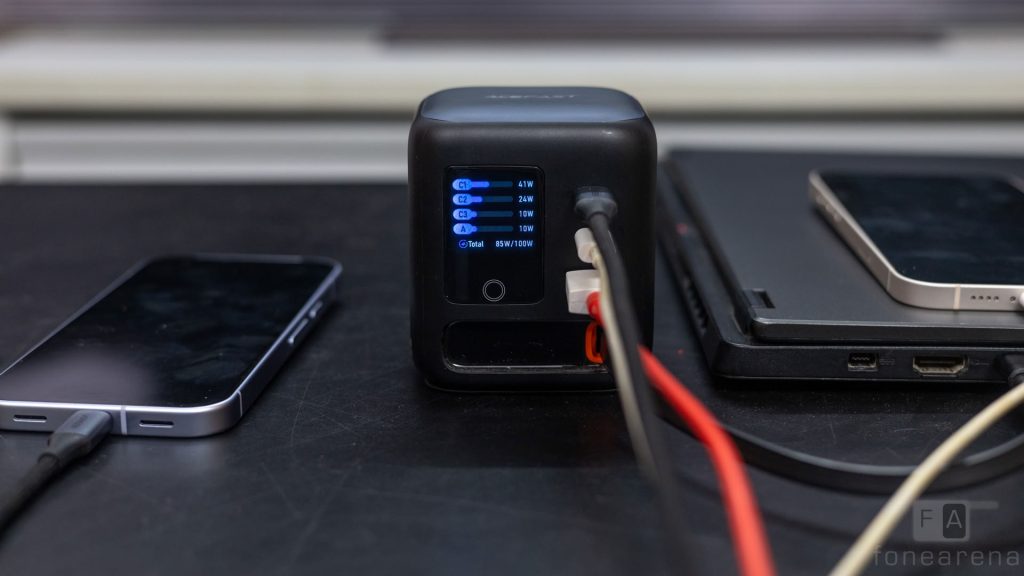
When we connected devices to all four ports, we recorded a total output of 85W.
These figures fall slightly short of the rated maximums, but they remain close enough to be reassuring. This is expected behaviour, since peak charging speeds typically last only a short time. Devices then settle into wattages a little below the rated maximum, for reasons of safety, efficiency and temperature management. Modern devices constantly monitor and renegotiate their charging with the connected charger. The Z10 handles this well across its four outputs.
Display and Safety Features
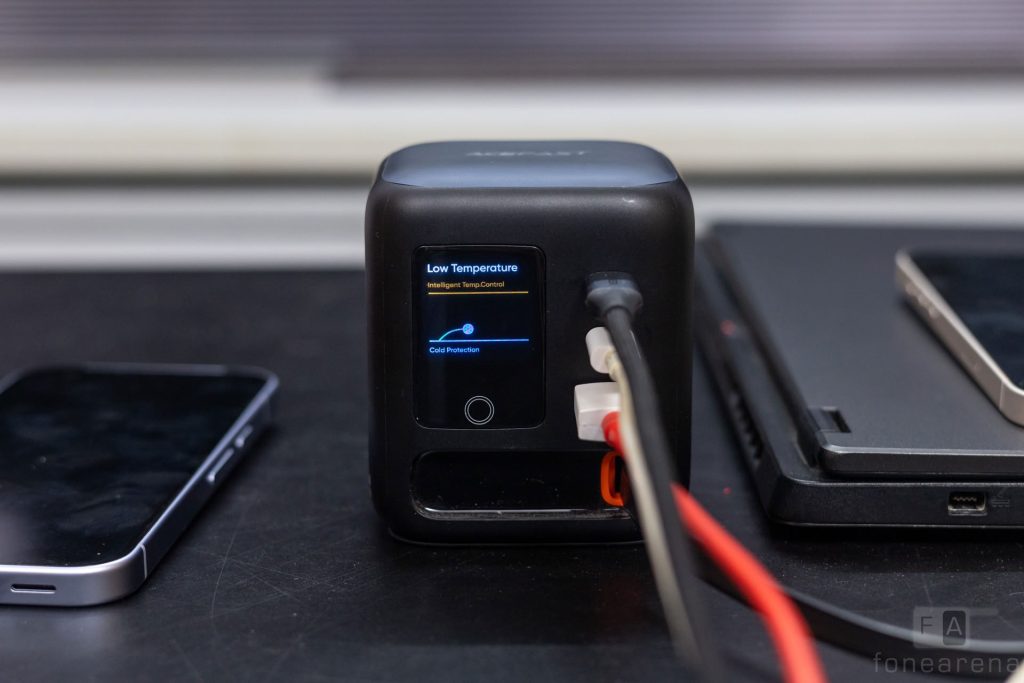
A highlight feature of the Z10 is the TFT display on the front. It cycles through three screens: one showing total output power, one showing per-port power, and one showing a temperature graph. Users can cycle through the screens by tapping the capacitive button below the display.
We found the wattage split screen to be the most useful, since it shows the amount of charge drawn by each connected device. It would have been nice to see additional information, such as voltage, current, or even which charging standard each port is using. The temperature screen was the least useful, as overheating rarely becomes an issue with modern devices.
For safety, the Z10 is equipped with a comprehensive set of safeguards. These include overvoltage, overcurrent, short-circuit, overtemperature and overpower protection, along with anti-interference and electromagnetic field protection. Similar to the Z9, the Z10 monitors temperature 40 times a second and adjusts output accordingly. For a device that can charge four devices at a maximum output of 100W, it is comforting to know they will charge safely.
Verdict
The ACEFAST Desktop Power Station Z10 delivers on most of what it promises. Its four outputs, three USB-C and one USB-A, offer genuine flexibility. Our testing confirmed that real-world output stays close to the rated figures, even with multiple devices connected at once. The TFT display is a particularly useful addition, especially the wattage split screen. A little more detail on voltage, current or charging standard per port would have made it even better.
Build quality feels solid overall, aided by the flame-retardant PC shell and compact footprint. The suction base, however, could grip more firmly. The comprehensive safety suite adds welcome peace of mind for a charger handling up to 100W across four devices at once. For anyone juggling multiple gadgets on a single desk, the Z10 is a capable, well-rounded charging solution.
The ACEFAST Desktop Power Station Z10 is available for purchase in global e-tail shops such as as Aliexpress for a price of $57 (Approx. Rs. 5479.30).