
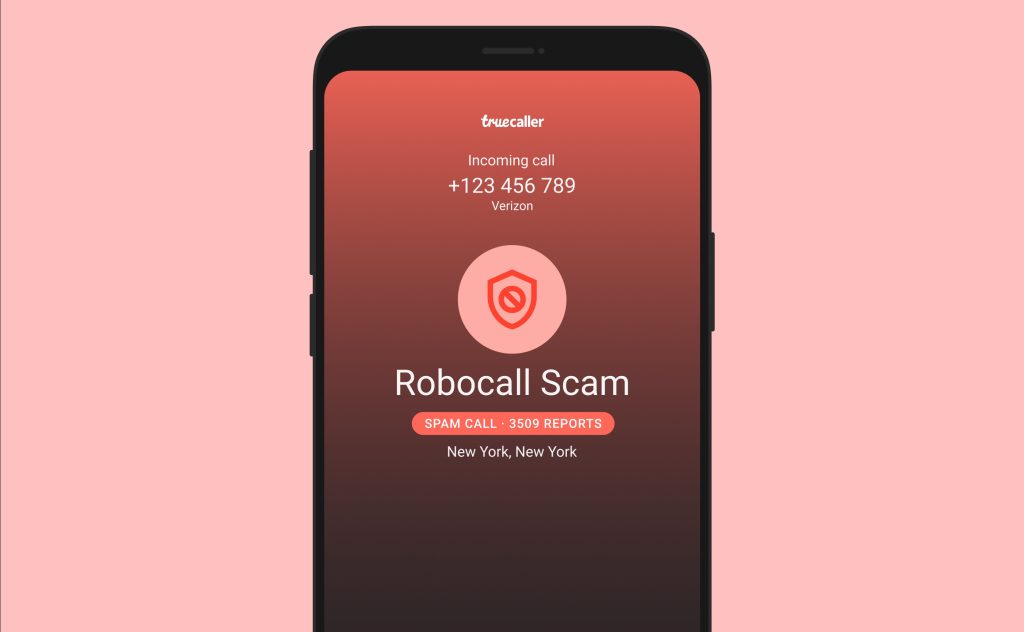
 Spam and Fraud calls are a massive problem plaguing India and many other countries. India is one of the most spammed countries around the world with consumers receiving over 41 billion spam calls and 129 billion spam messages every year.
What are the 140 and 1600 series?
The 140 and 1600 series are special number prefixes created by TRAI (Telecom Regulatory Authority of India) so you can instantly tell what kind of commercial call you’re getting — 140 means telemarketing, 1600 means service calls from banks and financial companies. The rules were finalised in February 2025 under the TCCCPR (Telecom Commercial Communications Customer Preference Regulations), and banks, NBFCs, mutual funds and insurers were given strict deadlines to move to these numbers by early 2026.
TRAI’s Whitelist Mandate
In late 2025, alongside the migration mandates, TRAI directed Caller ID apps — including Truecaller, Hiya — to whitelist the entire 140 and 1600 series. The apps could no longer show spam tags or block them no matter how many users had reported them as spam. Truecaller has confirmed it complied under protest, after informing the regulator that the approach would backfire. The effect: every 1600-series call now appears as a bare, unflaggable number — whether it’s a genuine bank fraud alert or a marketing pitch reported as spam by thousands.
Eight months on: a consumer revolt
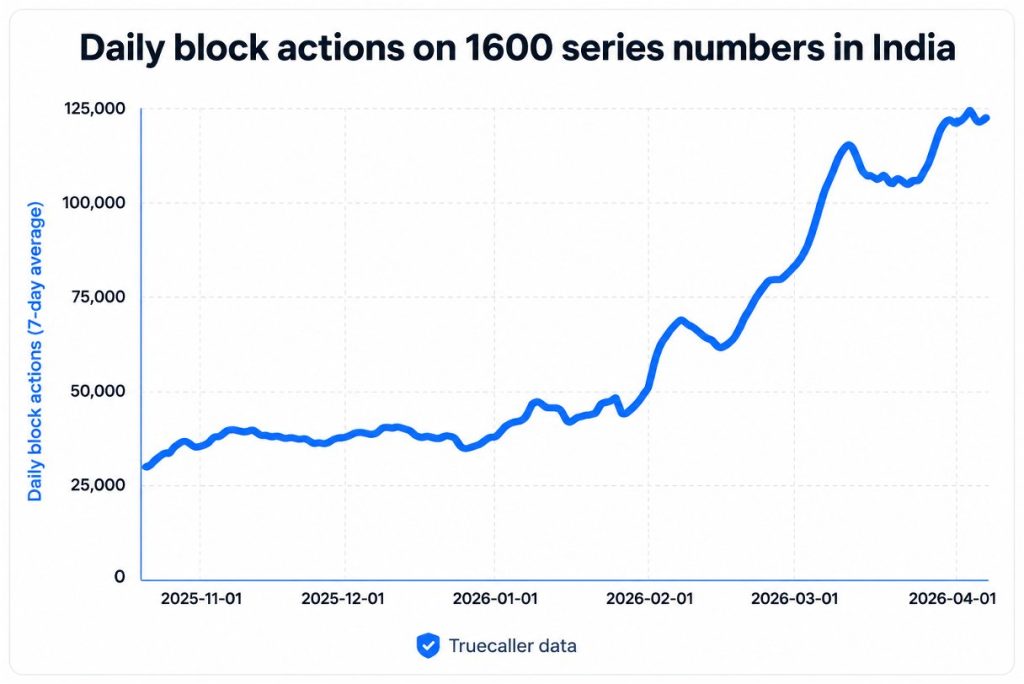
Eight months on, the data points to a consumer revolt. Truecaller users now ignore 81% of all 140-series calls and 79% of 1600-series calls, with over 5.1 crore calls from these ranges going unanswered every single day. Manual blocking tells the same story — around 4 lakh 140-series and 1.25 lakh 1600-series numbers are blocked daily, totalling 7.4 crore blocking actions since October 2025, with daily blocking of the 1600 series alone tripling (+208%) in that period.
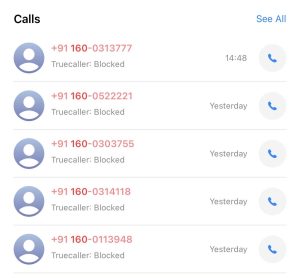
The root of the problem: abuse by companies
The root of the problem is abuse by the companies themselves. The 1600 series was meant strictly for service calls — fraud alerts, payment confirmations, account updates — but banks and financial institutions are using it to push credit cards, loans and insurance. Because the series is whitelisted by order, these marketing calls carry a clean slate: no spam tag, no warning, no community reports. Users keep reporting them in growing numbers; Truecaller is simply barred from showing it. TRAI has full jurisdiction over every one of these registered, regulated entities — yet its enforcement energy has gone toward expanding control over the apps that expose the misuse rather than penalising the offenders.
TRAI wants more power
TRAI is now seeking more power. It has asked MeitY to designate it an “authorised agency” under the IT Act, giving it direct authority over caller ID apps like Truecaller, Hiya and Whoscall — platforms currently outside its jurisdiction. Draft TCCCPR amendments go further: apps that block, filter or tag designated-series calls could lose Section 79 safe harbour protection, exposing them to direct legal liability. The latest developments would bar apps from showing any information at all on 140 and 1600 numbers.
Truecaller CEO Rishit Jhunjhunwala wrote on Twitter/X earlier today:
“We are the good actors who are helping hundreds of millions of Indians every day, including the vulnerable elderly, to have a trusted communication experience. Instead, they want to enable bad actors and give them an open playground to spam and scam us by censoring community information. We find this unacceptable. Penalize the bad actors, not the ones like Truecaller that make a significant positive impact.”
Industry pushback
IAMAI (the Internet and Mobile Association of India), which represents digital platforms including caller ID apps, has formally opposed TRAI’s move on two grounds. One, TRAI has no authority here — apps like Truecaller are governed by the IT Act and MeitY, not telecom law, and TRAI’s rules apply to telecom operators, not apps. Two, the draft rules would force apps to hand over their spam detection data and user reports to telecom operators — data that companies like Truecaller have spent years building, given away to players with their own commercial interests. IAMAI has also warned of the precedent: if TRAI can grab powers to control app features, every other regulator will want the same.
DND: fifteen years of mixed results
TRAI launched DND registry (Do Not Disturb) back in 2010 that lets users opt out of commercial calls and SMS by dialling or messaging 1909. Telemarketers calling DND-registered numbers face penalties and disconnection under the rules. In practice, results have been mixed: much of the spam shifted to unregistered callers using ordinary 10-digit SIMs, which the registry was not designed to catch, and complaint resolution through 1909 has been slow. Fifteen years on, users on the DND list continue to receive spam calls regularly — a gap that community-driven caller ID apps like Truecaller stepped in to fill, becoming the de facto spam defence for hundreds of millions of Indians.
Consumers should have the liberty to decide
At the heart of this is a simple principle: let consumers decide whether they want to be contacted. For that, they deserve context — who is calling, why, and what others have experienced with the same number. Community-based initiatives like Truecaller’s reporting system have been a blessing for consumers bombarded by a growing flood of spam and marketing calls: millions of users pooling their experiences so everyone can make an informed choice before answering.
The forced whitelisting strips that context away — consumers now see a bare number, with everything the community knows about it deliberately hidden. Left with no other option, they’re blocking or ignoring these calls in response to rampant abuse by marketers. The solution lies in punishing the entities abusing the liberties the system gave them — but it may already be too late, with consumer trust broken beyond repair. Both consumers and businesses making legitimate calls are paying the price.