

Apple is developing a vapor chamber cooling system for a future iPad Pro, according to Mark Gurman of Bloomberg. The feature is reportedly planned for release around spring 2027, in line with Apple’s typical 18-month iPad Pro upgrade cycle.
From iPhone 17 Pro to iPad Pro
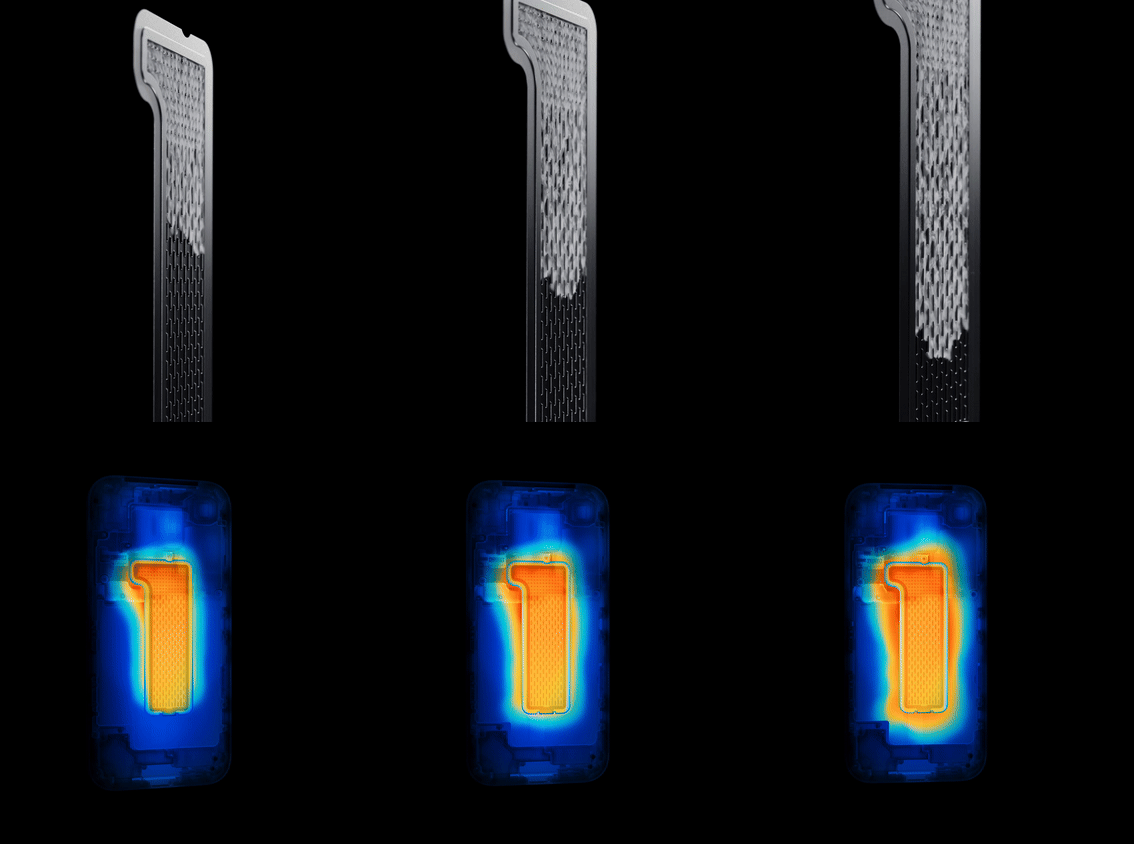
The report notes that the vapor chamber system, first introduced with the iPhone 17 Pro and Pro Max, uses a liquid-cooling mechanism to control heat generated by high-performance chips. This helps maintain consistent performance during intensive gaming, video editing, or Apple Intelligence tasks — all without the need for internal fans.
Although the concept has existed for years in devices from Samsung and other manufacturers, Apple has refined it to improve thermal efficiency and reduce overheating issues seen in earlier titanium iPhones.
Why the iPad Pro needs improved cooling
The iPad Pro has become increasingly powerful, with the latest model running on the M5 chip, which delivers performance comparable to the Mac Studio’s M1 Ultra. As the tablet is now used for AI applications, multitasking, and professional media workloads, effective heat management is becoming critical.
While its larger surface area helps dissipate heat more easily than an iPhone, a vapor chamber would further reduce thermal throttling and sustain higher performance levels during heavy tasks.
Launch timeline and expected upgrades
According to the report, Apple aims to integrate the vapor chamber cooling system in the next-generation iPad Pro models, expected in 2027. These models are also likely to debut the M6 processor, built on TSMC’s 2-nanometer process, offering improved performance and power efficiency.
The upgrade could also help differentiate the iPad Pro from the iPad Air, which now features a 13-inch display and is set to receive the M4 chip in 2026. Looking ahead, Apple may extend vapor chamber cooling to other fanless products such as the MacBook Air, further enhancing thermal stability without adding internal fans.