
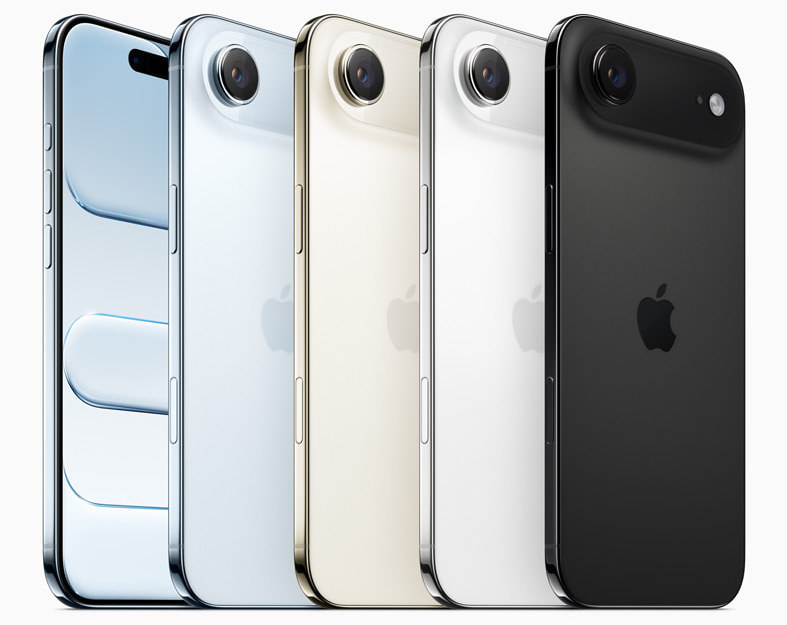
Apple is sharply reducing iPhone Air production while increasing orders for the iPhone 17 and iPhone 17 Pro, according to a Nikkei Asia report. The move comes as strong sales for the iPhone 17 lineup offset the weak response to the iPhone Air, despite ongoing global economic uncertainty and U.S.–China tariff tensions.
iPhone Air Production Scaled Back
Apple has reportedly cut iPhone Air production to near “end-of-production” levels due to sluggish demand in markets outside China. Sources said the company has asked suppliers to reduce component and module orders from November onward, with volumes falling to less than 10% of September levels.
Initially, the iPhone Air was expected to make up 10–15% of total new iPhone output in 2025. Despite launching in China only last week—after delays tied to eSIM regulations—early local sales have been solid. However, global demand has remained below expectations.
The model is also viewed internally as a step toward Apple’s first foldable iPhone, expected to debut in 2026.
iPhone 17 Demand Remains Strong
Apple has raised production for the iPhone 17 and iPhone 17 Pro amid stronger-than-expected demand. Sources said orders for the base model have increased by around 5 million units, with additional production added for the Pro variant.
In the U.S., wait times currently average two to three weeks for the iPhone 17 and one to two weeks for the iPhone 17 Pro, while the iPhone Air is available immediately. The company’s total iPhone 17 lineup forecast remains steady at 85–90 million units for 2025.
Suppliers have welcomed the unchanged forecast as a sign of stability amid a weak smartphone market. “Apple is the only client that has kept its forecast intact. Other smartphone brands are all seeing declines,” one component supplier told Nikkei Asia.
Stable Outlook and Market Performance
The iPhone 17 lineup launched on September 9, with shipments beginning September 19. Despite a soft global market, research firms Counterpoint and IDC reported year-on-year growth in Apple’s iPhone shipments for the July–September quarter, outperforming Samsung, Xiaomi, Vivo, and OPPO.
According to Counterpoint, the iPhone 17 series outperformed the iPhone 16 lineup by 14% in the first 10 days of sales across China and the U.S., with the standard iPhone 17 driving most of the growth.
Looking Ahead
Apple is expected to monitor iPhone Air sales in China before finalizing next-quarter production adjustments. Its steady iPhone 17 targets indicate confidence in sustained global demand heading into the 2025 holiday season.