
Apple’s artificial intelligence efforts are beginning to show progress with the introduction of its redesigned Siri experience and updated Apple Intelligence features.
According to a report by Bloomberg’s Mark Gurman, the new Siri, despite arriving roughly two years later than originally expected, delivers several capabilities Apple first announced in 2024 and could help the company move beyond a period of criticism surrounding its AI strategy.
Personal context and on-screen awareness arrive
The core additions are personal context and on-screen awareness, features Apple unveiled in June 2024 before delaying their release.
After testing Siri across iPhone, iPad, and Mac devices, the report found that these capabilities allow the assistant to work with information stored across emails, messages, files, calendars, and apps.
Examples cited in the report include:
- Moving a calendar appointment, changing the event title, and replacing a dial-in number with an in-person meeting address through a single request
- Finding a TV recommendation shared weeks earlier in a conversation
- Locating a specific order-related email
- Pulling restaurant suggestions from messages and emails
- Creating calendar events using information displayed inside a third-party app
- Searching messages, emails, and files for travel plans discussed at different times
- Drafting a message and attaching a relevant photo through the same request
According to the report, these were among the most important Apple Intelligence capabilities announced in 2024, despite Apple previously characterizing them as only part of the broader Siri and Apple Intelligence roadmap.
Siri shows improved understanding of requests
Beyond contextual awareness, the report highlights improvements in Siri’s ability to interpret requests.
As an example, Gurman noted that previous versions of Siri could misinterpret navigation requests, directing users to a city sharing the same name as a nearby restaurant rather than the intended destination. The updated Siri reportedly handles such requests more accurately.
The report says Siri can now perform many tasks consumers commonly use AI assistants for, including:
- AI-powered web searches
- Recipe and historical information lookups
- Editing text and emails
- Finding practical information
- Checking local entertainment listings
According to the report, Siri is now functioning more like a modern AI assistant, though it does not introduce major new AI capabilities beyond those already available elsewhere.
Closer to competitors, but limitations remain
The report suggests Siri is now roughly comparable to where leading AI chatbots were about six months earlier.
It also notes that Apple’s built-in AI tools may be sufficient for many everyday tasks, reducing the need for some users to rely on third-party AI applications.
However, Siri continues to trail services such as ChatGPT, Gemini, and Claude in more advanced workloads, including:
- In-depth research
- Long-form report writing
- Programming assistance
- Data analysis
- Complex travel planning
- Legal document reviews
- Tax-related tasks
- Large PDF analysis
- Spreadsheet, chart, and presentation generation
The report compares Siri AI to iMovie and ChatGPT to Final Cut Pro, describing Siri as suitable for general tasks while more advanced platforms continue to offer broader capabilities.
Apple Intelligence expands beyond Siri
The report also highlights updates across Apple Intelligence.
Features mentioned include:
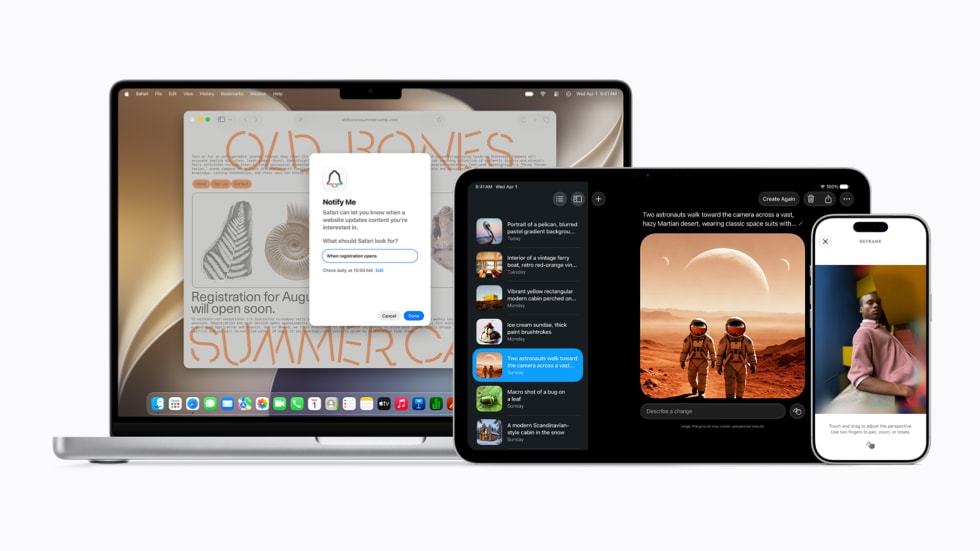
- Image generation improvements in Image Playground
- Improved Genmoji creation
- Image expansion tools that generate additional content within a scene
- An updated Clean Up feature for removing unwanted objects and people from photos
Future AI capabilities
According to the report, Siri’s new architecture could support additional capabilities in the future, including more precise voice-based control of apps. One feature previously demonstrated by Apple involves viewing a photo and instructing an app to make specific edits beyond basic actions such as cropping or rotating an image.
The report also suggests Apple could eventually develop an AI agent capable of operating software across iPhone, iPad, and Mac devices on behalf of users.
Speaking after Apple’s keynote presentation, Siri engineering chief Mike Rockwell said the new Siri architecture is “a completely modern architecture” with the ability to be extended in the future.
Apple software chief Craig Federighi described this category as experimental and said development is focused on finding the right user experience.
Beta version still has issues
The first Siri AI beta reportedly continues to show a number of limitations, including:
- Slow response times
- Canceled queries
- Misinterpreted requests
- Inconsistent HomeKit controls
- Lost conversation history
- Failures to understand some on-screen content
The report notes that many of these issues could be addressed before the public release later this year.
Why it matters
The report argues that Apple is positioning Siri and Apple Intelligence as useful, privacy-focused AI features while also working to close the gap with competing AI platforms. It also notes that if Apple could offer AI capabilities on par with leading competitors today, it likely would.
According to the report, Siri’s progress has also been supported by Google’s AI technologies and changes in Siri leadership. If the remaining issues are addressed, the updated assistant could reduce concerns about Apple’s AI position and help support future product launches.
The report concludes that improvements to Siri, Apple Intelligence, and Apple’s software platforms may help avoid AI-related concerns affecting future devices, including the company’s foldable iPhone, the 20th anniversary iPhone, and future AI-powered hardware products that may have been delayed until the software platform was ready.