
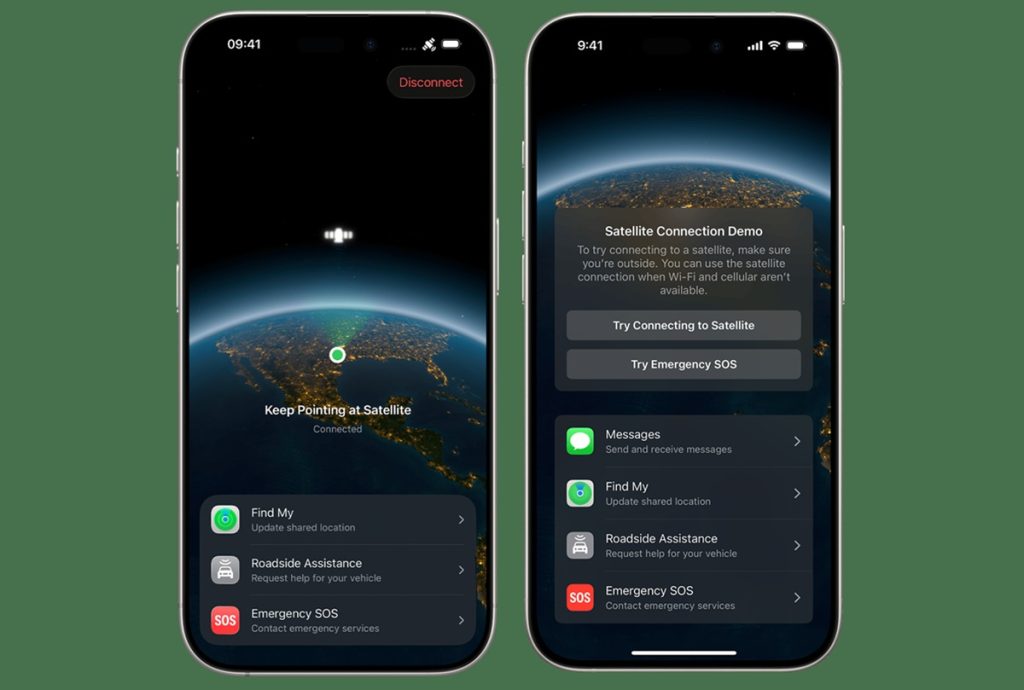
Apple is preparing a significant expansion of its satellite capabilities across the iPhone and Apple Watch lineup, according to a report by Bloomberg’s Mark Gurman. The company is developing new software frameworks, expanded messaging support and hardware-level updates as it moves forward with a satellite strategy that began nearly a decade ago.
A long-term shift in Apple’s satellite roadmap
Apple began its satellite research after hiring two senior engineers from Alphabet around ten years ago. Early investigations looked at whether iPhones could connect directly to satellites instead of relying on mobile carriers, but the technology was not viable at the time.
The company later moved toward a phased approach, which led to Emergency SOS via Satellite, introduced with the iPhone 14 in 2022.
Steady expansion of satellite services
Since then, Apple has gradually broadened its satellite offerings. It added Roadside Assistance via AAA in 2023 and recently enabled two-way text messaging for non-emergency communication in areas without cellular service.
These features are developed by Apple’s Satellite Connectivity Group (SCG), led by senior hardware engineering director Mike Trela, working with wireless software, hardware technologies, business development and regulatory teams.
Apple uses Globalstar’s satellite network for these services, which also supports the Apple Watch Ultra 3. The company has also explored satellite capability for future iPads through in-house modems, though no launch timeline has been decided.
Industry competition and internal discussions
Apple’s satellite roadmap is evolving as the broader industry accelerates. SpaceX’s Starlink is expanding and collaborating with T-Mobile on satellite-to-phone coverage, while Verizon and AT&T are developing similar capabilities.
Inside Apple, some executives have questioned how far the company should move into areas typically handled by carriers. That viewpoint has gained attention as telecom providers ramp up their satellite plans. Still, Apple continues to see value in maintaining its own satellite capabilities due to:
- A potential long-term shift toward satellite-supported mobile networks
- Control over user experience, privacy and system design
- Support for international regions where satellite deployment is slower
- Technical reliance on Globalstar-specific protocols
Globalstar is considering a possible sale, with SpaceX viewed as a potential bidder — a development that could influence Apple’s long-term plans.
Upcoming features in development
The report outlines several satellite features Apple is currently working on:
- Satellite API for third-party apps: A framework that will allow developers to integrate satellite functionality into their apps when supported.
- Apple Maps with satellite navigation: Exploring satellite-powered navigation, so Maps can provide routing without cellular or Wi-Fi connectivity.
- Photo support in satellite messaging: Work is underway to enable photo transmission over satellite, expanding beyond text-only messaging.
- More natural connection behaviour: Apple aims to reduce the need for users to point devices toward the sky. Future iPhones are expected to maintain satellite connections: inside a pocket, in a vehicle, and potentially indoors.
- 5G NTN support in upcoming iPhones: Next-year iPhones are expected to include 5G NTN (non-terrestrial networks), allowing carriers to route mobile data through satellites for wider coverage.
Infrastructure upgrades and business model
Many upcoming capabilities depend on upgrades to Globalstar’s satellite constellation, partly funded by Apple. If a SpaceX acquisition proceeds, these improvements may accelerate, though Apple may need to reassess parts of its satellite business model.
Current core features such as Emergency SOS remain free. More advanced services are expected to be offered through paid plans from carriers, SpaceX or other satellite providers.
Apple does not plan to support satellite-based phone calls, video calling or full web browsing at this stage. SpaceX is moving toward those capabilities, which may eventually reach iPhone users through partner-led premium tiers.
Outlook
Gurman’s report indicates that Apple is advancing toward the satellite vision it began developing almost ten years ago. With new APIs, upgraded messaging, navigation support and next-generation connectivity, iPhone users are likely to see a broader set of satellite features in the coming years.