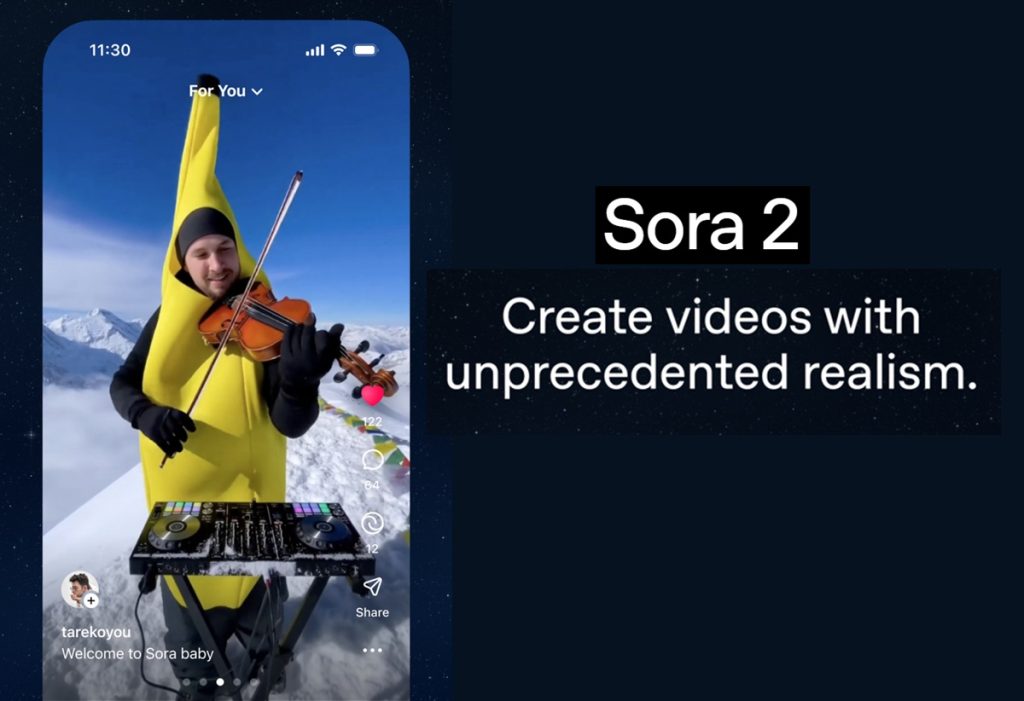
OpenAI introduced Sora 2, its latest video and audio generation model, alongside a new iOS app called Sora. The model brings improved realism, stronger physical accuracy, and greater controllability than its predecessor. It supports synchronized dialogue, ambient audio, and sound effects, allowing users to generate and share content within the app.
From Sora 1 to Sora 2
The first Sora model, released in February 2024, was described as a “GPT-1 moment” for video, introducing basic features such as object permanence through scaled video training. Since then, OpenAI has focused on building models with stronger world simulation.
Sora 2 represents a leap closer to a “GPT-3.5 moment,” with the ability to handle advanced behaviors and physical interactions that earlier AI video systems could not.
Key Features and Capabilities
- Physics-Aware Video: Models real-world dynamics such as buoyancy, rigidity, and motion. For example, a missed basketball shot rebounds off the backboard rather than teleporting.
- Realistic Failures: Mistakes appear like errors of an internal agent rather than distorted outputs.
- Controllability: Follows multi-shot instructions and maintains consistent world state across scenes.
- Visual Styles: Supports realistic, cinematic, and anime-style sequences.
- Integrated Audio: Produces synchronized speech, background soundscapes, and sound effects.
- Personalization: Users can insert themselves, friends, or objects into generated environments using short recordings.
Sora iOS App: Features and Availability
The Sora iOS app, currently invite-only, serves as the primary platform for Sora 2. Key features include:
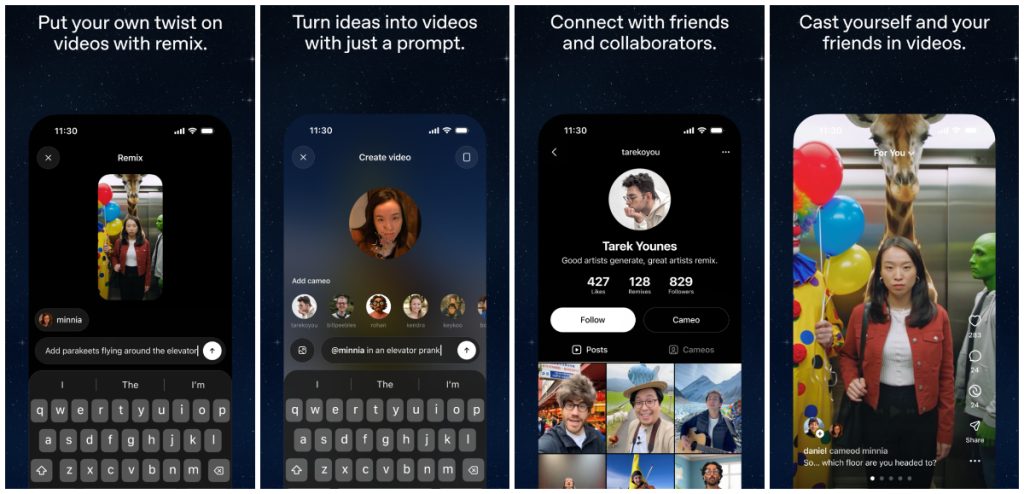
- Creating and remixing AI-generated videos
- Browsing and sharing through a customizable feed
- Cameos, allowing users to place themselves or others into AI-generated scenes after a one-time video and audio recording
OpenAI noted that internal testing showed cameos encouraged new forms of social interaction, seen as a natural progression in digital communication.
Availability
- Launching in the U.S. and Canada first, with plans to expand to additional regions
- Users can sign up in-app to receive notifications when their accounts are activated
- Safety, personalization, and cameo tools are fully integrated from launch
Responsible Deployment and Safety
OpenAI has integrated multiple safeguards into the app:
- Feed Controls: A natural-language-based recommender system, not optimized for time spent.
- Teen Protections: Viewing limits, stricter cameo permissions, and parental controls via ChatGPT.
- Consent & Control: Users can revoke cameo access or remove any video featuring their likeness.
- Moderation: Human reviewers work alongside automated systems to address bullying and harmful content.
- Monetization: No ad-based model; optional paid access may be introduced only to balance compute demand.
Web Platform, Pro Access, and API Availability
- Web Platform: Sora 2 is also accessible at sora.com with the same features as the app.
- Pricing: Free with generous usage limits; future paid options may address compute demand.
- Sora 2 Pro Access: ChatGPT Pro users are prioritized for early access, though OpenAI has not provided an exact timeline. The company aims to expand access as quickly and safely as possible.
- API Plans: Sora 2 will be released via API for developers.
- Legacy Support: Sora 1 Turbo remains available, with all prior creations stored in user libraries.
Outlook
The Sora Team shared its view on the progress of AI video generation and its long-term implications:
Video models are improving rapidly. General-purpose world simulators and robotic agents will reshape society and accelerate human progress. Sora 2 marks important progress toward this vision. Consistent with our mission, we aim to ensure these models benefit humanity as they develop. We believe Sora will bring creativity, joy, and new ways of connection worldwide.
This perspective highlights that Sora 2 is not just a technical upgrade but also a step toward aligning advanced AI with broader human benefit.