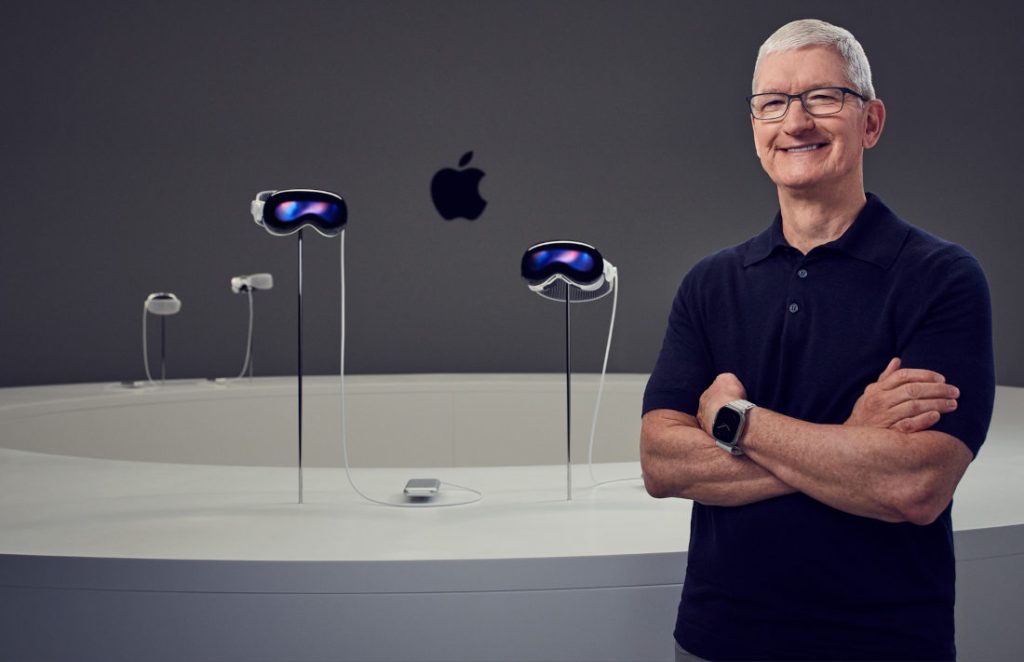
Apple will not release any new head-mounted devices in 2026, according to renowned analyst Ming-Chi Kuo. In his latest research update published on Medium, Kuo revealed that Apple is actively developing multiple Vision Series and smart glasses products, with key launches scheduled to begin in 2027.
No New Headsets in 2026
Kuo confirmed that no new head-mounted products are expected from Apple in 2026. However, development is underway on seven separate projects—three under the Vision lineup and four smart glasses models—with five already on track for production.
Smart Glasses to Lead Market Momentum
Among Apple’s upcoming wearables, Ray-Ban-style smart glasses are expected to drive early adoption. These audio-first, display-free glasses are projected to ship 3–5 million units or more in 2027.
Designed for audio playback, video capture, and AI-powered environmental sensing, these glasses could partially replace TWS earbuds and smartphone cameras in everyday use.
Kuo believes Apple’s arrival in the market will push total smart glasses shipments to more than 10 million in 2027, setting the stage for broader adoption.
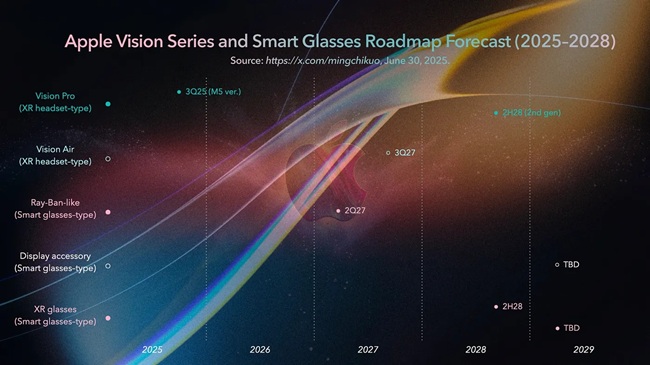
Vision Series: Roadmap & Models
Vision Pro M5 (Q3 2025)
- Mass production begins in Q3 2025
- M5 chip upgrade (from M2); other specs remain unchanged
- 150,000–200,000 units expected
- Aimed at ecosystem development, inventory clearance, and niche market presence
Vision Air (Q3 2027)
- New, lightweight form factor (~40% lighter than Vision Pro)
- Powered by an iPhone-grade processor
- Uses plastic optics, magnesium alloy, and reduced sensors for weight and cost efficiency
- Positioned as a lower-cost alternative with broader appeal
Vision Pro 2nd Gen (2H 2028)
- Features a completely new design
- Powered by a Mac-grade chip
- Lighter and more affordable than the original
- Mass production in second half of 2028
Smart Glasses Lineup
Ray-Ban-like Smart Glasses (Q2 2027)
- Production begins Q2 2027
- 3–5 million+ units forecast
- No display; supports: Audio playback; Camera and video recording; AI-based environmental sensing
- Voice and gesture UI
- Multiple frame/temple materials offered
XR Glasses (2H 2028)
- Production starts late 2028
- Color display using LCoS waveguide technology
- Controlled via voice and gestures
- Heavy focus on AI integration
- Additional variant also in development (lower visibility)
Display Accessory (Paused)
- Originally slated for Q2 2026 production, now paused
- Intended as a tethered viewer for iPhone content
- Display: Birdbath optics with electrochromic dimming
- Project halted due to weight disadvantage versus competitors (120–130g vs. sub-100g)
Competitive Advantage: Hardware Strength, Software Hurdles
Kuo highlights Apple’s strong hardware and ecosystem integration as key differentiators in the head-mounted space. However, the biggest challenge remains in developing robust AI-powered software, which is essential for intuitive user experiences.
While competitors may introduce similar products earlier, Kuo believes they’ll remain niche over the next two years, due to current limitations in tech and design.
Outlook
Ming-Chi Kuo expects Apple’s head-mounted devices—particularly smart glasses—to shape the next major shift in consumer electronics. While Vision Pro remains a niche product, the Ray-Ban-like glasses could become mainstream and ignite a new hardware cycle starting in 2027.