
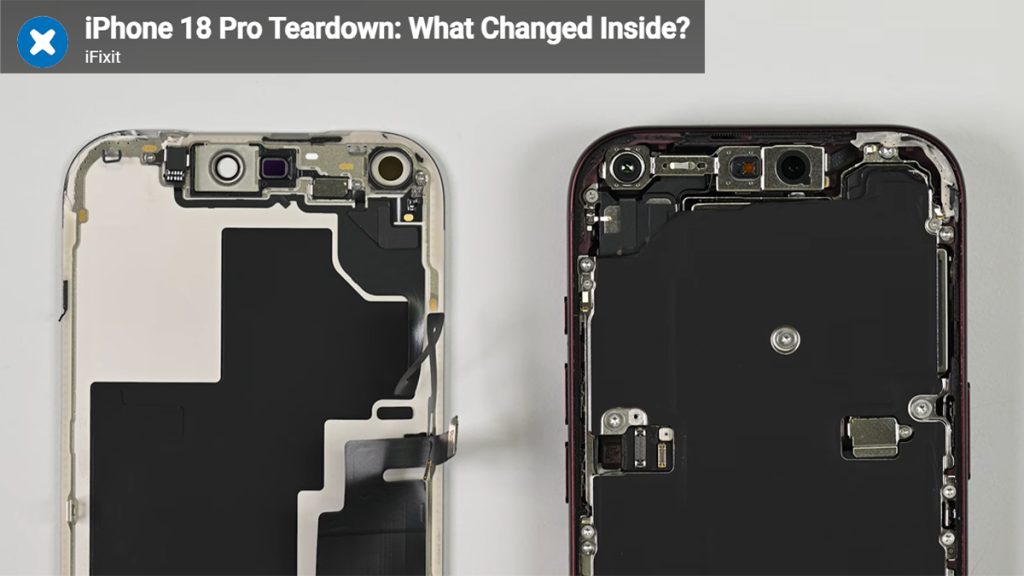
iFixit has shared its teardown of the recently launched iPhone 18 Pro and iPhone 18 Pro Max, examining the variable aperture camera, battery access, cooling system, logic board layout, Face ID hardware and repairability.
Variable Aperture Camera
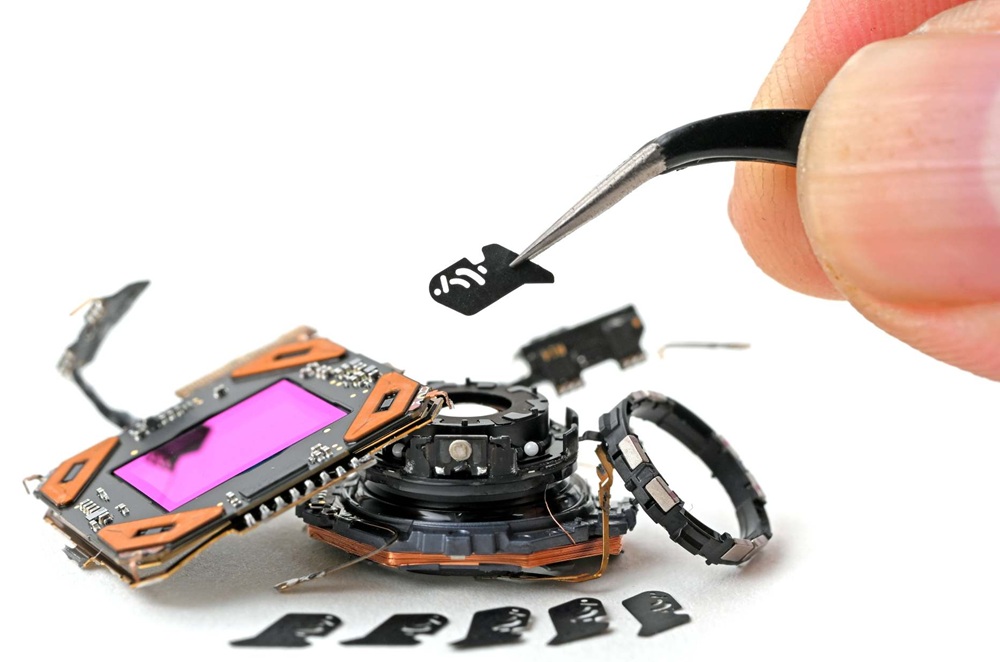
The iPhone 18 Pro and Pro Max use a variable aperture main camera with six overlapping polymer-composite blades. The magnetically actuated blades are about as thin as a human hair and use tiny slots and holes that engage with pins.
Their tight tolerances make the mechanism difficult to repair, so damage would likely require replacing the complete camera assembly. However, the camera module itself is modular and can be replaced relatively easily.
The camera offers four preset aperture settings:
- ƒ/1.48
- ƒ/1.8
- ƒ/2.8
- ƒ/4.0
The ƒ/1.48 setting is the widest aperture on an iPhone. iFixit says it is half a stop wider than the iPhone 17 Pro and only slightly wider than the iPhone 13 Pro’s ƒ/1.5. The main camera has a 6.8 mm focal length, a sensor slightly less than half an inch diagonally and a 4.6 mm opening at ƒ/1.48.
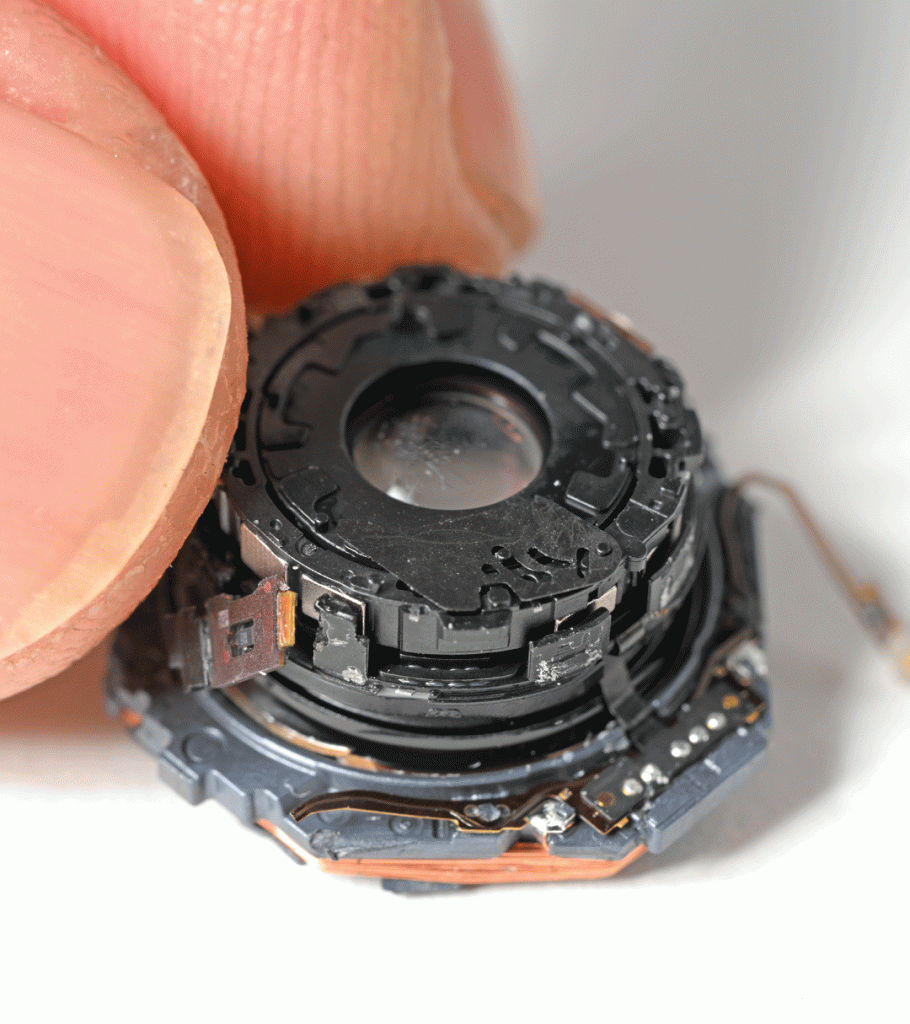
At ƒ/1.48, the camera receives about 7.3 times more light than at ƒ/4.0. In iFixit’s test images, the different aperture settings produced visible differences, although background details remained visible even at ƒ/1.48. Apple has not yet released replacement camera parts; iFixit notes that the iPhone 17 Pro camera assembly costs $249.
Battery and Display
The iPhone 18 Pro and Pro Max retain a front-entry repair design. The rear glass can be opened, but the wireless charging coil is the only serviceable component accessible from that side, so battery access requires removing the display.
During the teardown, three of the four display panels continued working but had cracked or separated white plastic frames. Since the frame is part of the display assembly, fresh adhesive cannot repair damaged plastic. iFixit notes that adhesive strength, heating technique and differences in the plastic could affect the result, while four teardowns are not enough to establish a failure rate.
Once the display is removed, the battery and its metal tray can be taken out together without dealing with battery adhesive. The cell remains glued to the tray, but electrically releasable adhesive allowed iFixit to remove it in about 90 seconds at 12 volts.
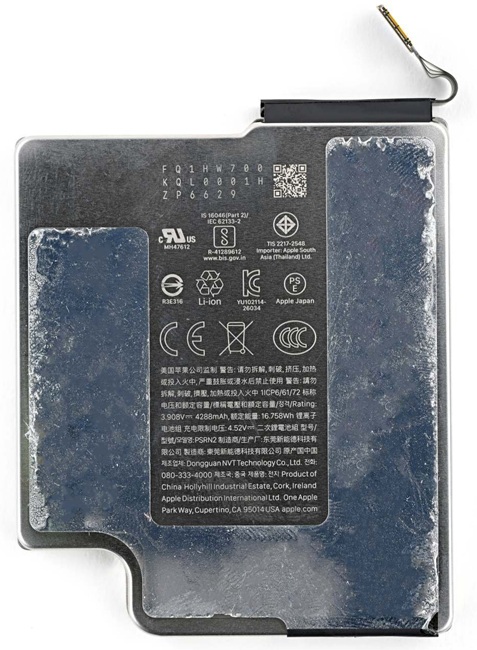
The eSIM versions have the following battery capacities:
- iPhone 18 Pro: 16.76 Wh (4,288 mAh)
- iPhone 18 Pro Max: 21.751 Wh (5,567 mAh)
Physical SIM models have smaller batteries.
Cooling and Logic Board
The A20 Pro has moved outside the logic board sandwich, with the memory positioned beside the processor. This provides a direct path to the vapor chamber, which uses a conformable thermal interface and has three times the surface area of the previous design. The vapor chamber moves heat through a working fluid that evaporates near hot areas, condenses over cooler surfaces and returns through a wick.
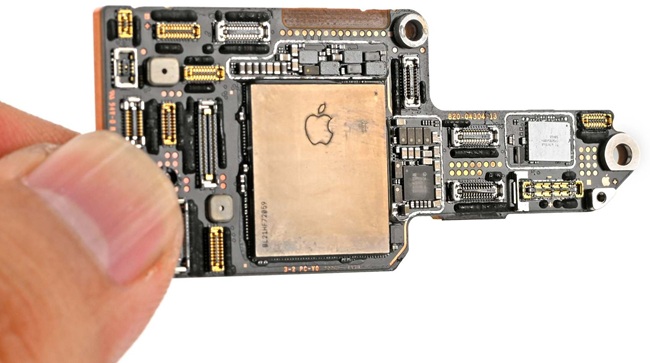
The new board layout also changes access to the NAND storage:
- NAND is positioned inside the logic board sandwich.
- Access requires separating the board layers, adding heat and labor.
- The process increases the risk of damage during repair.
- iPhone data protection prevents specialists from simply transplanting the NAND when recovery requires access to the original storage.
The chip configuration also varies by region:
- iPhone 18 Pro and Pro Max: Apple C2
- US iPhone 18 Pro Max: Qualcomm mobile chip
iFixit notes that the Qualcomm chip is more power-hungry than the C2.
Face ID and USB-C
The Face ID infrared camera has moved beneath the display toward the upper-left corner, while the selfie camera and infrared dot projector remain in the central opening. The changes include:
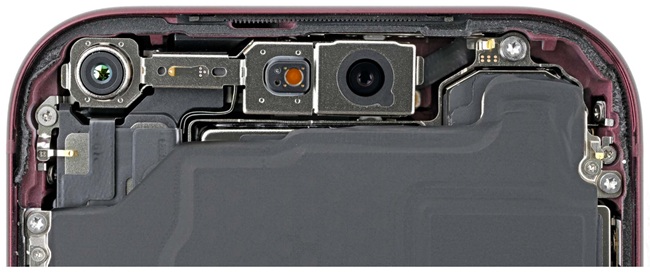
- Every other row of display pixels is missing above the infrared camera.
- The infrared camera opening is less visible to the naked eye.
- An apparent infrared-pass filter sits below the OLED.
- The front-facing camera array can be removed without screws or glue.
iFixit notes that the under-display approach is similar to Samsung’s implementation on the Galaxy Z Fold4, Z Fold5, and Z Fold6, although Apple uses it for the infrared Face ID camera.
The USB-C port is harder to access because its long flex cable runs along the side of the phone, with screws, adhesive, and other components obstructing its removal.
Repairability
iFixit has given both the iPhone 18 Pro and iPhone 18 Pro Max a provisional 7/10 repairability score. The teardown assessment considers:
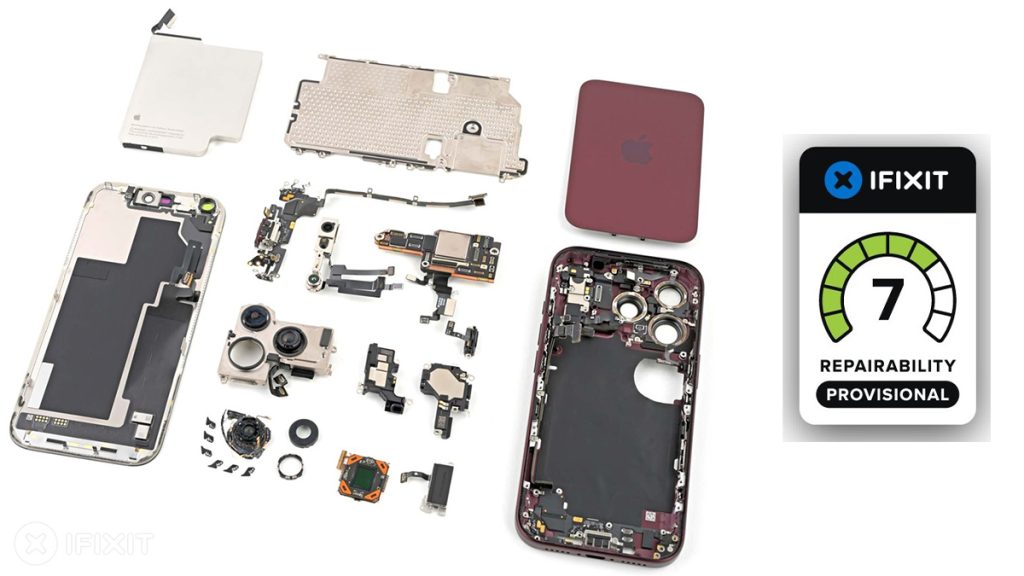
- Screwed-in battery tray
- Modular camera assemblies
- Apple’s repair support
- Display removal required for most repairs
iFixit notes that most repairs still require opening the phone from the display side, which adds time and the risk of damaging the screen. It also says the display frame damage found during the teardown needs further testing to determine its cause and repeatability.