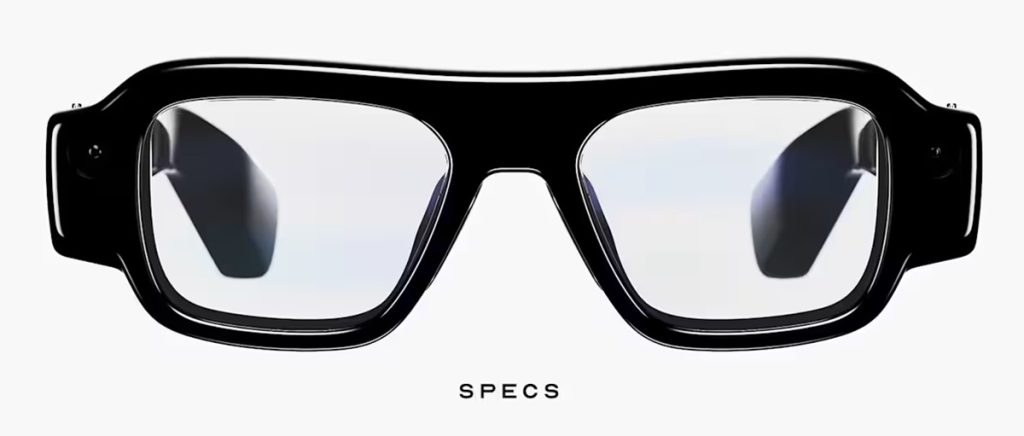
Snap Inc. introduced SPECS Augmented Reality Glasses at Augmented World Expo 2026. The device integrates AI assistance, productivity tools, entertainment, and shared experiences through augmented reality.
The company stated that SPECS are based on more than a decade of augmented reality development, reflecting the shift from traditional computing systems to personal devices with continued screen-heavy usage patterns.
It added that SPECS are designed to place digital content into physical environments while maintaining user awareness of surroundings, aligning augmented reality with human visual and spatial perception.
SPECS Augmented Reality Glasses
SPECS are standalone AR glasses that operate without a tether or external computing unit. The device is built using Swiss TR90 polymer and comes in two physical size variants.
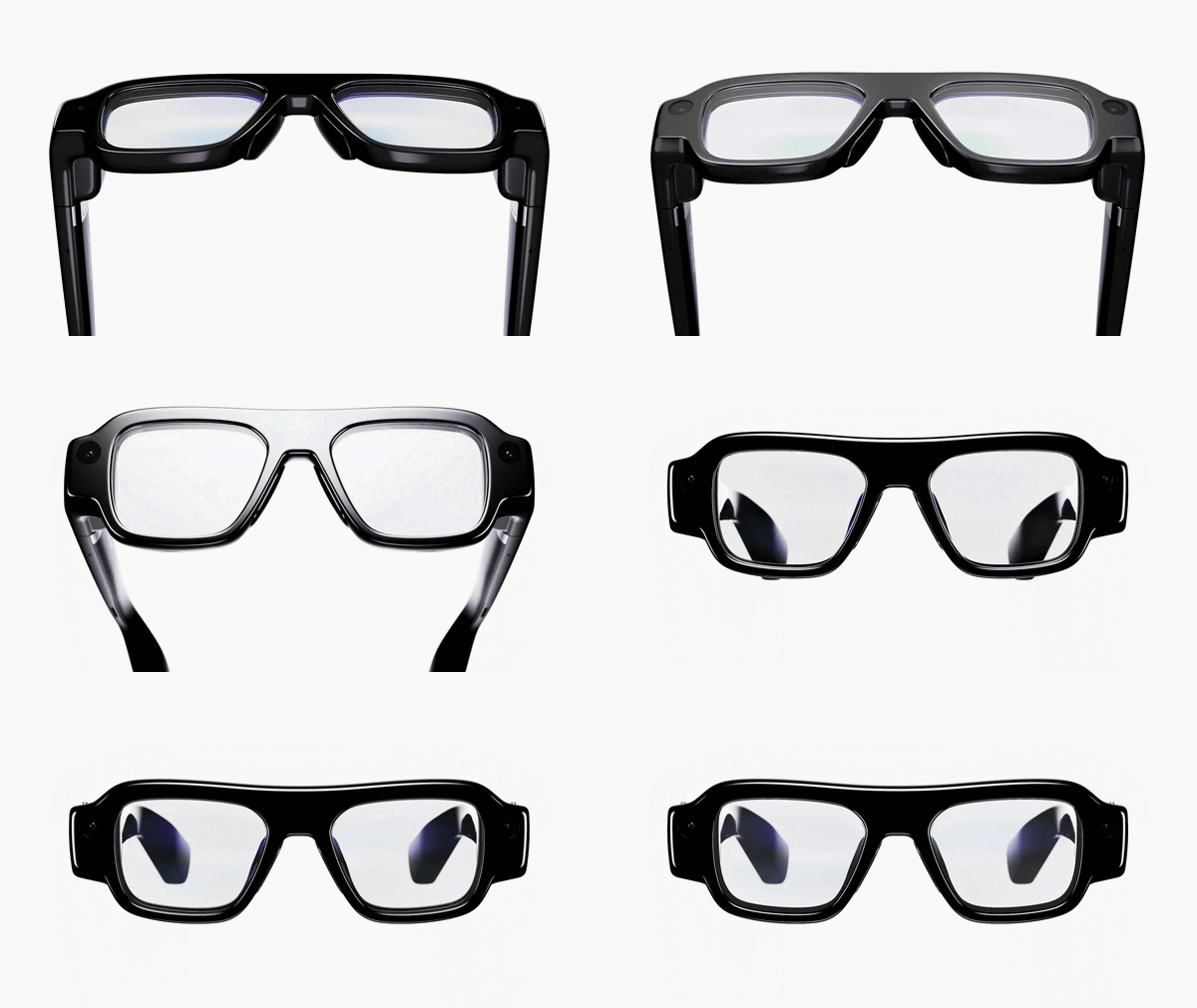
The core physical specifications include:
- 47 mm model weighs 132 grams
- 52 mm model weighs 136 grams
- Prescription lens support included
- Electrochromic lenses shift from clear to tinted in ~10 seconds
The display system combines liquid crystal on silicon (LCoS) with a waveguide architecture. It supports a 51-degree field of view and 16 million colors for spatial overlay rendering.
The visual output is designed to simulate:
- 24-inch display for productivity use
- 115-inch screen at ~10 feet for media viewing
The waveguide uses nanoscale structures to improve light control and alignment with real-world visuals.
SPECS use a dual Snapdragon processor configuration where each chip is assigned a separate function. One handles computer vision while the other processes AR Lenses and spatial computing tasks.
This system enables real-time spatial tracking, object recognition, and anchored AR rendering. It also supports a motion-to-photon latency of 7 milliseconds based on robotic measurement testing.
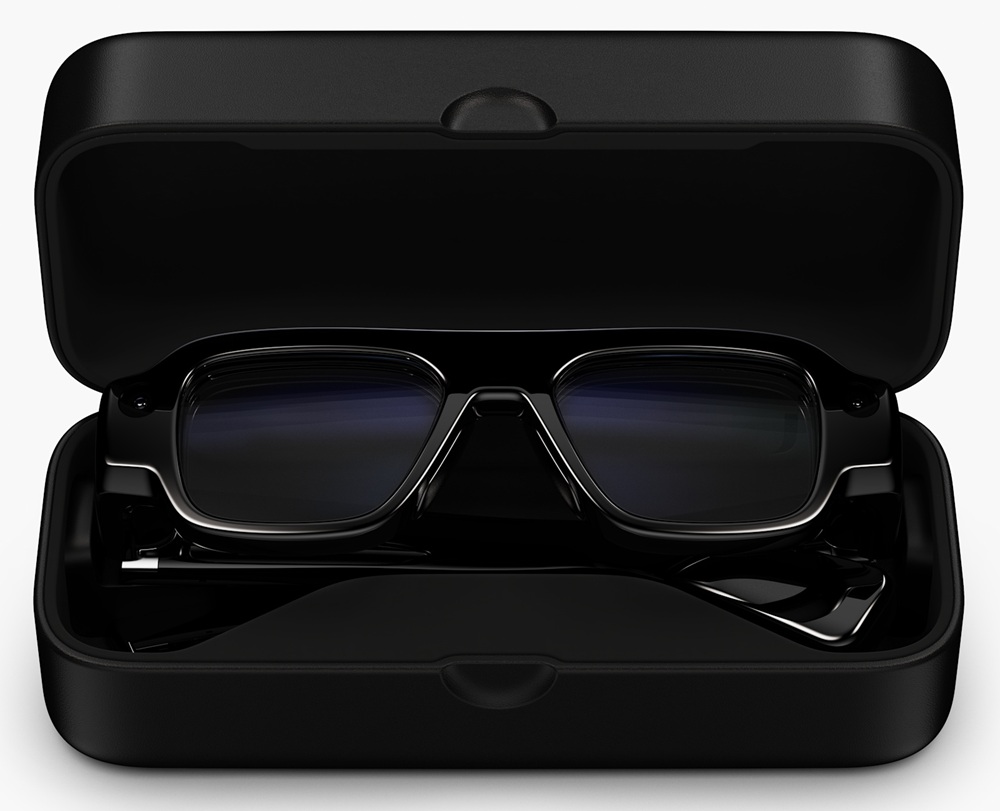
Battery performance is structured for mixed usage scenarios including AI functions, AR Lenses, media playback, and notifications.
- Up to 4 hours of active use
- Charging case adds 4 full charges
- Total usage up to ~20 hours
Snap stated that SPECS development spans optics, hardware, operating systems, and computer vision systems, supported by more than 7,000 patents.
AI and real-world interaction
SPECS include AI capabilities that process real-world input in real time and generate contextual responses based on what the user sees.
Core AI-enabled functions include:
- Real-time navigation and guidance overlays
- Object-linked information display in the user’s field of view
- Task assistance without switching applications
The device also supports spatial computing use cases where physical environments become interactive workspaces. These include screen casting, content streaming, virtual whiteboards, and collaboration tools.
Developers have built AR Lenses for specific use cases such as golf green reading tools, Drum Kit interactive overlays, and Vector Fields visualizations representing physical forces.
Developer platform and Snap OS
Snap continues development of its Snap OS platform for augmented reality applications. Over the past 18 months, it has released 10 updates and added more than 40 features and APIs for developers.
The ecosystem includes hundreds of AR Lenses across productivity, education, and entertainment categories. New development tools are focused on improving spatial computing workflows and AI-assisted creation.
Key developer tools include:
- Agentic development support in Lens Studio
- Integration with Claude Code, Codex, and Cursor (developer preview)
- SPECS Spatial Benchmark system for performance evaluation
- Migration Agent for porting existing AR experiences
- Native Development Kit for custom code integration
These tools support building AR applications that respond to real-world environments and AI-driven inputs.
Privacy and safety
SPECS include privacy controls designed to provide transparency and user control over data usage. The system includes an LED indicator that activates during recording.
Users must grant explicit permission for access to sensitive data, and selected features rely on on-device processing. Data controls allow management of storage, syncing, sharing, and deletion.
Key privacy mechanisms include:
- LED indicator for active recording
- Explicit permission prompts for sensitive access
- On-device processing for select functions
- User-controlled data storage and sharing settings
Snap stated that these safeguards are intended to ensure transparency in AI-enabled spatial computing systems.
Pricing and availability
SPECS are available for pre-order at $2,195 (Rs. 2,07,175 approx.) with a $200 refundable deposit. The device is scheduled to ship in fall 2026 across the United States, United Kingdom, and France.