YouTube has announced updates to its AI disclosure system aimed at improving transparency for both viewers and creators. The company says the changes are designed to make AI-generated content labels more visible while simplifying how disclosures work across videos and Shorts.
YouTube first introduced AI disclosure labels in 2024, requiring creators to indicate when realistic AI tools were used in their content. According to the company, feedback from users showed that viewers want clearer and easier-to-find disclosures for AI-generated or AI-altered videos.
YouTube moves AI labels to a more visible position
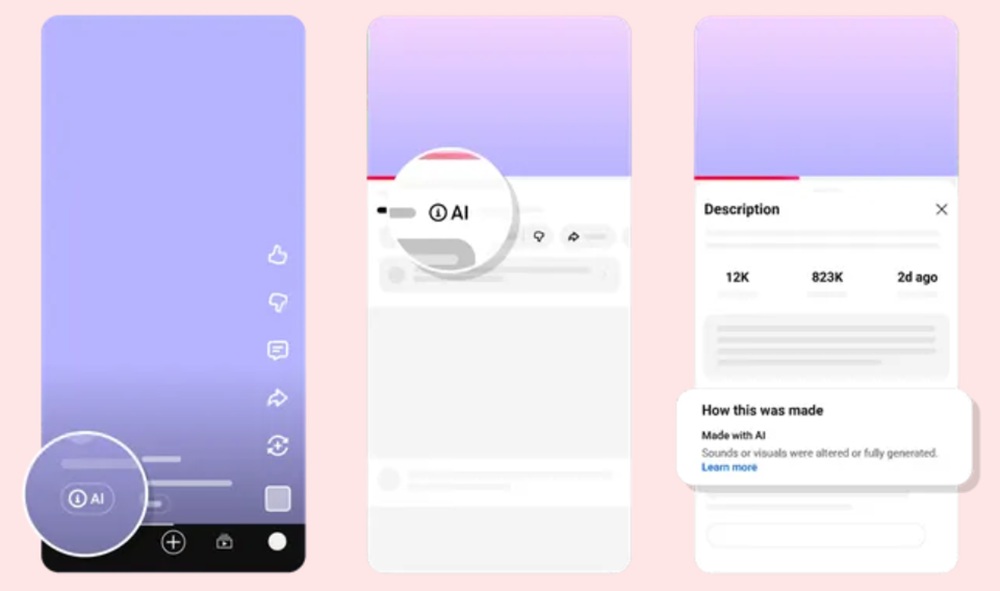
YouTube is repositioning disclosure labels for photorealistic and meaningfully AI-generated or AI-altered content.
For long-form videos, the label will now appear directly below the video player and above the description section. For Shorts, the label will appear as an overlay on the video itself.
The company says this will become the standard disclosure format for realistic AI-generated or significantly AI-modified content on the platform.
Meanwhile, content that is unrealistic, animated, or only slightly altered will continue to show AI disclosures inside the expanded description section.
YouTube adds automatic AI-generated content detection
YouTube is also introducing new internal detection signals designed to identify videos containing significant photorealistic AI-generated material.
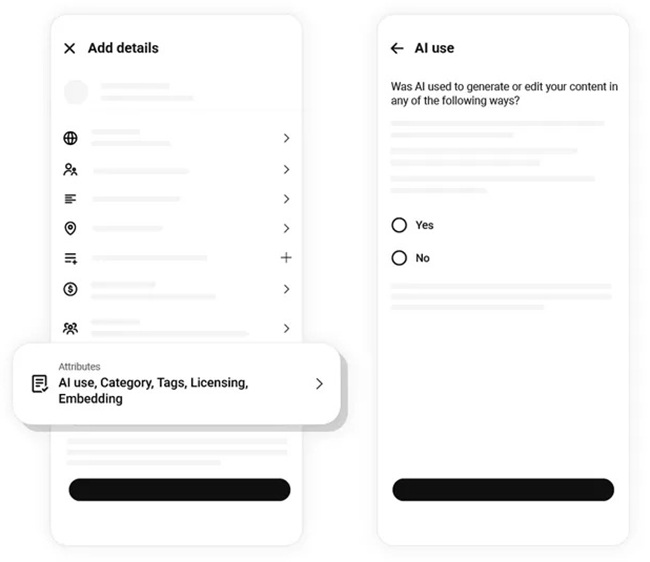
Creators are still required to manually disclose realistic AI usage. However, if YouTube’s systems detect major AI-generated content and a creator has not added a disclosure label, the platform will automatically apply one.
The company says creators will still remain in control of their disclosure settings in most situations. If a creator believes their video was incorrectly identified as AI-generated, they can manually update the disclosure status through YouTube Studio.
However, YouTube says disclosures will remain permanent in some cases, including:
- Content created using YouTube AI tools such as Veo or Dream Screen
- Content containing C2PA metadata indicating the video was fully AI-generated
AI labels will not affect monetization or recommendations
YouTube clarified that AI disclosure labels alone will not impact how videos are recommended on the platform or whether creators can earn revenue from them.
The company says the changes are intended to balance transparency with creator control while giving viewers clearer information about the content they are watching.
Availability and rollout
YouTube says the updated disclosure label placement for videos and Shorts is rolling out now. The company also confirmed that automatic AI-generated content detection and auto-labeling tools will begin rolling out starting in May 2026.